Deputies are reviewing supplementary assessments of the implementation of the 2025 socio-economic development and state budget plans, as well as the performance of similar plans for 2026 in the first months. They are also discussing key frameworks, including the five-year socio-economic development plan for 2026–2030, the medium-term public investment plan for the same period, the five-year national financial plan, and the public debt borrowing and repayment plan for 2026–2030.
    |
 |
|
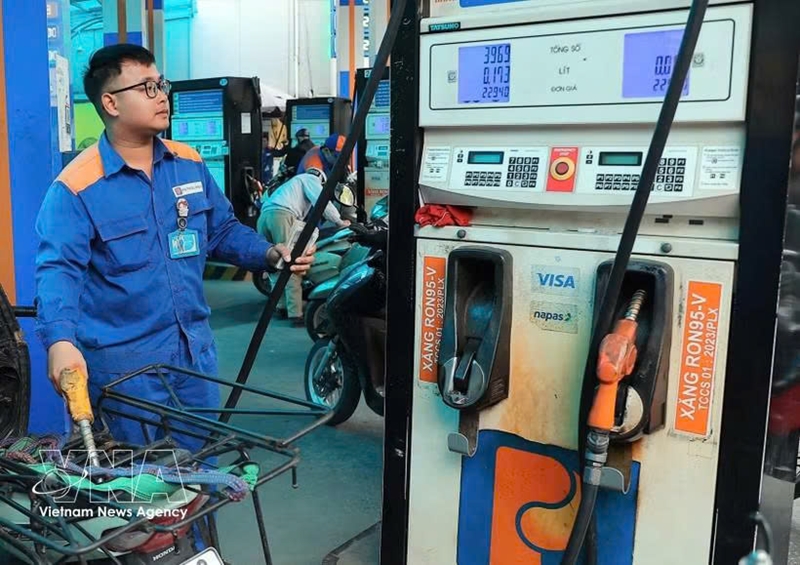
A worker refuels a motorbike at a Petrolimex station. (Photo for illustration) |
Other items on the agenda include the 2024 state budget settlement, thrift practice and anti-wastefulness efforts in 2025, and the implementation of the national gender equality targets in 2025.
During the morning session, legislators will examine a draft law amending and supplementing several articles of the Law on Overseas Representative Missions of the Socialist Republic of Vietnam, a draft resolution on coordination mechanisms and special policies for enhancing the efficiency of preventing and resolving international investment disputes, and another on some regulations regarding environmental protection tax, value-added tax, and excise tax on petrol, oil, and aviation fuel.
In the afternoon plenary sitting, the N.A. will debate draft amendments to the Law on Emulation and Commendation and the Law on Belief and Religion, as well as a draft resolution on some regulations regarding the abovementioned taxes on petrol, oil, and aviation fuel.
Under the draft resolution, the environmental protection tax on petrol (excluding ethanol), diesel, aviation fuel, kerosene, and mazut would be reduced to zero VND per liter. These products would not be subject to VAT declaration or payment while still allowing input VAT credit. The excise tax rate on petrol of all types would also be set at 0%.
The proposed measures are expected to be applied from April 16 through June 30, 2026. The Prime Minister would be authorized to make specific decisions to adjust the duration of the policy, either shortening or extending its validity, in line with global oil price developments and domestic market conditions.
While broadly agreeing with the necessity of the policy, the verification body called for comprehensive and coordinated solutions, including improved price governance, greater transparency in the composition of base fuel prices, ensuring stable supply chains, and stronger inspection and strict handling of speculation and hoarding. These measures, it said, are essential to enhance policy effectiveness and ensure alignment with the Party and State’s guidelines and policies.
Source: VNA