Lawmakers broadly agreed that the revisions should move toward a more flexible tax system that adapts to economic fluctuations and ensures fairness, transparency, and greater convenience for taxpayers.
    |
 |
|
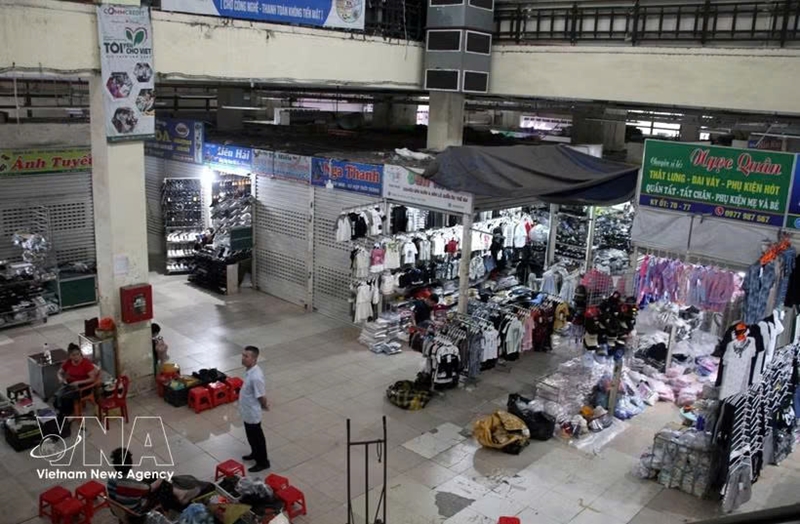
Kiosks at Vinh market in Nghe An province (Photo for illustration) |
During the debate, deputies commended the Government and the legislature for their proactive and decisive approach in advancing tax policy reforms. They described the proposed amendments as timely measures that could ease capital constraints, reduce cost burdens on households and businesses, and support the economy in overcoming current challenges and advancing toward two-digit growth targets.
A key point of consensus was to authorize the Government to determine specific taxable income thresholds. Deputies argued that such delegation will provide a legal basis for more responsive policy adjustments in line with macroeconomic conditions. At the same time, many stressed the need for clear legislative principles and boundaries to ensure that this authority remains consistent with constitutional provisions and subject to effective parliamentary oversight.
Deputy Trinh Tu Anh from Lam Dong province pointed out that the current taxable revenue threshold of 500 million VND (19,000 USD) per year is no longer aligned with reality. Based on projected per capita GDP levels of approximately 125.5 million VND in 2025 and 128–130 million VND in 2026, the existing threshold represents only about four times per capita income, significantly lower than the 8–15 times range commonly observed in comparable economies. Several lawmakers proposed setting a statutory floor of no less than 1 billion VND and a ceiling of up to 2 billion VND, allowing the Government to adjust within this band over time.
Concerns were also raised regarding sectoral disparities, as profit margins vary widely across industries. Deputies suggested that tax policy implementation should consider sector-specific cost structures to ensure equitable treatment.
Addressing the session, Minister of Finance Ngo Van Tuan stated that the proposed exemption threshold of 1 billion VND has been carefully considered and deemed appropriate under current conditions. The increase, which doubles the existing level, is expected to reduce state budget revenues by approximately 7 trillion VND. Of this, around 4.8 trillion VND would stem from relief for household and individual businesses, while about 256,000 small enterprises would benefit from support estimated at 2.1 trillion VND.
The minister emphasized that tax policy reform aims to ensure neutrality and efficiency, minimizing both administrative costs and compliance burdens. The proposed threshold, he added, reflects a balanced approach and will be further refined for submission to the National Assembly for consideration and approval.
Source: VNA