Improvements in macroeconomic fundamentals, coupled with a renewed inflow of investment capital, are laying the groundwork for a new growth cycle.
Experts from Savills noted that last year, Vietnam maintained macroeconomic stability, with GDP growth reaching approximately 8.02%, while total realized investment rose by 12.1% year-on-year. Foreign direct investment (FDI) remained a bright spot, with total registered capital nearing 38.4 billion USD and disbursed capital reaching around 27.6 billion USD, the highest level recorded in five years.
    |
 |
|
Vietnam’s property market buoyed by domestic strength, infrastructure push |
Investment flows were driven largely by Asian investors, particularly from Singapore, China, Hong Kong (China), and Japan, reflecting the ongoing shift in manufacturing and supply chains towards Vietnam.
Momentum has carried into 2026, with GDP expanding by approximately 7.8% in the first quarter, while newly registered FDI reached 15.2 billion USD, up 43% year-on-year. The processing and manufacturing sector continued to dominate, accounting for roughly 69% of total investment.
Domestic consumption and tourism have also rebounded markedly. Total retail sales of goods and services reached an estimated 1.9 quadrillion VND (72.2 billion USD), while international arrivals approached 6.8 million, boosting the commercial and resort property segments.
According to analysts, infrastructure is emerging as a decisive driver of the market’s next phase. Around 234 large-scale projects, with total investment estimated at 3.4 quadrillion VND, are currently underway nationwide.
Key developments such as Long Thanh International Airport, metro systems in Hanoi and Ho Chi Minh City, along with more than 380 kilometers of newly operational sections of the North–South expressway, are helping to shape new economic corridors.
Su Ngoc Khuong, Senior Director of Investment at Savills Vietnam, observed that infrastructure will be the most significant catalyst for the market in the coming period, providing a foundation for sustainable development.
In practice, expanded infrastructure not only supports the growth of industrial real estate through integrated supply chain models but also drives the emergence of new urban areas and growth poles in satellite regions.
Investment has begun to regain momentum, becoming more diverse and selective, particularly in high-quality segments. In the fourth quarter of 2025, Ho Chi Minh City recorded a major transaction at the Can Gio tourism urban area project, valued at approximately 664.5 million USD, signaling long-term confidence in infrastructure and tourism potential.
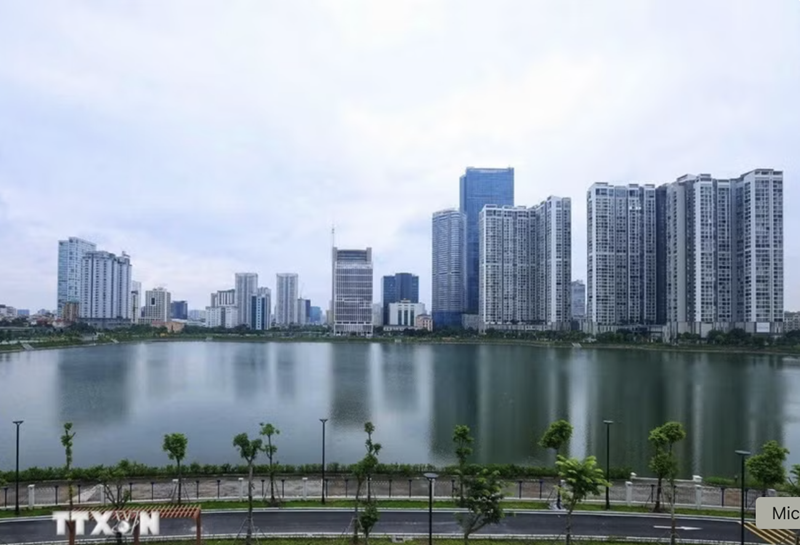
In Hanoi, capital flows are increasingly shifting towards retail and commercial assets in prime urban locations, with notable deals including Vincom Center Nguyen Chi Thanh at nearly 138 million USD, and the VP1 plot within the An Binh City complex in Phu Dien ward at 108.4 million USD.
Experts suggest the market is transitioning from a phase driven largely by potential to one characterized by selective investment, where high-quality projects capable of delivering tangible value will lead the way.
Against this backdrop, Vietnam’s property sector is expected to continue attracting both domestic and foreign capital, positioning itself for a more sustainable new growth cycle.
Source: VNA