As the country’s economic powerhouse, the Southern metropolis is expected to take the lead in creating new growth drivers, renewing its development model, and contributing more strongly to national growth. However, its medium- and long-term growth outlook reveals notable concerns.
    |
 |
|
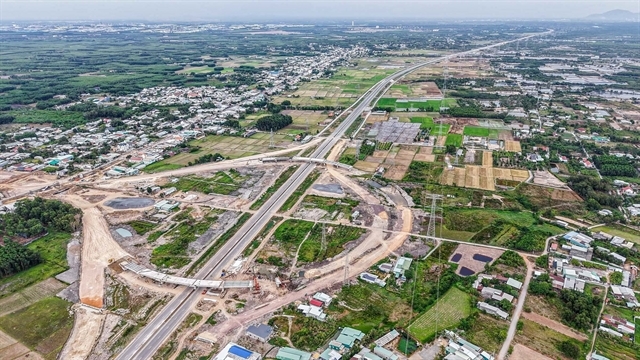
Accelerating public investment disbursement and upgrading infrastructure are expected to provide a strong boost to help Ho Chi Minh City achieve its double-digit growth target in 2026. |
While traditional growth drivers have expanded in scale, their quality and spillover effects remain limited. Public investment has improved but has yet to effectively mobilize broader social resources. Domestic consumption is gradually recovering but lacks strong breakthrough, while import-export growth has slowed and fallen below the national average.
These challenges require the city to adopt more decisive and substantive measures to meet its growth targets. In particular, escalating geopolitical tensions in the Middle East and the risk of a global energy crisis demand cities with highly open economies like Ho Chi Minh City prepare for new uncertainties.
Experts and city leaders agree that solutions should go beyond risk mitigation. Instead, the city must turn challenges into opportunities by leveraging external pressures to accelerate its transition toward a more resilient growth model.
According to Pham Binh An, Deputy Director of the Ho Chi Minh City Institute for Development Studies, the city’s open economy makes it highly dependent on global and national growth trends. To achieve growth of over 10% in 2026, the city must post at least 10.3% growth in the first half of the year.
Under the most challenging scenario, with escalating conflicts affecting the global economy, second-quarter growth would need to reach between 12.62% and 13.52%. In a more favorable scenario, growth of 10.41% to 11.31% would still be required to meet the annual target.
To achieve these goals, the city must focus on several key priorities, including accelerating public investment disbursement; boosting industrial production and exports; stimulating domestic consumption and services; attracting high-quality foreign and private investment; maintaining macroeconomic stability; managing risks; and promoting the digital economy and innovation.
According to the municipal Department of External Relations, while external factors such as global oil prices and logistics costs remain beyond the city’s control, reducing business operating costs is a thing it can do. This can be achieved by improving the investment climate, improving public governance and continued streamlining of administrative procedures.
In the short term, Assoc. Prof., Dr. Tran Hoang Ngan from Sai Gon University stressed the need to stabilize fuel prices, combat smuggling, ensure social welfare, subsidize public transport, and control food prices to cushion the impact on people’s lives.
Over the longer term, the city should accelerate its transition to a green growth model, gradually reducing dependence on fossil fuels and expanding the use of clean energy. Ngan also suggested establishing a dedicated task force to respond to potential energy crises in the future.
Experts emphasized that growth must be approached from a broader strategic perspective, focusing on three key pillars - energy, growth model transformation, and institutional reform.
As a hub for innovation and policy experimentation, Ho Chi Minh City is well positioned to pilot breakthrough mechanisms, they said, noting that if double-digit growth is defined as a long-term strategic goal of the economy, then institutional reform is the prerequisite for turning that ambition into reality.
Chairman of the municipal People’s Committee Nguyen Van Duoc highlighted the importance of effectively implementing the Politburo’s strategic resolutions and maximizing special mechanisms to expand development space, mobilize investment, and enhance decentralization.
He said in 2026, Ho Chi Minh City plans to submit to the N.A. for consideration and approval the Law on Special Urban Areas, which is expected to serve as a crucial legal framework, enabling the city to adopt breakthrough mechanisms in finance, investment management, urban planning, and administrative organization, thereby laying the foundation for rapid and sustainable development in the new phase.
At the same time, the city’s growth model needs to be redefined by fostering new growth drivers based on knowledge, science and technology, innovation, and digital transformation, while continuing to promote traditional engines such as investment, consumption, and exports, Duoc went on.
With clear priorities and coordinated implementation, Ho Chi Minh City aims not only to achieve its short-term growth target but also to reinforce its role as Vietnam’s leading economic engine in the next phase of development, he stressed.
Source: VNA