Petrol prices have been kept under control and aligned with global trends, while overall energy supplies have continued to meet production and consumption needs without major fluctuations, said the PM at the meeting, which focused on discussing measures to safeguard national energy security amid the impact of the Middle East conflict on the global energy supply chain.
    |
 |
|
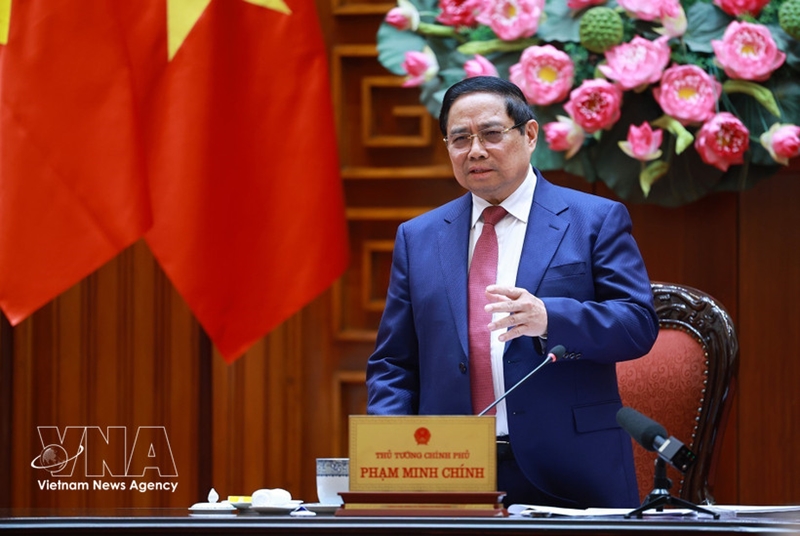
Prime Minister Pham Minh Chinh addresses the meeting. |
The PM commended ministries and agencies for responding promptly and effectively to developments, helping to maintain energy security.
He said that to respond to the situation, the Government has issued a resolution outlining 10 key solutions, promoted energy diplomacy and directed increased exploitation of oil, gas and coal resources, while regulating hydropower reservoirs to support electricity generation.
Participants hailed the Government's timely, flexible and effective measures to ensure domestic energy security, noting that the PM conducted diplomatic engagements with leaders of several countries and worked with ambassadors in Vietnam to seek support in maintaining stable energy supplies.
Following the PM's directions, ministries and agencies have drawn on the petrol price stabilization fund and adjusted taxes to help stabilize prices, while State-owned groups have increased the supply of petrol, coal, electricity and gas. Efforts have also been stepped up to promote energy transition, encourage energy conservation and strengthen inspections to prevent smuggling, hoarding and speculation in petrol trading.
Participants assessed that the Middle East conflict is likely to persist, continuing to affect global energy supply chains and potentially pushing up oil prices, which could impact domestic supply and prices. In addition to current measures, longer-term solutions are therefore needed to ensure stable petrol supplies for production, consumption and socio-economic development.
Looking ahead, PM Pham Minh Chinh requested solutions to ensure six key objectives - preventing energy shortages for production and consumption; avoiding disruptions in energy supply chains; maintaining political stability and social order; restructuring energy production and distribution to adapt to changing conditions; strengthening strategic energy reserves; and diversifying markets, products and supply sources.
Emphasizing the principle of closely monitoring developments and responding flexibly and effectively, the Government leader assigned 11 tasks to ministries, sectors, localities and enterprises to achieve these objectives.
The Ministry of Industry and Trade and relevant agencies were tasked with ensuring energy supplies for socio-economic development and preventing petrol shortages under any circumstances, while maintaining stable refinery operations, securing crude oil imports and promoting the early production and use of E10 petrol in accordance with the Government’s Resolution 36.
The Ministry of Finance was asked to coordinate with the Ministry of Industry and Trade to manage petrol prices in line with global market movements and flexibly use the petrol price stabilization fund, while stepping up measures to combat smuggling, hoarding and price manipulation and studying possible adjustments to taxes and fees if global oil prices remain high.
Relevant ministries and authorities were also instructed to strengthen inspections of petrol trading activities, ensure adequate fuel supplies for electricity production, expand cooperation with international partners to secure fuel imports, facilitate access to capital for energy enterprises and promote technological solutions to improve energy efficiency and reduce reliance on fossil fuels.
PM Pham Minh Chinh also stressed the need to strengthen communications to provide accurate and timely information, prevent public concern and counter misinformation. The Ministries of Culture, Sports and Tourism; Industry and Trade; and Finance were tasked with holding press briefings every five days to update the media and the public on developments.
He also agreed in principle to consider proposals from businesses regarding petrol transport support while emphasizing the need to ensure the safety of Vietnamese vessels and crews and protect the country’s reputation.
Deputy PM Bui Thanh Son was assigned to continue directing the task force in addressing related issues and reporting matters beyond his authority to the PM for consideration.
Source: VNA