Behind these impressive figures lies the arduous journey of Viettel's telecommunications personnel, who have crossed mountains and forests to bring mobile connectivity to communities, opening up new opportunities for development in remote and disadvantaged areas.
Addressing needs on ground
Viet Nam's mobile network ranks among the world's leading networks in coverage, speed and affordability. It covers 99.7 percent of the population, above the global 4G average of 94 percent. Data costs just 0.08 USD per GB, ranking ninth worldwide, while mobile network speeds reach 230.31 Mbps, placing Viet Nam eighth globally, according to Cable.co.uk and Ookla's 2026 reports, respectively.
    |
 |
|
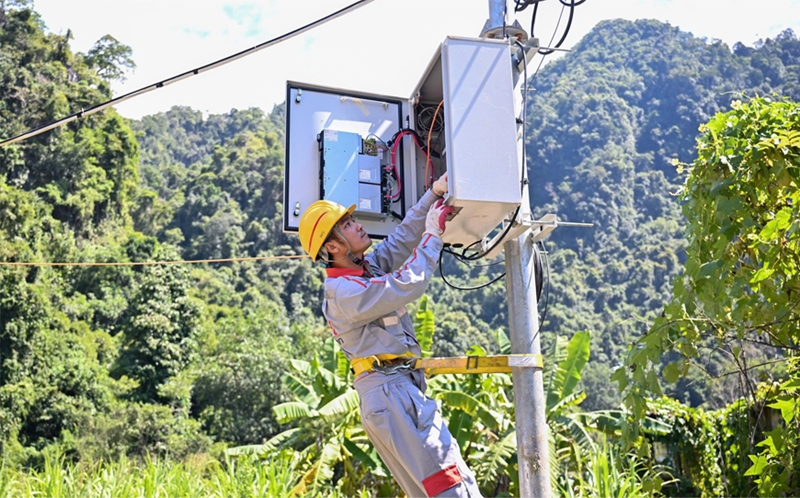
Viettel expands mobile coverage in remote and disadvantaged areas. (Photo provided by Viettel) |
Despite these achievements, many communities in remote and mountainous areas still lack access to reliable telecommunications services. According to the Ministry of Science and Technology, 215 villages nationwide remained without mobile coverage as of the end of the third quarter of 2026, mostly in remote areas. The issue was raised by National Assembly deputy Tran Nhat Minh of Nghe An province, who called for solutions to ensure stable connectivity for residents.
As digital transformation accelerates, connectivity is essential for communities to access information, knowledge and development opportunities. Addressing coverage gaps is therefore important not only for improving living standards but also for strengthening local security and social stability.
In response, Viettel launched a nationwide campaign in 2026 to expand mobile coverage in remote, border and disadvantaged areas. By October, the group had put 1,337 BTS stations into operation, eliminating 1,856 coverage gaps and completing the campaign two months ahead of schedule. The effort has helped expand telecommunications infrastructure, promote socio-economic development and ensure security and safety in remoted areas.
Improving people's life through better connectivity
As a mountainous border province with challenging terrain, Son La has many remote villages where building BTS stations is difficult due to limited transport access, power supplies and construction conditions. Recognizing the importance of digital infrastructure, provincial authorities have coordinated with local agencies and residents to support Viettel's efforts to expand mobile coverage.
The campaign reached completion two months ahead of schedule when the 1,337th BTS station was put into operation in Co Hay village, Son La province. In the province alone, 246 stations now provide coverage to 348 previously underserved villages and residential communities, benefiting tens of thousands of people, including those in areas with only 50 to 150 people.
In Lang Son province, mobile connectivity is also making a practical difference in disaster-prone areas. In Lan Dat village, which is isolated for up to three months during the rainy season, local people can now receive disaster warnings and call for rescue assistance thanks to mobile coverage.
Viettel's completion of 1,337 new BTS stations marks a significant step in eliminating mobile coverage gaps and bringing knowledge and development opportunities to communities across the country. However, this is only the beginning.
As Viet Nam's leading telecommunications operator, Viettel considers expanding coverage to disadvantaged and sparsely populated areas part of its responsibility to ensure that everyone has access to information and digital services. In the coming period, the group will continue targeting residential communities of fewer than 50 people that remain without mobile coverage, while seeking infrastructure solutions suited to the specific conditions of each area to close the remaining connectivity gaps.
Translated by Quynh Oanh