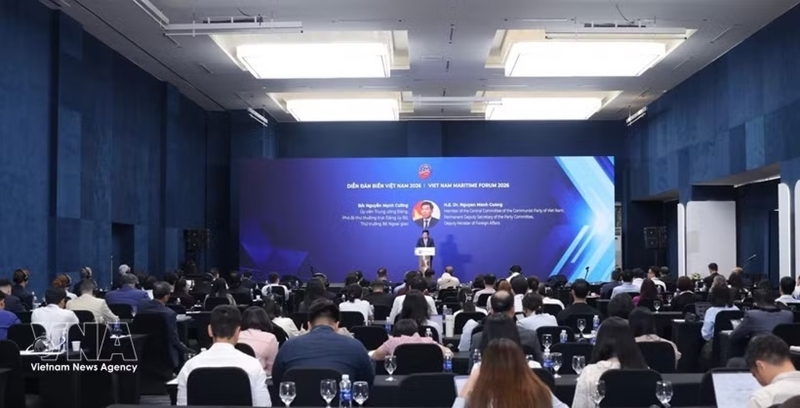
Organized by the Diplomatic Academy of Viet Nam under the Ministry of Foreign Affairs, the forum featured more than 20 presentations and dozens of exchanges and policy suggestions across thematic sessions.
    |
 |
|
The Viet Nam Sea Forum 2026 wraps up in Hanoi on October 2. |
The sessions focused on mobilizing resources and strengthening international connectivity for sustainable marine development, science, technology and marine governance in the new era, and enhancing international cooperation to protect the environment and promote the values of coastal communities.
Cuong praised the substantive discussions, saying that they highlighted a clear requirement that international cooperation must be translated into Viet Nam’s own capabilities. External capital, technology and knowledge can become sources of maritime strength only when they help develop domestic human resources, data, processes and self-operating capacity, he said.
The official highlighted four key points from the forum.
First, international cooperation and integration are pillars of promoting maritime strength. As maritime challenges become increasingly complex and transboundary, no country can address them through unilateral action. Advantages in regional maritime geography are conditions, rather than outcomes. Geographical position becomes a strategic position only when it is translated into concrete contributions and functions that Viet Nam can perform effectively, he noted.
Second, international cooperation and integration should be transformed into resources for developing a green, modern and globally competitive marine economy. Viet Nam needs to take a more pro-active role in shaping cooperation and selecting projects that attract investment, facilitate technology transfer, develop human resources and strengthen linkages with domestic enterprises.
Third, science, technology, innovation and marine data should serve as foundations for modern marine governance, Cuong said. Marine data and knowledge are becoming strategic resources for governance, forecasting and policymaking. Scientific and technological cooperation should go beyond academic exchanges to generate technologies, products, governance models and new capabilities for Viet Nam.
Fourth, people, communities, businesses and ecosystems should be placed at the center of international cooperation and integration for a sustainable marine space, he said. International cooperation should help local people access green technologies, support businesses in meeting international standards and create sustainable livelihoods, while promoting maritime culture as a soft resource connecting Viet Nam with the world.
According to the official, international cooperation should strengthen domestic capacity, enabling Viet Nam to make more practical contributions to the region and the international community. A stronger maritime Viet Nam must also contribute more to peace, cooperation and sustainable development, he stressed.
The Deputy Minister expressed hope that the forum’s discussions would lead to more research programs, policy projects and cooperation initiatives with partners.
The Ministry of Foreign Affairs will fully review the opinions and coordinate with ministries, sectors and localities to consolidate recommendations for submission to competent authorities in support of the implementation of Resolution No.20-NQ/TW, while connecting specific proposals with interested partners, he said.
The ministry will also study making the Viet Nam Maritime Forum an annual event and a channel for policy consultation and cooperation connectivity accompanying the implementation of the resolution, he added.
Source: VNA