In an interview with Viet Nam News Agency (VNA) correspondents in Berlin, Alexander Schonl, CEO, Founder & Principal Microsoft Dynamics 365 Business Central Advisor at Solid Scale Solutions, based in Bavaria, said Germany has a strong small- and medium-sized enterprise (SME) sector that is accelerating digital transformation and increasingly seeking to connect business operations on digital platforms.
Germany is facing a shortage of nearly 80,000 IT specialists, increasing demand for professionals who can combine technical expertise with a strong understanding of business processes.
    |
 |
|
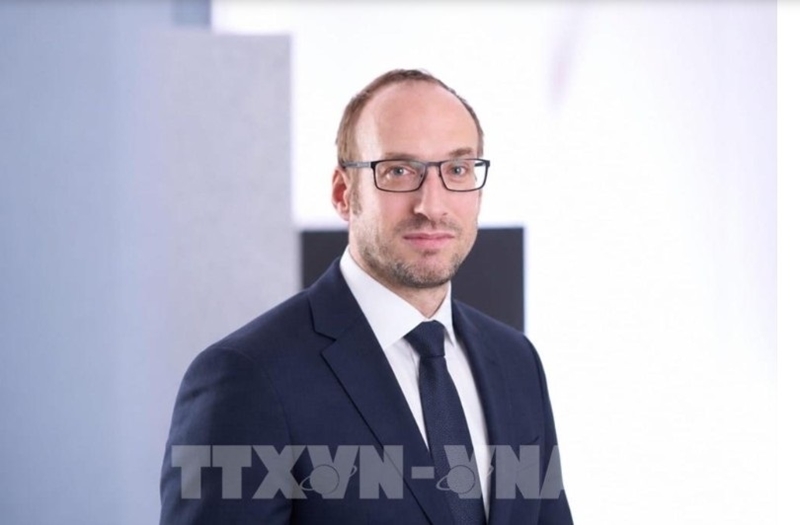
Alexander Schönl, CEO, founder, and senior advisor for Microsoft Dynamics 365 Business Central at Solid Scale Solutions, based in Bavaria, Germany |
He noted that Viet Nam has increasingly skilled STEM (science, technology, engineering and mathematics) human resources, as well as considerable experience in delivering IT services to international clients.
Beyond technical capabilities, Schonl highlighted the importance of cultural understanding and mutual trust between the two countries. Viet Nam-Germany economic ties have been strengthened over decades through trade, the growing presence of German businesses in Viet Nam and the increasingly vibrant Vietnamese community in Germany.
Citing German education statistics, he said that in the 2013-2014 school year, about 64% of students of Vietnamese origin attended Gymnasium schools, compared with around 47% of German students. He described this as an important human-resource foundation, noting that strategic technology partnerships ultimately rely on expertise and mutual trust.
In practice, German companies are no longer working with Vietnamese teams only on basic software outsourcing, but are increasingly engaging them in software engineering, product development and other more complex technology work.
Against this backdrop, the expert said the key question is no longer whether Viet Nam has sufficient technical capabilities, but how Vietnamese businesses can move further up the value chain. Instead of simply receiving a specific development task and delivering the product, companies should understand their customers’ operations, jointly identify problems, develop solutions, and gradually take responsibility for outcomes, he said.
From the perspective of German businesses, customers are not simply looking for additional programmers. They need partners with technical expertise and business knowledge, strong legal compliance, high cybersecurity standards, transparent communication and the ability to build long-term relationships.
This is particularly important in enterprise resource planning (ERP) system implementation projects, where technology is directly linked to core business operations.
To gain deeper access to the German market, Vietnamese companies should therefore understand customers, compliance requirements and sector-specific characteristics, while strengthening consulting and communication capabilities, Schonl said.
English can serve as a common language, but German proficiency is an advantage for positions involving regular consulting and direct customer interaction.
He suggested increasing joint consultancy projects, in which Vietnamese and German experts work together to implement projects while gaining practical experience. He said this approach is more effective than theoretical training or working entirely remotely, particularly as the time difference limits common working hours.
Schonl stressed that cooperation is a two-way process. While Vietnamese businesses need to gain a deeper understanding of the German market, German companies should also improve their understanding of Viet Nam’s business environment and culture.
On that basis, Vietnamese businesses can combine domestic technological capabilities with connections to customers in Germany, gradually shifting from manpower provision to technology partnerships and jointly solving business challenges, he added.
Source: VNA