The Tet atmosphere of different ethnic communities at the village is vividly conveyed through everyday life, where artisans personally conduct rituals, practice traditional crafts and present cultural traditions within the authentic spaces of their own communities.
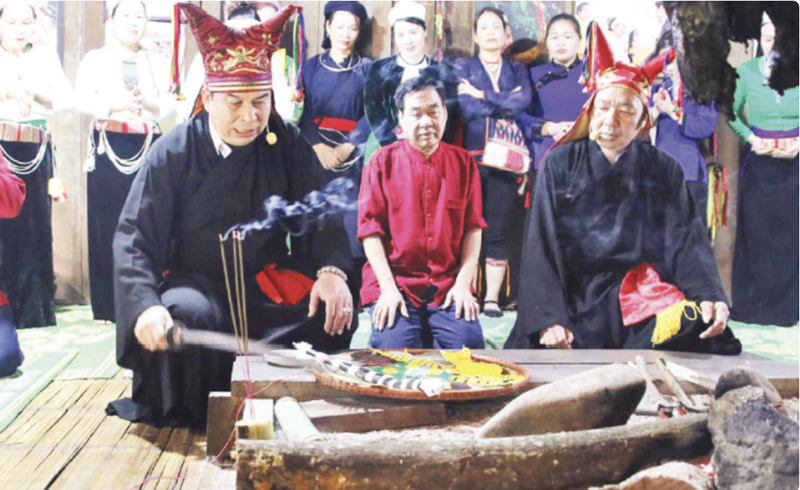
Each ethnic group brings its own unique Tet customs, creating a rich and colorful cultural mosaic. In the Muong ethnic village area, mornings begin with gentle smoke rising from stilt-house kitchens. The hearth is lit not only for warmth but also to prepare for the kitchen-spirit worship ritual, a significant spiritual practice in Muong cultural life.
    |
 |
|
A ritual to welcome the New Year of the Muong people in Phu Tho (Photo: nhandan.vn) |
For the Thai ethnic group in Moc Chau, Son La province, Tet cuisine is both a distinctive cultural feature and a source of pride. A notable dish traditionally prepared for Tet is ‘ga mo’, made from chicken combined with local ingredients such as banana blossom, ‘mac khen’ (Zanthoxylum rhetsa) and ‘doi’ seeds and mustard greens. According to artisans, the chicken is finely chopped, seasoned, wrapped in banana or ‘dong’ (Phrynium placentarium) leaves and then steamed for about an hour until tender. Alongside this dish, other traditional foods such as ‘banh chung’, grilled fish, colored sticky rice and smoked buffalo meat are also prepared. Visitors are able to watch the preparation process, take part in activities, sit by the fire and listen to stories about the Thai people’s Tet customs, creating a space for cultural exchange and connection between artisans and the public, as well as between tradition and contemporary life.
Similar festive scenes are taking place in other village areas, each reflecting the cultural identity of an ethnic group. Through direct interaction, guidance and storytelling, artisans help transmit cultural knowledge and practices, contributing to a vibrant and diverse Tet celebration.
According to artisans participating in the activities, the opportunity to introduce and share their cultural heritage has brought a strong sense of pride and responsibility in preserving and passing on ethnic traditions.
Trinh Ngoc Chung, Director of the Department of Culture of Vietnam’s Ethnic Groups under the Ministry of Culture, Sports and Tourism, emphasized that the activities at the village are not merely for display, but aim to create a genuine space for ethnic communities to interact, strengthen cultural bonds and promote national unity.
Statistics show that visitors to the village have increased steadily, reaching nearly 1 million in 2025, including a large proportion of students and international visitors.
Source: VNA