Closely intertwined with the four major Muong regions, Bi, Vang, Thang and Dong, the event served as an occasion to honor the pioneers who founded the land and to pay tribute to the deities believed to protect local communities.
Held on a provincial scale, the Khai Ha Festival 2026 not only affirmed the enduring vitality of Muong cultural heritage but also showcased the convergence, inheritance and diffusion of ethnic cultural values upon their ancestral land.
    |
 |
|
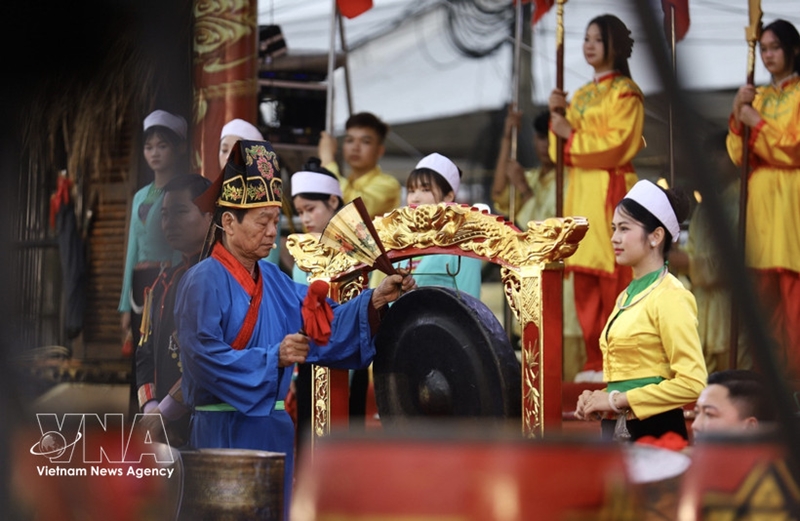
The ritual of praying for a good harvest is performed at the festival |
Beyond its spiritual significance, it has evolved into a distinctive cultural tourism product. Through a wide range of cultural, artistic, sporting and folk-game activities, residents and visitors alike help promote the image of Phu Tho and its people.
The festival embodies hopes for favorable weather, abundant harvests, prosperity and happiness in the year ahead. It also helps rekindle patriotism and ethnic pride, raising public awareness of the importance of preserving Muong cultural heritage.
Taking place over three days from February 22-24, the 2026 event harmoniously blended solemn rituals with vibrant festivities. The ceremonial segment featured offerings to local deities and tutelary spirits, a palanquin procession, and traditional performances culminating in the early-spring ploughing ritual at Na Trung field, an iconic hallmark of the celebration.
The festive program was equally colorful, with activities including Muong traditional costume performances, cultural camp and heritage displays, ethnic cuisine showcases, volleyball tournaments and folk singing contests.
Experiential and demonstration activities highlighted brocade weaving, brewing ruou can (fermented rice wine), bamboo calendar-making, folk games and Muong folk songs. Notably, this year’s festival also featured performances of Xoan singing from Van Phu ward and Trong Quan singing from Song Lo commune, signature cultural heritage items of the ancestral land.
A highlight of the opening art program saw more than 400 artisans performing a Muong gong ensemble, followed by a nighttime bonfire celebration that added a striking flourish to the festivities.
Bui Thi Dung, a resident of Muong Bi commune, said locals take pride in their indigenous culture preserved across generations. Each spring, the festival is not only a ritual to pray for favorable weather and good harvests but also a moment for community bonding, ancestral remembrance and the celebration of ethnic identity.
Nguyen Tuan Anh, a visitor from Hanoi, said the festival left a strong impression as visitors could immerse themselves in a distinctive cultural space, join folk games, enjoy traditional cuisine and learn about legends of Muong Bi, the cradle of Muong culture. He expressed his hope that the festival will continue to be preserved and widely promoted, becoming a signature cultural tourism highlight of the locality every spring.
Source: VNA