Since joining UNESCO’s Creative Cities Network in the field of design in October 2019, Hanoi has entered a crucial phase of transformation in its development mindset. Over four editions, the Hanoi Creative Design Festival has evolved from a standalone cultural event into a platform for testing new models that bring together heritage, community, and creativity within the economic sphere.
    |
 |
|
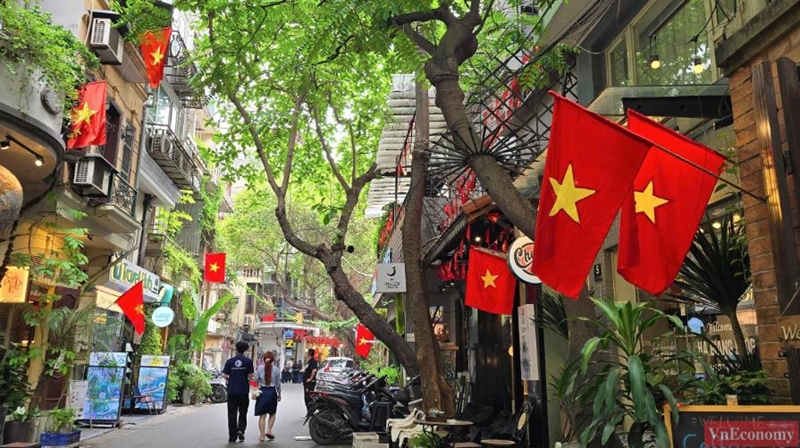
Hanoi turns heritage into engine of creative economy. (Photo for illustration: vneconomy.vn) |
The festival has helped revive a number of heritage sites once neglected and foster a growing network of creative spaces. From the Gia Lam train factory to historical areas across the capital, heritage is increasingly seen as an open resource capable of generating new value when reinterpreted in contemporary contexts.
Seeking to elevate creative design activities, Hanoi has decided to hold the Creative Design Festival on a biennial basis, while shifting its focus from organizing events to building an “urban creative ecosystem.” Activity frameworks are announced early to encourage proactive participation, alongside mechanisms to recognize outstanding models, individuals and businesses.
From festival to creative ecosystem
Speaking at the launch of the framework of activities for the 2026 Hanoi Creative Design Festival on December 11, Vice Chairwoman of the municipal People’s Committee Vu Thu Ha said the city aims to turn projects and ideas that draw on cultural values, tangible and intangible heritage, and traditional craft villages into creative initiatives with commercial potential and long-term development, linking cultural preservation with innovation and economic growth.
The 2026 edition is positioned as a hub for connection, dialogue, and experimentation of creative economic models, with activities running from January to November 2026 across the city. A key feature of this edition lies in its spatial organization based on layered values, reflecting a creative development mindset closely tied to the urban and heritage context.
The heritage space, centered on Dong Xuan Market, Bac Qua, and the Dong Xuan Cultural Industries Center, has been designated as the core area. Here, designers, creators, and artisans will collaborate in installations and pilot cultural and commercial models, linking artisans, designers, and traders to form heritage - creativity - commerce experience routes. The move aims to transform a traditional market into a creative economic space suited to a modern city.
The “Ke Cho” space, spanning Hanoi’s Old Quarter and its historic 36 streets, seeks to revive the traditional structure of “market - street - craft” through creative trade streets linked to specific cultural industries, alongside educational and hands-on activities for students and young people.
Meanwhile, the ecological space on the Red River alluvial area is envisioned as a pilot area for an “urban - ecological symbiosis” model, prioritizing landscape art, local materials, circular design and seasonal experiences.
In mid-December, the municipal People’s Committee also launched the Hanoi Creative Space Network.
UNESCO Chief Representative in Vietnam Jonathan Wallace Baker said the shift from a festival-based approach to building a creative ecosystem will create sustainable opportunities for designers, artists, creative businesses, students and communities, adding that UNESCO strongly supports Hanoi’s long-term vision of creativity.
Source: VNA