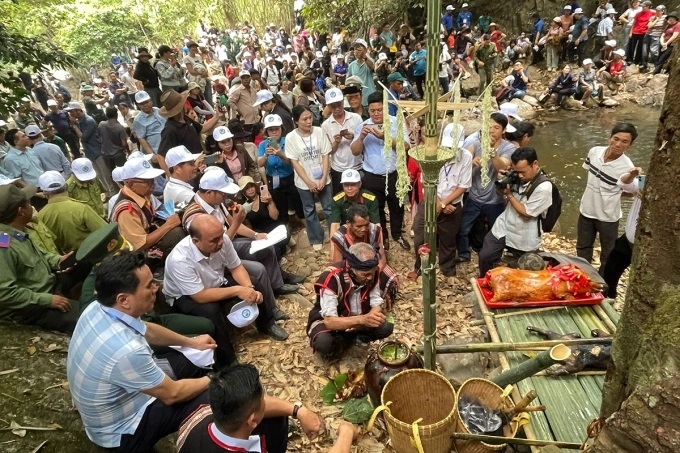
People from O Grang and De Chi villages in Gao commune carried meat, jars, pigs, chickens, and bamboo-tube rice up Ia Cor Mountain, about 3km from the commune center, to prepare for the ceremony. This year’s ritual was conducted by village elders Puih Long and Siu Toi.
    |
 |
|
The forest thanksgiving ritual performed by village elders Puih Long and Siu Toi |
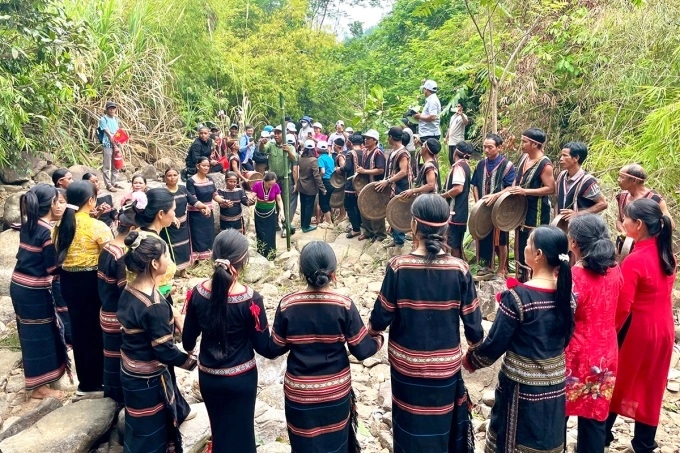
The ceremony lasted about 20 minutes, expressing hopes for a year of good fortune, peace, and freedom from illness. Afterwards, villagers shared grilled meat and bamboo-tube rice, traditional dishes of the Jarai people, and performed the xoang dance beneath the forest canopy.
Village elder Puih Long said the tradition helps raise awareness among residents of forest protection, discouraging illegal logging, encouraging tree planting, and educating younger generations to be grateful for and protect the forest like they protect their own lives.
The forest worship ritual of the Jrai people in the Central Highlands is a long-standing tradition passed down through generations, closely tied to animistic beliefs. The ceremony is usually held in spring (around March–April) to give thanks to the forest deity (Giang) for safeguarding the village and to pray for favorable weather. According to the beliefs of Central Highlands ethnic communities, the forest is the “home” of deities who protect villagers from natural disasters.
|
|
 |
|
Villagers share food and perform the xoang dance in the forest. |
Siu Thunh, Vice Chairman of the Gao commune People’s Committee, said the ritual not only helps preserve and promote the community’s traditional cultural values, but also raises awareness of forest conservation and sustainable environmental protection. The event also provides an opportunity to promote the local people, landscape, and unique cultural identity, in the first year Gia Lai has been selected to host the National Tourism Year.
Translated by Tran Hoai