April 26, 2026 | 22:58 (GMT+7)
Five ancient stone axes discovered in Phong Nha - Ke Bang National Park
Five ancient stone axes believed to date back thousands of years have been discovered in En Cave within Phong Nha – Ke Bang National Park complex in Central Vietnam, according to the Department of Culture, Sports and Tourism of Quang Tri province.
These stone axes were subsequently presented to the Quang Tri Museum and the Hanoi Museum for research, preservation and display, contributing to promoting cultural and historical values of the Quang Tri land.
    |
 |
|
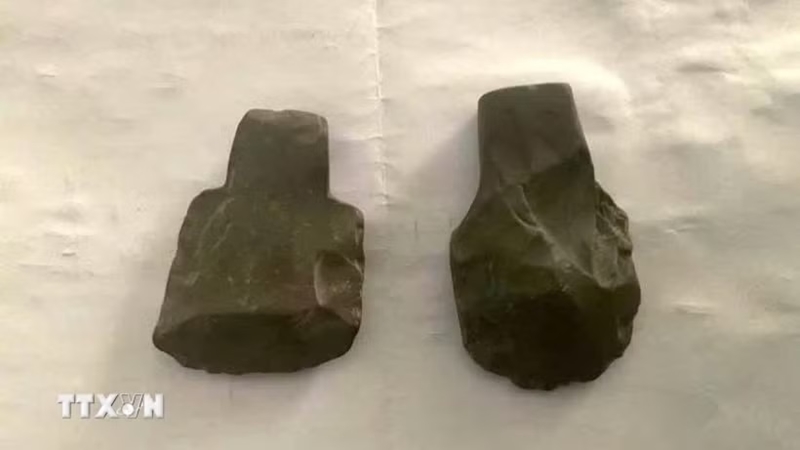
Ancient stone axes discovered in Phong Nha - Ke Bang National Park |
Previously, an expedition team led by Dr. Howard Limbert, a British cave expert and member of the Royal British Cave Association, discovered the five stone axes in En Cave, one of the world's largest caves in Phong Nha - Ke Bang National Park. The artifacts found in a sediment layer showing signs of water disturbance indicated they belong to an ancient cultural layer.
Initial assessments suggest the stone axes date back around 6,000 – 8,000 years to the Neolithic period and are associated with the Bau Tro Culture.
Made from siliceous stone, the tools include sloping-shoulder and broad-shouldered axe types, showing signs of prolonged use by early inhabitants.
Experts said the findings provide further evidence of early human activity inside the cave systems of Phong Nha–Ke Bang, a UNESCO-recognized World Heritage site known for its extensive karst formations and archaeological significance.
The discovery adds to a growing body of artefacts uncovered in the region, including metal objects, bronze axe molds linked to the Dong Son Culture, bronze Buddha statues, and ancient Cham inscriptions in caves, highlighting long-term human presence and cultural development in Central Vietnam.
Source: VNA