Among them are several large caves with complex structures and high scientific value, including Thien Cung Cave, measuring 4,206 meters – the longest cave identified during the survey, Nuoc Lan Cave (2,721 meters), Ma Dom Cave (1,257 meters) and Cha Ngheo Cave (583 meters).
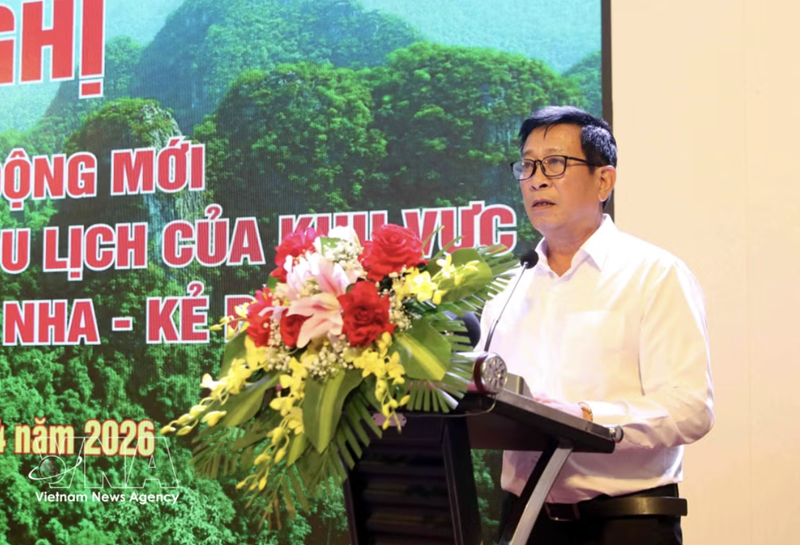
Speaking at the announcement of the survey results on April 24, Pham Hong Thai, Director of the park, said the discoveries affirm the exceptional value of the area’s cave system. They also add important data for geological and geomorphological research, serving both scientific study and the development of sustainable tourism.
    |
 |
|
Pham Hong Thai, Director of Phong Nha - Ke Bang National Park, speaks at the announcement of the survey results on April 24. |
The survey was conducted from March 21 to April 11 with 10 British cave experts, supported by local guides and residents. It covered multiple areas within the park and its buffer zone, revealing considerable potential for further exploration and tourism development.
Results show the cave system has developed strongly in karst terrain, featuring both deep vertical caves and extensive horizontal networks. These characteristics reinforce the site’s outstanding universal value, recognized by UNESCO under criteria related to geology, geomorphology and biodiversity.
Notably, in strictly protected sub-zone 2 in Kim Dien commune, Cha Ngheo Cave has been identified as a deep vertical shaft cave with a waterfall and an underground stream system beneath. In Sinh Ton valley, the discovery of the entrance to Thien Cung Cave is considered particularly significant, as it may represent an ancient flow route of the Hang Toi River and has hydrological links with the Chay River.
In Kim Phu commune, a chain of three caves with underground streams was recorded behind Ruc Mon Cave, including one suitable for adventure tourism. Mo Roo Cave, around 500 meters long, is considered favorable for tourism thanks to its accessibility and scenic features. Meanwhile, Nuoc Lan Cave shows seasonal water flow, offering prospects for further karst hydrology research.
The survey team also recommended improvements to existing tourism activities, including adjustments to lighting systems at the Son Boi cave cluster to enhance safety and visitor experience, and stronger connectivity between attractions.
Often dubbed the “Kingdom of Caves”, Phong Nha - Ke Bang National Park is home to more than 425 known caves, around 50 of which are open to tourism. Among its most famous is Son Doong Cave, located in the park’s core zone and renowned as the biggest cave in the world, complete with an underground river system and its own climate.
The 2026 survey marks a significant step in research, conservation and heritage promotion, opening up new opportunities for sustainable tourism development in the park.
Source: VNA