Resolution No.80-NQ/TW of the Politburo on the development of Vietnamese culture recognizes it not only as a spiritual foundation but also as an intrinsic resource directly driving economic growth and enhancing national standing, while opening up a new development space in which culture is central to the broader ecosystem.
Economic thinking in cultural development
Assoc. Prof., Dr. Nguyen Thanh Nam from the Hanoi University of Culture says the resolution takes a clear economic approach to cultural development as Vietnam moves into a new stage. It focuses on setting goals for culture’s role in the economy, growing cultural industries, connecting culture with tourism and heritage-based economic growth, evaluating culture’s overall economic value, mobilizing resources and financial policies, and promoting a digital economy tied to culture.
    |
 |
|
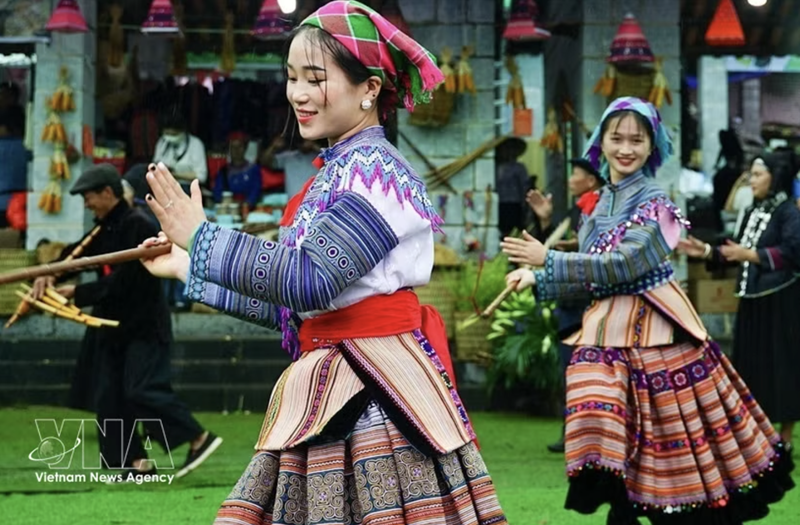
A dance performance by members of the H'mong ethnic group at the “Great National Unity Festival” of ethnic communities at the Vietnam National Village for Ethnic Culture and Tourism. |
Resolution 80 views culture as an “asset” capable of generating returns and contributing to national economic development, with a target for cultural industries to account for 7% of GDP by 2030 and for culture to become a key export sector.
The resolution also underscores the importance of public investment in culture, stipulating that at least 2% of total annual state budget expenditure be allocated to this sector, with gradual increases based on practical needs. It further highlights preferential economic policies, including land incentives and corporate income tax exemptions or reductions for start-ups in the cultural sector.
Nam noted that Resolution 80 marks a significant turning point in concretizing the cultural economy model and embedding economic thinking into cultural development in Vietnam. Compared with Resolution No.33-NQ/TW (2014), which primarily focused on building people and cultural environments, Resolution 80 introduces a more practical and market-oriented approach. Whereas earlier policies largely regarded culture as a “spiritual foundation” and public good, the new framework emphasizes that culture must generate GDP, profits and export value.
Cultural industries, first mentioned in Resolution 33, are now identified as a breakthrough development strategy in the knowledge-based economy. Notably, Resolution 80 promotes a strong “public investment – private governance” model, in which the State sets direction and establishes mechanisms, mobilizing financial resources and creativity from the private sector and multinational corporations.
He also stressed that meeting the resolution’s objectives will require a new generation of cultural human resources – managers, professionals, creators and designers – who possess both a deep understanding of cultural identity and strong technological and economic management skills.
Cultural ecosystem approach
According to Pham Thanh Tinh, Chairman of the Southeast Asian Research Association of Vietnam, the introduction of the concept of a “cultural ecosystem” in Resolution 80 represents a pivotal shift in strategic thinking.
Previously, culture was often treated as a relatively independent field associated with preservation, education and artistic activities. The new resolution, however, restores culture to its broader role, not merely as a spiritual foundation but as a dynamic system capable of interaction, diffusion, and value creation across the entire national development structure.
|
|
 |
|
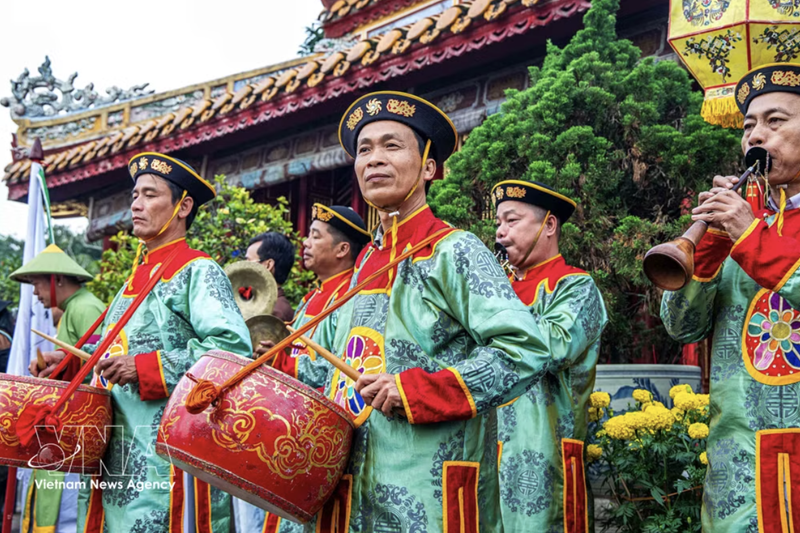
A performance of Nha Nhac (Vietnamese court music) |
The key breakthrough lies in moving from a “single-sector” mindset to an interdisciplinary and ecosystem-based approach. Culture is no longer positioned alongside the economy, science or education, but rather acts as a connective force shaping and driving these sectors. This shift is particularly relevant in today’s context, where development challenges are increasingly complex and require integrated solutions.
As heritage goes digital and traditional values find their way into tourism, education, and creative industries, culture starts creating real, measurable value for the economy.
From an external perspective, in an increasingly interconnected region, cultural diplomacy linked with innovation is expected to become a key pillar enabling Vietnam to engage more deeply in multilateral cooperation networks.
To put Resolution 80 into action, the association will focus on three main areas: creating interdisciplinary knowledge ecosystems that connect culture with the creative economy, education, technology, and public policy; building regional networks and strengthening collaboration with research institutes, universities, and international organizations; and promoting culture as a key driver of innovation, from creative economy models and cultural industries to tech applications in preserving and showcasing heritage.
With Resolution 80, Vietnam now has a clear strategic orientation to transform culture into a driver of sustainable development, supporting the country’s continued progress and strengthening its position regionally and globally.
Source: VNA