Held under the theme “From Diverse Traditions to a Living Global Heritage,” the forum served as a high-level international dialogue on coffee as a “living heritage” capable of connecting people, communities, and civilizations while becoming a shared symbol of harmony, creativity, and sustainable development.
    |
 |
|
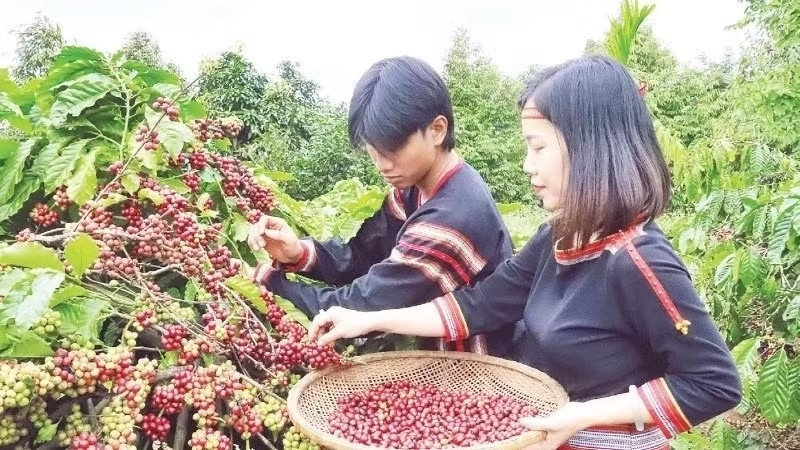
In March 2025, the Ministry of Culture, Sports and Tourism recognizes “the knowledge of coffee cultivation and processing in Dak Lak” as a national intangible cultural heritage. (Photo: nhandan.vn) |
Nearly 40 research papers and presentations from Vietnamese and international scholars and experts were featured at the event, covering topics ranging from economics, culture, and heritage to processing technology, global value chains, and sustainability. Discussions were organized around four key themes: the history of global coffee, coffee cultivation and production, global coffee consumption culture and the evolution of coffee heritage, and best practices in conservation and sustainable development.
During sessions on cultivation and production, delegates highlighted the coffee ecosystem as a combination of indigenous knowledge, cultural landscapes, and community livelihoods. Discussions also focused on the global coffee value chain, the social responsibility of the coffee sector, and strategies to position Dak Lak as a global coffee hub while advancing efforts to have Vietnam’s coffee cultural landscape recognized by UNESCO and support green transition goals.
At discussions on coffee consumption culture and heritage development, speakers emphasized that coffee goes beyond being a consumer product, serving instead as a cultural space for interaction, dialogue, and creativity. Digital technology, they noted, is helping redefine coffee as a “living heritage” with growing influence in modern life.
The forum also shared successful conservation and sustainable development models from Thailand, alongside approaches by the Food and Agriculture Organization of the United Nations (FAO) to building sustainable coffee systems that balance livelihoods and environmental protection. Delegates clarified UNESCO standards for “good safeguarding practices,” stressing the central role of communities in preserving, passing on, and promoting heritage while creating sustainable livelihoods.
Participants agreed that coffee should be regarded not only as an agricultural commodity or economic sector, but also as a “living heritage” and cultural space that embodies knowledge, customs, lifestyles, and spiritual values passed down through generations.
Beyond the story of a crop, coffee’s history is also one of trade, cultural exchange, creativity, and aspirations for development. Vietnam holds a distinctive position as one of the world’s leading coffee producers and exporters, with favorable conditions for nurturing a rich and unique coffee culture. In Buon Ma Thuot, coffee is deeply rooted in indigenous knowledge systems covering cultivation, harvesting, processing, enjoyment, cultural practices, and community life, values that continue to shape a vibrant living heritage.
In March 2025, the Ministry of Culture, Sports and Tourism recognized “the knowledge of coffee cultivation and processing in Dak Lak” as a national intangible cultural heritage. The recognition affirmed the heritage’s historical depth, cultural vitality, and community significance.
Standing Deputy Minister of Foreign Affairs Nguyen Minh Vu said introducing Dak Lak’s coffee cultivation and processing heritage to the international community will help promote the image of the Central Highlands and its people, strengthen multicultural dialogue, and enhance the added value of Vietnam’s coffee industry, gradually reinforcing the country’s standing on the global coffee map.
Source: VNA