Resolution No.80-NQ/TW issued by the Politburo on developing Vietnamese culture sets the goal of turning Vietnam into a compelling venue for regional and world-class cultural and artistic events, highlighting the selective absorption of global cultural achievements. The policy contributes not only to cultural development but also to tourism growth, economic expansion and national branding.
A meeting place for global cultural excellence
Vietnam’s cultural scene has become more vibrant with the regular presence of international-standard performances.
From March 25–27, the Russian State Ballet staged The Nutcracker and Romeo and Juliet at Ho Guom Theatre, reflecting the rising appeal of Vietnam’s performing arts market. Artistic Director Viktor Davydov praised Vietnamese audiences for their warmth and enthusiasm, describing them as evidence of increasingly refined artistic tastes.
Earlier, the dance drama Peacock, choreographed by China’s Yang Liping, received strong public and critical acclaim in Hanoi, demonstrating growing demand for high-quality performances and signaling Vietnam’s emergence as a dynamic space for classical and contemporary arts.
    |
 |
|
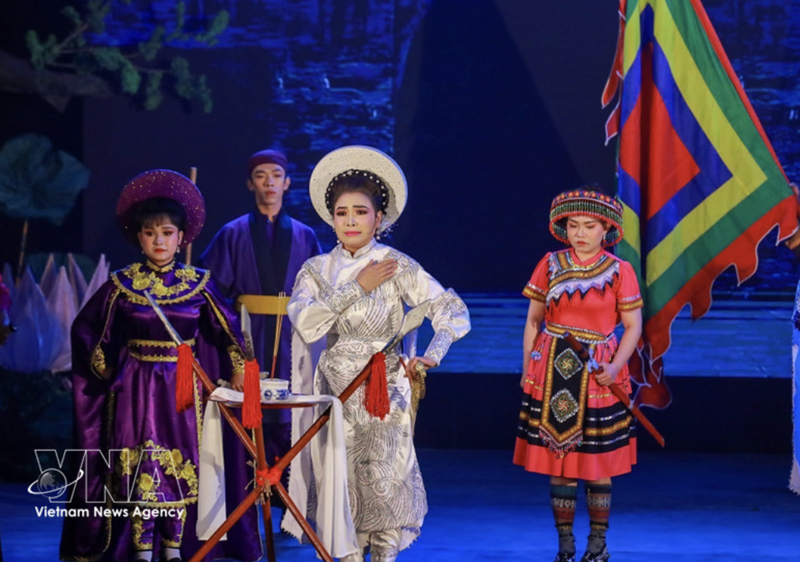
A performance by the Vam Co Cai Luong Art Troupe (Tay Ninh) during an art program on March 9, 2026 in Hanoi |
International exchanges have expanded through concerts and cultural programs such as Hungary – Vietnam: A Symphonic Dialogue, The Russian Soul in Vietnam, and performances by orchestras from Austria, Germany and Italy. Major events including the Hanoi International Film Festival, the Da Nang Asian Film Festival and international theatre festivals have further strengthened cultural connectivity, positioning Vietnam as a lively hub for artistic dialogue and creative exchange.
Collaborations among Vietnamese and international artists have fostered meaningful cultural interaction, deepening global integration while promoting mutual understanding among nations.
A strategic vision
Experts note that the growing presence of international performances reflects sustained cultural integration rather than a temporary trend. According to Meritorious Artist Phan Luong of the Vietnam National Opera and Ballet, Vietnamese audiences, particularly younger generations, are increasingly receptive to academic arts.
International performances also help domestic artists improve professional standards and provide valuable learning opportunities for arts students.
The development of Vietnam’s cultural life is closely aligned with strategic orientations set by the Party and State. Resolution No.80-NQ/TW identifies cultural integration as both a necessity and a driver for enhancing national capacity, prestige and soft power, outlining tasks including proactive international cultural cooperation and promotion of Vietnamese cultural values.
Experts view the resolution as marking a shift toward proactive and well-directed cultural integration. Selective absorption of global cultural achievements, if implemented strategically, can enrich national culture, stimulate creativity and support the development of distinctive cultural products.
The resolution positions culture as both a societal foundation and a pillar of external relations, calling for stronger cultural diplomacy, expanded international commitments and greater integration of cultural elements into economic and trade cooperation.
The success of international artistic programs highlights the growing appeal of Vietnam’s cultural market, the maturity of audiences and improved organizational capacity. More importantly, it affirms Vietnam’s gradual emergence as a cultural destination of global significance, with Resolution No.80 serving as a strategic guide for modern, internationally integrated cultural development grounded in national identity.
Source: VNA