Leveraging the advantages of a dynamic megacity, increasingly complete infrastructure, and a range of breakthrough mechanisms and policies, the city is steadily translating its aspiration of becoming a “mega tourism region” into reality. This strategy aims to enhance international competitiveness while creating sustainable development space for the future.
    |
 |
|
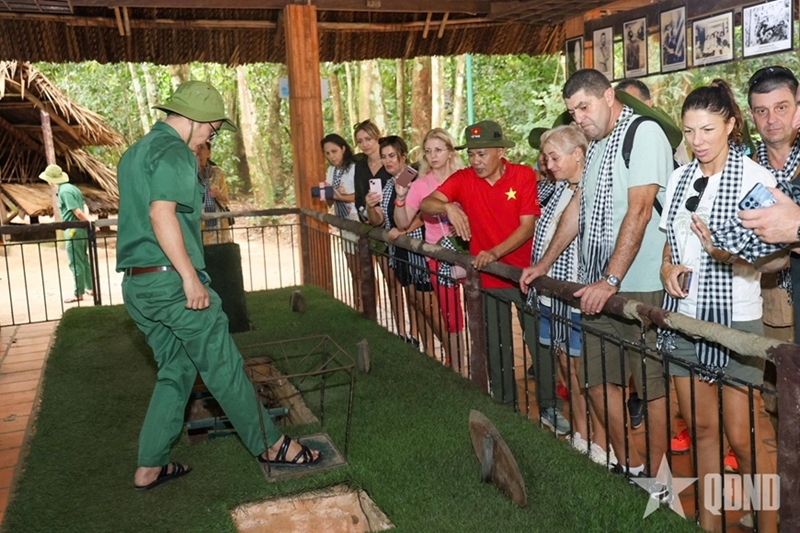
Foreign tourists visit and experience the Cu Chi Tunnels Historical Site. |
According to the Ho Chi Minh City Department of Tourism, all tourism development targets for 2025 all met or exceeded the set plan. The city welcomed more than 8.5 million international visitors, representing a year-on-year increase of 40.3 percent. Domestic arrivals reached nearly 45.6 million, up 20 percent, while total tourism revenue amounted to VND 278,566 billion, an increase of 45.8 percent. These figures underline the strong appeal of Ho Chi Minh City as a major, vibrant, and deeply integrated tourism hub.
Beyond quantitative growth, the city’s tourism sector has demonstrated clear qualitative improvements. Tourism products are being developed in a more structured and in-depth manner, with a stronger focus on cultural and historical values. At the same time, digital transformation and green transition are being actively promoted, contributing to the image of Ho Chi Minh City as a hospitable, humane, and increasingly attractive destination.
Nguyen Trung Khanh, Director of the Vietnam National Authority of Tourism, noted that Ho Chi Minh City continues to maintain its role as the core growth engine of national tourism. The city leads the country in international visitor arrivals and serves as a major center for international events, conferences, and exhibitions. In the context of administrative re-organization and the implementation of the two-tier local government model, the city’s tourism sector has shown strong adaptability, professionalism, and effective governance capacity.
|
|
 |
|
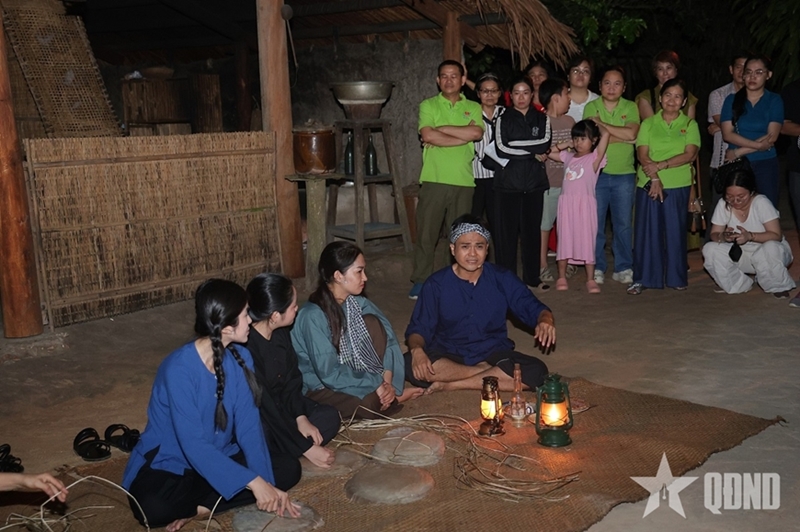
A night performance reenacts the daily life and combat of the people and armed forces of Cu Chi. |
The development space of the city is being expanded under a model of one center, three zones, and one special zone. Together with synchronized investment in strategic transport infrastructure, this approach has opened up new opportunities for tourism breakthroughs. It provides a solid foundation for diversifying tourism products, attracting high-spending visitors, extending length of stay, and increasing overall tourist expenditure.
According to Nguyen Van Dung, Vice Chairman of the Ho Chi Minh City People’s Committee, tourism is not merely a service industry, but also a matter of honor, the “face” of a civilized, modern, compassionate, and culturally rich city. Ho Chi Minh City is now well positioned to shape a “mega tourism region” stretching from the urban core to coastal areas, islands, mangrove forests, river-based landscapes, and high-tech agricultural ecosystems. This vision aims to create a seamless chain of tourism products that meet international standards, are competitive with leading regional destinations, and play a pioneering role in promoting green, sustainable, and digital tourism nationwide.
In line with the Prime Minister’s Dispatch No.34/CĐ-TTg on accelerating tourism development, the city’s tourism sector is shifting from extensive to intensive growth, and from administrative management to smart governance. Priority is being given to building a distinctive tourism ecosystem, accelerating the application of artificial intelligence, big data, and smart tourism solutions, developing a professional workforce that meets international standards, and strengthening regional linkages so that each ecological and urban space becomes a highlight in visitors’ journeys.
To implement these orientations, the Ho Chi Minh City Department of Tourism has planned 11 tourism promotion and marketing events throughout 2026, including the Ao Dai Festival, Tourism Day, River Festival, Summer Signature Program, International Travel Fair, Tourism Week, and the Ho Chi Minh City International Marathon. New products such as a Digital Culinary Passport, a Ho Chi Minh City Culinary Map, and digital food street models will also be introduced, linking on-site experiences with the night-time economy and digital platforms.
|
|
 |
|
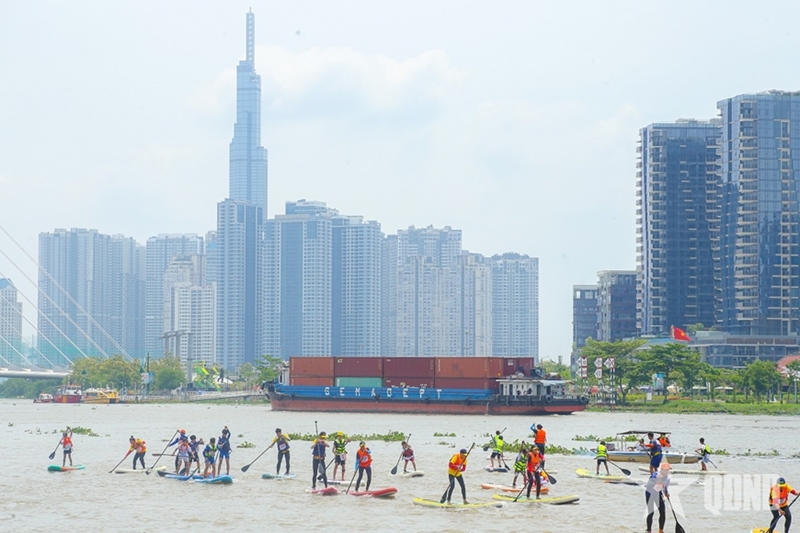
The first Ho Chi Minh City River Festival with the theme “The river tells stories” |
For international markets, the city is prioritizing business connections in key regions with strong growth potential and favorable air connectivity and visa policies. The tourism sector has set ambitious targets for 2026 of welcoming 11 million international visitors, 50 million domestic visitors, and generating a total tourism revenue of approximately VND 330 trillion.
Translated by Tran Hoai