The treasure is in transformation
As a thousand-year-old capital rich in cultural heritage, Hanoi possesses one of Vietnam’s most remarkable systems of historical and cultural sites. From the Imperial Citadel of Thang Long, the Temple of Literature, Hoa Lo Prison Relic to an extensive network of history, military and ethnology museums, each destination preserves a distinct perspective on Vietnam’s history throughout thousands of years of national construction and defense.
    |
 |
|
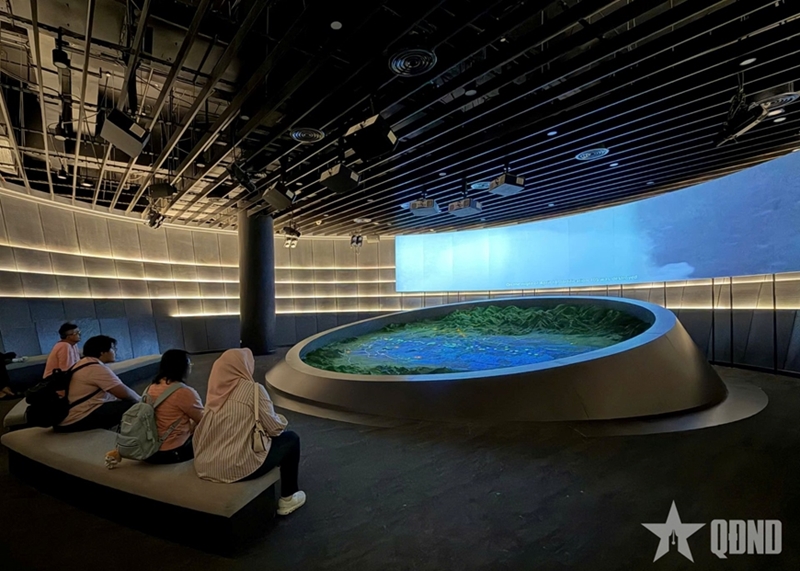
International visitors enjoy experiencing historical-event simulations through 3D mapping technology. |
For many years, historical sites in Hanoi were often regarded as “static spaces” dedicated to preserving artifacts and documents from the past. However, amidst the digital transformation trend in the tourism industry and the growing demand for immersive experiences among international visitors, many historical destinations in the capital are now proactively innovating the way they engage with the public through modern technology.
For many international tourists, technology serves as a “gateway” that helps them explore Vietnamese history in a more accessible and engaging way.
At the Vietnam Military History Museum, Jerome, a Canadian visitor who previously worked at a history museum, said he was particularly impressed by the combination of traditional artifacts and modern technology. According to him, the use of 3D technology, interactive screens and historical simulations allows visitors to absorb information more quickly, especially those not used to reading large amount of text in museums.
Beyond impressive projection technology, museums and historical sites in Hanoi are also helping visitors engage with history through multi-sensory experiences. Images, sound, reconstructed spaces and lighting effects make historical stories that once felt distant become far more vivid and immersive.
|
|
 |
|
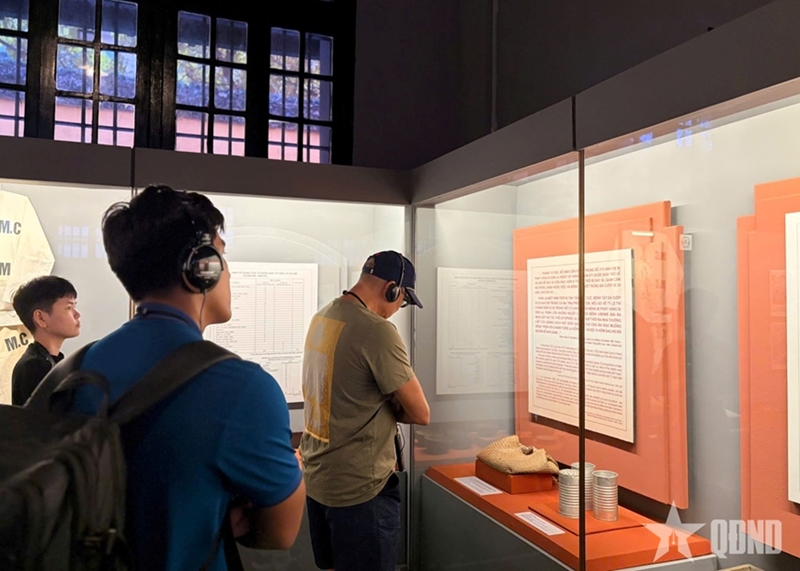
Foreign tourists visiting the Hoa Lo Prison Relic experience automated audio-guide devices. |
Franziska, a German tourist visiting the Hoa Lo Prison Relic, said the authentically reconstructed spaces combined with visual effects and audio-guide support left a strong impression on her.
Meanwhile, Katia, an Australian visitor, believed that the diversity of storytelling formats has made museums more appealing to international tourists. According to Katia, technology may not be the factor that creates the strongest emotions, but it helps historical stories be conveyed more effectively. “What truly creates emotion is still the historical story itself; however, technology helps viewers connect with that story more easily,” she said.
One of the most highly praised innovations is the multilingual automated audio-guide system. For international visitors, it serves as a valuable tool that allows them to explore history independently, at their own pace and in their preferred language, without relying entirely on tour guides. In addition, many tourists believe that the level of technological application at historical sites in Hanoi is approaching international standards. Jerome remarked that the exhibition quality at the Vietnam Military History Museum “can fully compare with national museums in Canada.” Such recognition demonstrates that technology does not diminish traditional historical values; instead, it is becoming a “new language” through which Vietnam tells its national story to the world.
|
|
 |
|
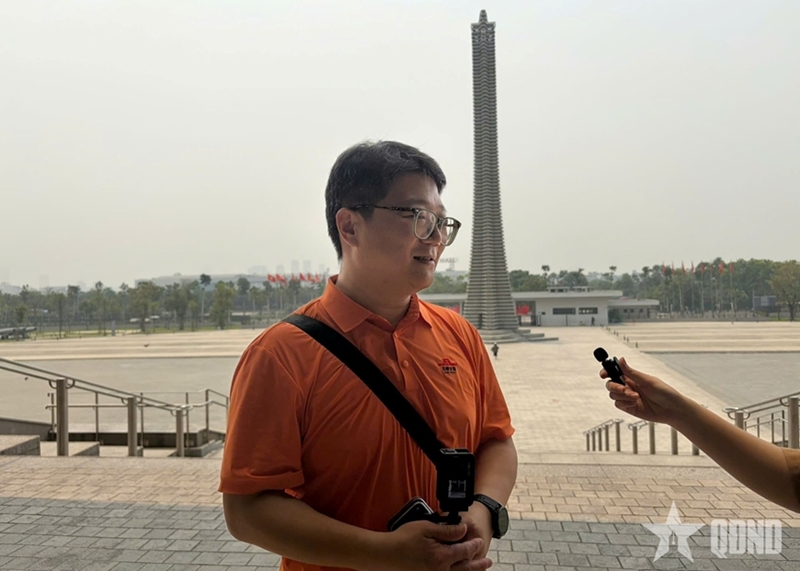
A Chinese tourist shares his impressions after visiting the Vietnam Military History Museum. |
Many visitors also noted that experiencing history through technology creates a much stronger emotional impact than simply reading documents or textbooks. When history is recreated through light, images, models and sound, it is no longer a series of dry lines of text but becomes an emotional experience, allowing historical memories to linger longer in the minds of viewers.
That is also why many international tourists now choose to visit museums and historical relics as an essential part of their journey to explore Vietnam, rather than focusing solely on leisure tourism or cuisine.
Development potential of historical tourism in digital era
Amidst the digital transformation process, the communication role of heritage management agencies is becoming increasingly important. Many museums and historical destinations in Hanoi are now proactively using digital platforms, social media, short-form videos and English-language websites to make information more accessible to international audiences.
|
|
 |
|
Jerome and his friend express excitement while sharing their experiences at the museum. |
National tourism promotion campaigns, tourism industry outreach activities and government policies encouraging digital transformation are also helping Vietnamese heritage gain broader exposure among the global community. The development of transportation infrastructure, online ticket-booking platforms, digital map applications and electronic payment systems has further made it easier for foreign visitors to explore historical sites in Hanoi. Many tourists interviewed commented that traveling, finding information and accessing historical attractions in the capital are now quite convenient.
In the future, the trend of combining historical tourism with technology is expected to continue growing strongly, particularly among younger generations of travelers who favor interactive and personalized experiences. Virtual reality (VR), artificial intelligence and digitized data may soon become common tools for recreating history at Vietnamese museums and heritage sites.
For many international visitors, experiences at Hanoi’s historical sites are not sightseeing tours but journeys into the depth of Vietnamese identity - a country marked by resilience, rich cultural character and continuous transformation in the modern era.
Translated by Quynh Oanh