The recipient, a 43-year-old man, had previously undergone partial removal of his penis at the hospital's Andrology Center. While he had recovered well over four years of treatment and maintained normal urinary function, the remaining tissue was too short for normal sexual activity, severely affecting his confidence and quality of life.
    |
 |
|
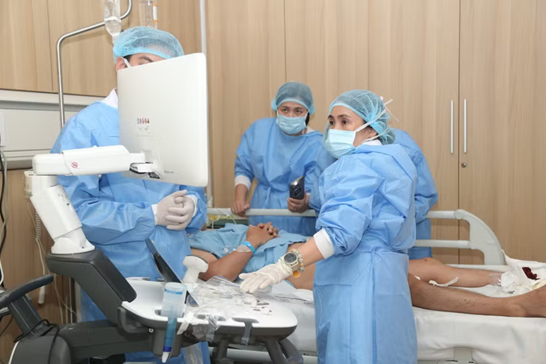
Vietnam's first penis transplant from a brain-dead donor is successfully performed at Viet Duc University Hospital. |
To restore both appearance and function, the patient underwent a thorough assessment by a multidisciplinary team. Doctors evaluated his medical condition, immune compatibility, psychological readiness and ethical considerations before determining that he was a suitable candidate for the transplant.
Assoc. Prof., Dr. Nguyen Quang, Director of the Andrology Center, said the surgery was technically demanding. Surgeons had to rebuild the urinary passage and erectile tissues while reconnecting tiny blood vessels and nerves using microsurgical techniques.
The operation brought together specialists in organ transplantation, andrology, microsurgery, anesthesia, intensive care, immunology and nursing, following modern transplant protocols aimed at ensuring both the survival of the transplanted tissue and the patient's long-term recovery.
Doctors said the achievement could open up new treatment options for patients who have lost the organ due to cancer, trauma or accidents, while demonstrating Vietnam's ability to perform highly advanced reconstructive transplant surgery.
Assoc. Prof., Dr. Duong Duc Hung, Director of Viet Duc University Hospital, said only five penis transplants have been documented worldwide, with the latest reported in 2018.
As the first operation of its kind in Vietnam, the hospital spent months developing treatment protocols, studying international experience and assembling a multidisciplinary team that included experts in transplantation, andrology, microsurgery, anesthesia, immunology and pathology.
The patient has shown encouraging progress since the operation. He remains fully conscious and in stable condition, with normal vital signs. Doctors said the surgical wound is healing well, no major early complications have been detected, and the patient is responding positively to anti-rejection treatment and post-operative care.
They cautioned, however, that additional follow-up is needed to evaluate the recovery of sensation and function, as well as the risk of tissue rejection over the medium and long term. The patient will continue to receive close monitoring to assess the transplant's long-term outcome and maximize functional recovery.
Hospital officials said the successful transplant provides a strong foundation for expanding advanced reconstructive transplant techniques in Vietnam, offering new hope to patients with severe injuries and conditions that previously had few effective treatment options.
Source: VNA