Issued on May 6, Directive No.17/CT-TTg outlines a nationwide plan to provide free periodic health examinations and screenings for the public, while establishing electronic health records to support continuous healthcare management throughout a person’s life cycle.
The initiative implements the goals set out in Resolution No.72-NQ/TW adopted by the Politburo in September 2025, which calls for breakthrough measures to improve public health protection and healthcare services. The resolution emphasizes the need for a fundamental shift in healthcare thinking – from prioritizing treatment to promoting proactive disease prevention and comprehensive health monitoring.
    |
 |
|
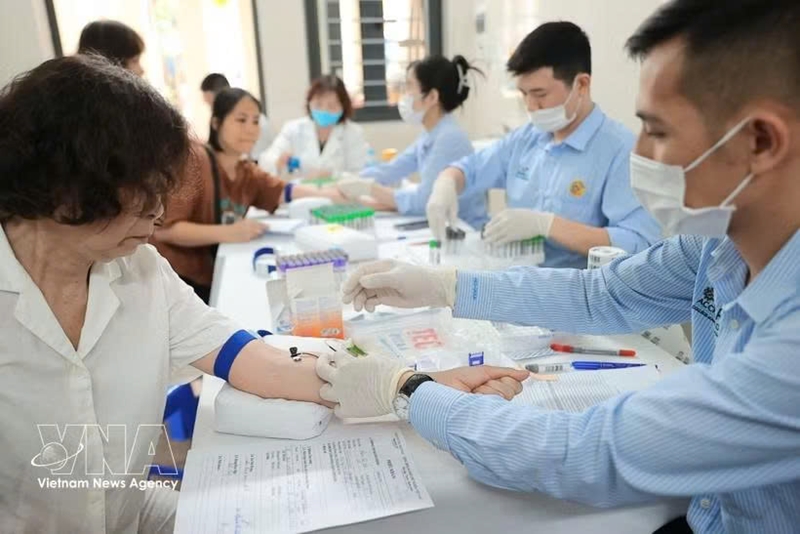
Residents in Hanoi's Bach Mai ward receive free health check-ups. |
Under the resolution, every citizen from 2026 onward will be entitled to at least one free annual medical check-ups or screening. Each individual will also have a digital health record integrated into the national digital identification platform VNeID, enabling authorities and healthcare providers to manage health data in a synchronized and continuous manner.
To ensure effective nationwide rollout, the Prime Minister instructed ministries, sectors and local authorities to treat the program as a key and enduring political task closely linked to socio-economic development and social security goals.
Provincial and municipal authorities were urged to accelerate preparations so that by the end of 2026, all residents will have access to free health check-ups or screenings and have electronic health records issued.
The directive also calls for the mobilization of the entire political system at the grassroots level, highlighting the role and responsibility of local administrations, Party organizations and relevant agencies in coordinating implementation efforts.
Public communication campaigns will be expanded to encourage citizens to adopt the habit of periodic health examination and early disease screening, thereby fostering greater public awareness of preventive healthcare.
The Ministry of Health was assigned to lead the program nationwide, issue detailed guidelines on organizing free health check-ups and screenings, and develop unified standards for health data integration and interoperability with the social insurance database system.
Authorities were instructed to complete the establishment of a synchronized electronic health record system by May 2026. The digital records will be linked with VNeID to facilitate healthcare management and identity verification during medical examinations.
At the same time, the health ministry was tasked with strengthening grassroots healthcare and preventive medicine systems by improving human resources, medical equipment and pharmaceutical supplies, and organizing training programs for healthcare workers participating in the initiative.
The Ministry of Public Security will coordinate the use of the national population database and electronic identification systems to support the management of electronic health records and ensure secure verification of citizens’ information. The ministry was also tasked with safeguarding cybersecurity and protecting personal health data during the collection, storage and sharing of medical information.
Meanwhile, the Ministry of Education and Training will work with localities and healthcare institutions to organize free periodic health examinations for students nationwide from the beginning of the 2026–2027 academic year.
The Ministry of Finance will allocate funding from the state budget and coordinate with relevant agencies to ensure efficient and lawful use of financial resources. The ministry will also oversee the synchronization of health screening data with social insurance databases and related digital platforms.
Special attention will be given to vulnerable and disadvantaged groups, including the elderly, people with disabilities, low-income households, ethnic communities, residents in mountainous and remote areas, and people suffering from chronic diseases.
Source: VNA