Its issuance of Plan No.109/KH-UBND on technological innovation in key economic sectors through 2035 serves as both a catalyst and a strategic move to systematize, elevate and reinforce the capital’s leading role in the digital era.
Three pillars and the imperative for technological innovation
Hanoi is translating its ambition to turn science, technology, innovation and digital transformation into the primary driver of growth, as in line with the Politburo's Resolution No.57-NQ/TW, through Plan No.109/KH-UBND. Notably, the roadmap is not conceived from a “blank slate” but builds upon ongoing developments in reality. It identifies three key economic sectors: cultural industries, tourism (with a focus on cultural tourism), and the digital technology industry.
    |
 |
|
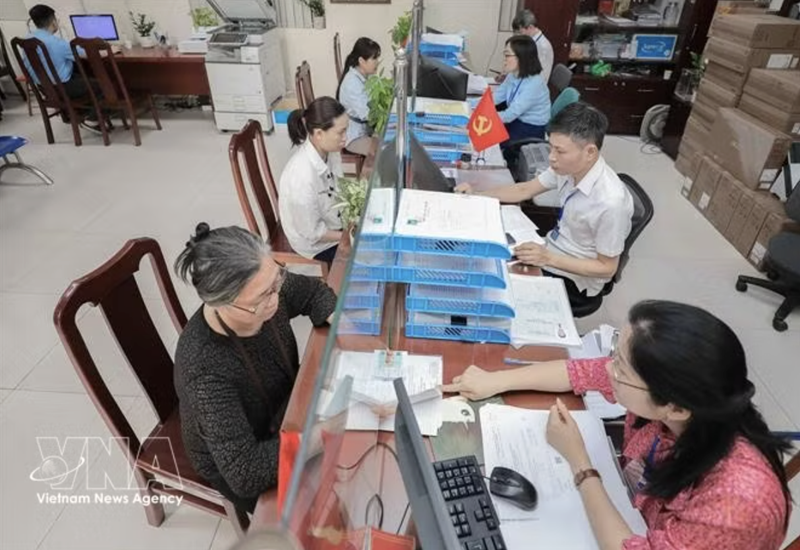
Phuc Loi ward in Hanoi has launched the “Digital Literacy for All” movement, forming support teams to help residents install applications such as iHanoi and eTax. |
This selection clearly reflects the capital’s shift in its growth model, from reliance on natural resources and labor towards one driven by knowledge, creativity and technology. Within this framework, digital technology serves as the foundation, cultural industries generate content, and tourism acts as the channel for optimizing and spreading values.
In practice, all three sectors have already made initial strides in adopting technology. In cultural industries, activities such as 3D mapping projections, virtual reality experiences, and digitally integrated art spaces around Hoan Kiem Lake, West Lake and within museums have helped reimagine heritage engagement and enhance interactivity.
In tourism, the need for technological innovation is driven by rapidly evolving market demands. Travelers increasingly prioritize smart and personalized experiences, relying on digital services from search and booking to on-site engagement. While Hanoi has begun applying technology to promotion, electronic payments and digital platform building, implementation remains somewhat fragmented.
Meanwhile, the digital technology industry is not only a key sector in its own right but also acts as a “lever” for the other two. The challenge lies in transitioning from outsourcing and basic service provision to the design and development of “Make in Vietnam” products, thereby enabling deeper integration into global value chains.
Overall, the push for technological innovation across these sectors stems not from a lack of capability but from the pressure to move faster to maintain competitive advantages. Without a structured roadmap, existing strengths may not translate into economic power. Conversely, if effectively organized, these sectors hold strong potential for breakthroughs and substantial contributions to growth.
Activating the ecosystem to deliver on objectives
The plan underscores the role of universities and research institutes as core drivers of knowledge and technological development.
In this regard, Assoc. Prof., Dr. Dang Hoai Bac, Director of the Posts and Telecommunications Institute of Technology, noted the institution’s readiness to collaborate in science and technology initiatives, particularly in areas such as artificial intelligence, semiconductors, information security and big data.
|
|
 |
|
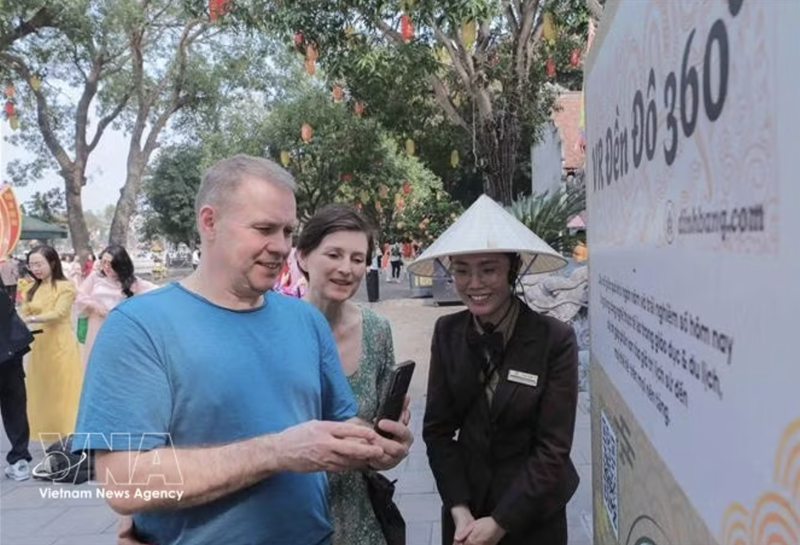
International tourists scan QR codes to access destination information, an example of digital transformation in tourism. |
Similarly, Prof., Dr. Hoang Anh Tuan, Rector of the University of Social Sciences and Humanities under the Vietnam National University Hanoi, emphasized that cultural industries should focus on transforming heritage into creative resources. Such proposals as 3D digitization of heritage sites, the development of virtual tour systems, the application of technology within heritage spaces, and the cultivation of human resources all match Hanoi's orientations.
The engagement of educational and research institutions indicates that an innovation ecosystem is gradually taking shape. Within this ecosystem, the State plays a facilitating role while research entities and enterprises serve as the main implementing forces.
As such, the issuance of Plan No.109/KH-UBND is a strategic instrument for connecting resources and generating new momentum for the key economic sectors. At the same time, this approach enables Hanoi to avoid falling behind while reinforcing its pioneering role in developing a creative economy, gradually positioning itself as a modern and knowledge-driven capital rich in cultural identity.
Source: VNA