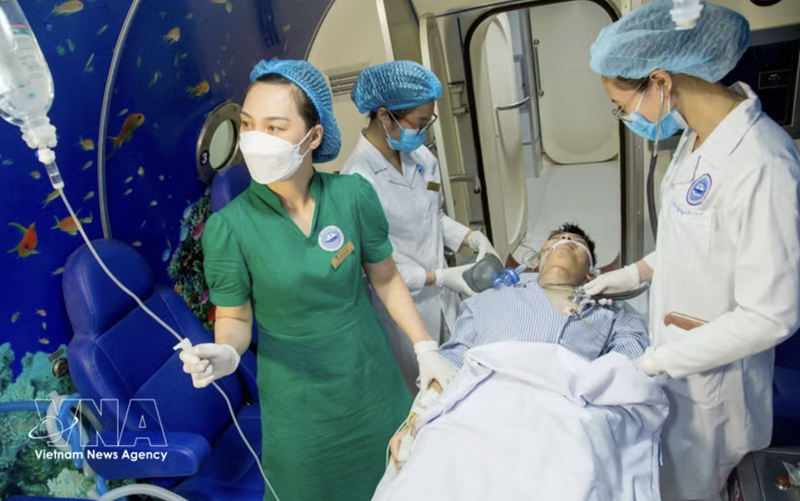
After 25 years, VINIMAM has become the country’s leading specialized medical center in underwater and hyperbaric medicine. It has successfully treated pressure-related conditions such as diving accidents, decompression sickness and barotrauma. In addition, the institute has implemented community healthcare programs, bringing medical services closer to fishermen and residents in coastal and insular areas, while expanding international cooperation.
    |
 |
|
Medical workers of the Vietnam National Institute of Maritime Medicine gives treatment to a patient using hyperbaric oxygen therapy. |
These achievements provide a strong foundation for its effective implementation of Resolution No.72-NQ/TW, particularly in enhancing the overall quality of healthcare services, developing specialized medicine and ensuring health security, as each fisherman is regarded as a “living marker at sea”, contributing to the safeguarding of national maritime sovereignty.
VINIMAM Director Dr. Nguyen Bao Nam said one of its most notable achievements is providing remote maritime emergency consultation (telemedicine) for vessels at sea. Through this system, leading experts have successfully provided emergency guidance in hundreds of cases involving serious accidents affecting seafarers across the Pacific, Indian and Atlantic Oceans.
Experts have also delivered timely and effective consultations for medical incidents occurring in remote maritime areas, and stand ready to assist offshore fishing vessels nationwide, seafood processing workers and maritime laborers via the telemedicine system, enabling vessels to continue their journeys without the need to return to the shore. The institute’s personnel also support Vietnamese vessels in addressing medical-related disputes abroad, he added.
Looking ahead, Nam highlighted key priorities including strengthening scientific research, particularly applied research linked to practical needs, developing high-quality human resources, investing in modern infrastructure and equipment, and expanding cooperation with international partners. These are seen as critical factors in improving public health and supporting the nationwide implementation of Resolution No.72-NQ/TW.
|
|
 |
|
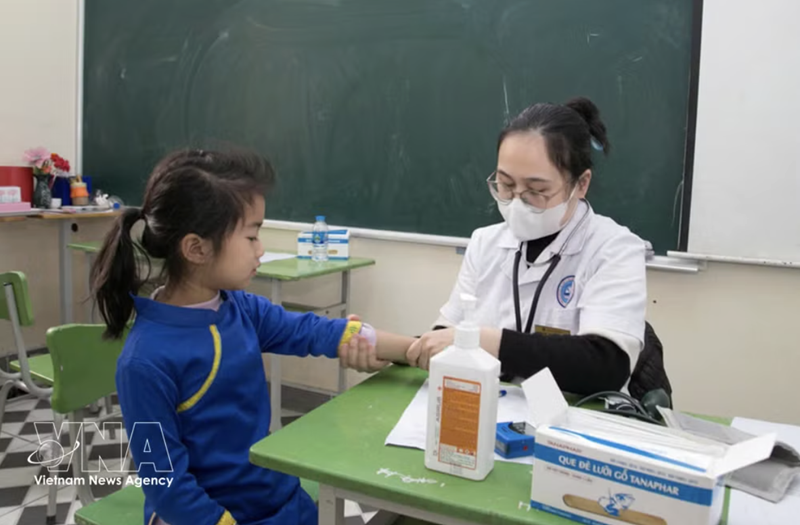
A doctor from the Vietnam National Institute of Maritime Medicine gives free medical examination to a child in a coastal area. |
He added that the resolution reflects the strong commitment of the Party and the State to the healthcare sector.
Vu Tien Phung, Vice Chairman of the Hai Phong People’s Committee, noted that the city has issued a project to enhance the capacity of the public healthcare system through 2030, with a projected investment of approximately 45 trillion VND (1.71 billion USD) to be mobilized from various sources. At the same time, Hai Phong remains committed to developing a comprehensive and modern healthcare system, moving towards a universal and holistic model.
Within this broader development, local authorities consistently recognize the role of central-level healthcare institutions, including VINIMAM, which plays a particularly important role in providing health care for fishermen and residents in coastal and insular areas.
Vietnam boasts a coastline of 3,360 kilometers, with 21 out of its 34 provinces and cities bordering the sea, and around 50% of the population living in coastal areas. Approximately 6 million workers are directly engaged in sea-based economic sectors. The sea serves not only as a space for economic development but also as a strategic domain for national defense, security and sovereignty.
Source: VNA