They were speaking on the sidelines of the 33rd Diplomatic Conference and the 22nd National Conference on External Affairs, taking place from August 1–7.
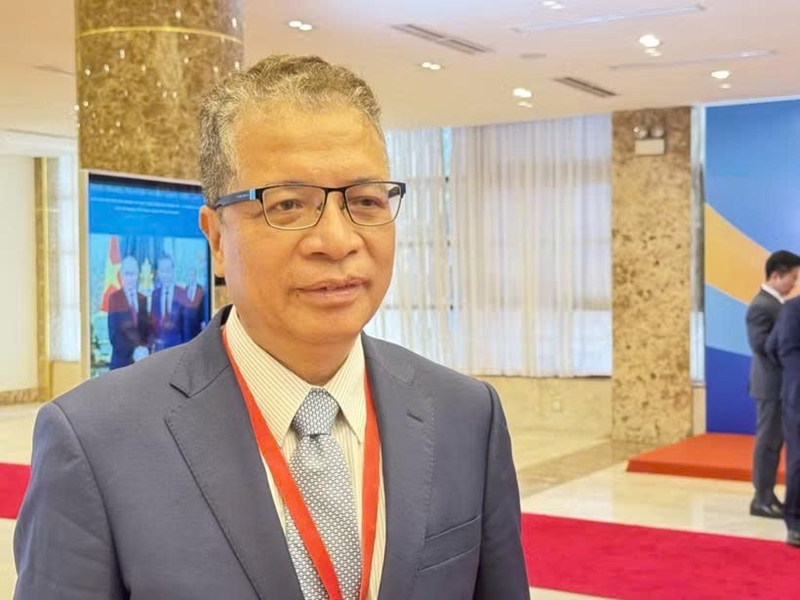
Commenting on the significance of this year's Diplomatic Conference, Vietnamese Ambassador to Russia Dang Minh Khoi said the event stands out for three particularly important features.
    |
 |
|
Vietnamese Ambassador to Russia Dang Minh Khoi |
First, it provides an opportunity for the entire foreign affairs sector to thoroughly grasp the Party and the State's foreign policy guidelines and resolutions.
Second, the conference takes place as Vietnam enters a new era of development with a long-term strategic vision towards the milestones of 2030 and 2045.
Third, the country's foreign affairs leadership mechanism has been further consolidated with the establishment of the Central Steering Committee for Foreign Affairs and International Integration, headed by Party General Secretary and State President To Lam.
Khoi stressed that the Party and the State now regard foreign affairs as a crucial and regular task on par with national defense and security. This places both a great honor and a significant responsibility on the diplomatic service.
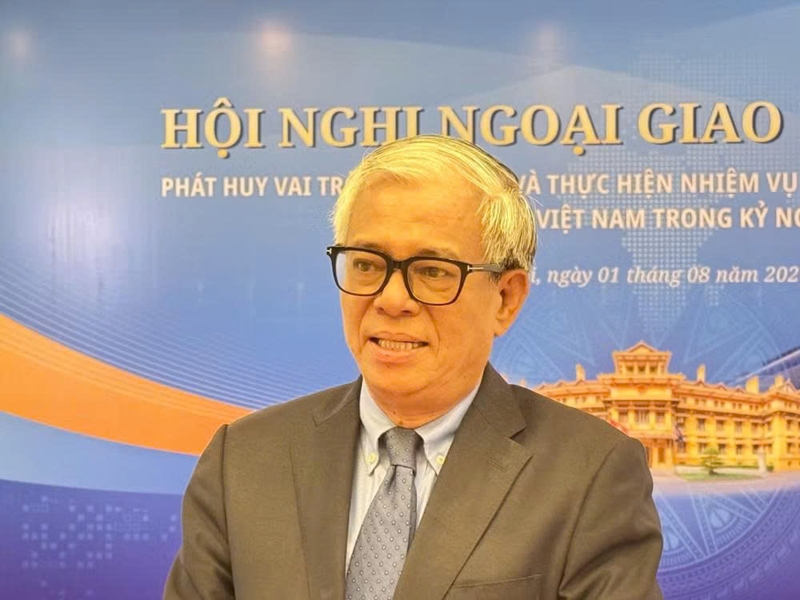
Sharing his views on the guiding principles for Vietnam's diplomacy amidst profound global changes, former Deputy Minister of Foreign Affairs Ambassador Pham Quang Vinh said the diplomatic sector should focus on three key pillars: proactiveness, shaping and capability.
On “pro-activeness,” he said the sector should proactively adapt to and manage risks arising from major-power competition, supply chain disruptions and regional crises, while strengthening its capacity for strategic forecasting and policy advice. At the same time, it should pro-actively safeguard a peaceful and stable environment and continue placing economic integration at the center of its efforts.
|
|
 |
|
Former Deputy Minister of Foreign Affairs Ambassador Pham Quang Vinh |
Regarding “shaping,” he said Vietnam's diplomacy should take the initiative in shaping a favorable strategic environment by deepening relations with key partners and neighboring countries, thereby creating sustainable interwoven interests.
It should also maximize the benefits of existing free trade agreements (FTAs), expand Vietnam's development space to regions such as Latin America, the Middle East and Africa, and to strategic areas including science and technology, digital transformation, green transition and the attraction of new-generation foreign direct investment (FDI).
At the multilateral level, Vietnam should actively contribute to shaping emerging international rules, such as those governing artificial intelligence (AI), while upholding the rule of law.
In terms of “capability,” Vinh stressed the need to build a streamlined and effective foreign affairs system suited to new thinking and new position, capable of translating policies into concrete cooperation programs and projects. He also called for closer coordination among the three pillars of foreign affairs, national defense and security, while strengthening links with economic agencies, localities and the business community.
The ambassador said that Vietnam's enhanced standing, capacity and confidence after four decades of Doi Moi (Renewal) provide a solid foundation for the diplomatic sector not only to maximize external resources for national development, but also to make active and responsible contributions to international peace and security.
Source: VNA