In an interview with the Vietnam News Agency ahead of the election scheduled for March 15, Khalidi said the election marks an important milestone in Vietnam’s development trajectory as it takes place at a moment when the country is entering a new phase of policy priorities and institutional reforms that will shape its next stage of development.
The 16th N.A. will, therefore, play a critical role in advancing legislative and institutional reforms needed to unlock new drivers of growth and sustain the country’s impressive socio-economic progress, she noted.
    |
 |
|
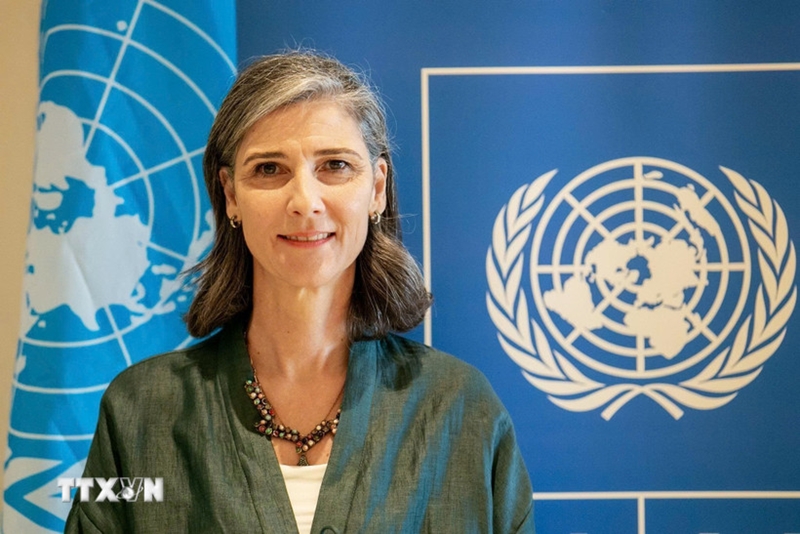
UNDP Resident Representative in Vietnam Ramla Khalidi |
According to the UNDP official, the election also comes as Vietnam enters the final stretch toward achieving the Socio-Economic Development Strategy (2021–2030), the 2030 Agenda for Sustainable Development, and its ambition to become an upper-middle-income country by 2030. The next phase of the National Targeted Programs is expected to further reinforce this reform and growth momentum, she said.
She observed that sustained high growth will require significant improvements in labor productivity, human-resource quality, and modern digital and physical infrastructure, particularly in an increasingly volatile global environment, with key priorities focused on developing high-quality human capital; promoting science, technology and innovation; strengthening private-sector development; and modernizing strategic infrastructure, including digital, transport and logistics systems.
Upgrading industries and accelerating digital transformation will also be essential to sustain Vietnam’s development momentum, she added.
She noted that recent cornerstone resolutions of the Politburo, such as Resolution No. 57-NQ/TW and Resolution No. 68-NQ/TW, set an ambitious direction for innovation-driven growth. The new N.A. will play a central role in translating these priorities into effective legislation, financing frameworks and oversight.
By establishing an enabling legal and regulatory ecosystem and aligning public investment with innovation priorities, the N.A. can help unlock the full dynamism of the country’s private sector, critical for job creation, productivity gains, green transition and global competitiveness, she said.
The legislature is also expected to review several important legislative initiatives, including the Law on Marriage and Family, the Law on Adoption, revisions to the Civil Code and Criminal Code, and the Law on International Agreements, Khalidi said, stressing that these reforms will have wide-ranging implications for both development and the daily lives of citizens, reinforcing the importance of a strong, responsive and forward-looking legislative agenda.
She emphasized that the quality of the legislative process remains critical, noting that ensuring that policymaking is participatory, transparent and inclusive, with broad citizen consultations and appropriate safeguards, including for data privacy, will strengthen both public trust and policy effectiveness.
According to her, diversity also strengthens policymaking. Encouragingly, the current candidate list includes the highest number of women candidates to date and, for the first time, a candidate with a disability, reflecting growing momentum toward a more diverse and representative N.A.
Equally important is ensuring that development policies remain inclusive and people-centered, Khalidi said. She noted that by strengthening social policies and promoting equal opportunities for women, ethnic minorities, persons with disabilities and other vulnerable groups, legislation can help ensure that Vietnam’s development progress benefits all citizens and that no one is left behind.
The UNDP official also highlighted the role of the legislative agenda in supporting Vietnam’s transition toward climate-resilient and environmentally sustainable development. She said stronger legal frameworks can translate national commitments on climate action, biodiversity protection and green growth into concrete policies guiding investment and implementation.
Such measures could include expanding renewable energy, promoting circular economy solutions, strengthening climate resilience in agriculture and infrastructure, protecting ecosystems such as forests and mangroves, and addressing environmental challenges such as air pollution that increasingly affect public health and urban quality of life, she said.
By integrating these priorities into legislation, Vietnam can better align socio-economic development with its long-term goal of achieving net-zero emissions by 2050, while safeguarding livelihoods, public health and economic stability, she went on.
Khalidi affirmed that as Vietnam enters this new legislative term, UNDP remains committed to accompanying the Government, the N.A. and the people of Vietnam in advancing inclusive and sustainable development.
"Through continued partnership on human development, good governance, climate action, environment and innovation, we stand ready to support Vietnam in achieving its development ambitions while ensuring that progress benefits all citizens and leaves no one behind," she said.
Source: VNA