In an interview with the Vietnam News Agency (VNA)'s correspondent in Prague, Head of Vicendeti’s Representative Office in the Czech Republic, identified four strategic pillars needed to strengthen inter-parliamentary cooperation and elevate legislative diplomacy in support of Vietnam’s development goals during the next term.
    |
 |
|
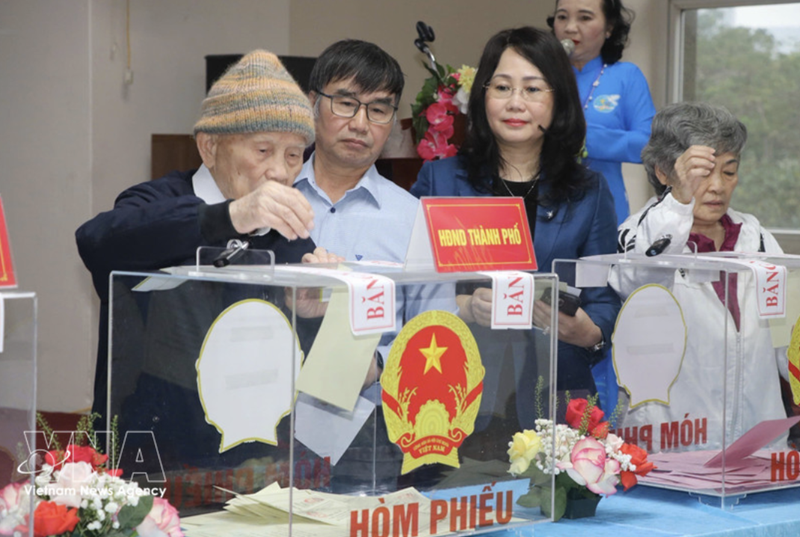
Nguyen Trong Khien, aged 100, casts his ballot at Polling Station No.16, Residential Group No.40, Yen Hoa ward, Hanoi, on March 15, 2026. |
First, it is necessary to shift from mere participation to proactive leadership in multilateral forums, he stressed.
According to him, the 16th legislature should continue to enhance the country’s standing in organizations such as the Inter-Parliamentary Union (IPU) General Assembly, the ASEAN Inter-Parliamentary Assembly (AIPA) and the Asia-Pacific Parliamentary Forum (APPF) by actively proposing forward-looking legal frameworks. This is particularly important in emerging areas with no established precedents but critical to the digital era, including cross-border cybersecurity governance, artificial intelligence ethics and green trade standards. By contributing to the shaping of international “rules of the game”, Vietnam could secure strategic advantages at the global policy-making stage, Cuong said.
Second, the expert underscored the importance of accelerating the domestication and harmonization of laws to deepen international integration. Effective legislative diplomacy ultimately lies in implementing commitments, he noted.
In the coming term, guided by orientations from the 14th National Party Congress, the N.A. should prioritize reviewing and incorporating international standards from new-generation trade agreements, notably the E.U.–Vietnam Free Trade Agreement (EVFTA) and the Comprehensive and Progressive Agreement for Trans-Pacific Partnership (CPTPP), in a coherent manner.
Establishing a legal system aligned with high global standards would not only safeguard national interests but also signal a transparent and reliable investment environment, he added.
Third, Cuong called for enhanced “thematic diplomacy” among specialized committees. This would involve direct, substantive engagement between Vietnam’s economic, legal and science-technology committees and their counterparts in legislatures of developed nations, particularly within the E.U.
Such technocratic exchanges on legislative experience in areas like energy transition and the circular economy would help Vietnam accelerate institutional development and directly support the sustainable development goals set by the Party.
Finally, Kien highlighted the Vietnamese legislative body’s supervisory role over international agreements as the fourth strategic pillar. Elevating legislative diplomacy also requires effective oversight of the implementation of treaties and agreements signed by the Government.
This would ensure that resources from international cooperation are allocated appropriately, promote both local and national economic development, and provide timely policy feedback to adjust external relations in the country’s best interests.
According to Cuong, as the Southeast Asian country aspires to become a high-income developed nation in the new era, legislative diplomacy must serve as an institutional pathfinder.
A reformed, streamlined and internationally integrated 16th N.A. would be a crucial guarantee for steering the country towards a stronger global presence, the expert concluded.
Source: VNA