Assessing the CPV’s leadership role in the national construction, protection and development cause, as well as the requirements for further consolidating and enhancing that role as Vietnam enters a new era of the nation’s rise, Talgam said that from a comparative and historical perspective, the CPV’s leadership has been the central factor underpinning the country’s enduring political stability and impressive development trajectory. In a world marked by rapid and unpredictable changes, few political organizations have been able to maintain continuity of leadership while simultaneously adapting their governance approach as effectively as the CPV.
    |
 |
|
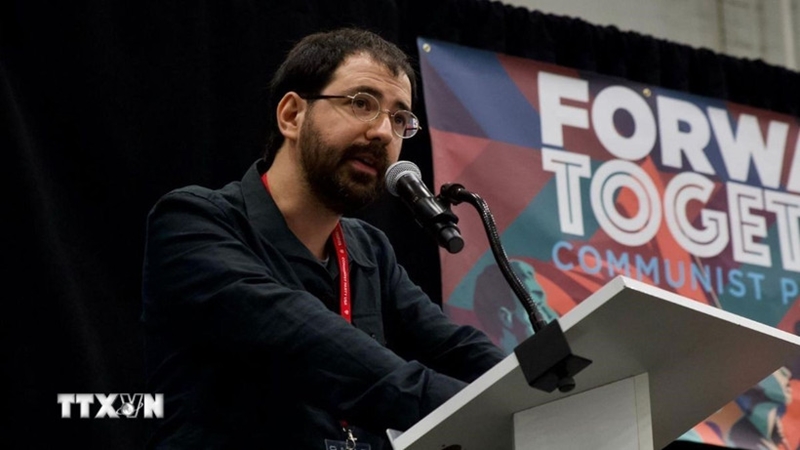
Historian and journalist Assaf Talgam |
Its ability to guide Vietnam through independence, post-war reconstruction and economic reforms demonstrates the Party’s strong popular roots and clear strategic vision. Particularly notable is not only the CPV’s ability to mobilize public support at decisive moments, but also its capacity to adjust strategic priorities in response to shifting domestic and international contexts.
The Renewal (Doi moi) process and subsequent reforms, he said, illustrate a pragmatic approach to governance, balancing ideological consistency with policy flexibility, an approach that has contributed to Vietnam’s steady economic growth and social stability.
As Vietnam enters a new era of national resurgence, the main challenge for the CPV is less about maintaining authority and more about strengthening popular participatory institutions and preserving the balance between economic growth and social equality. Enhancing its leadership role will depend on improving institutional effectiveness, policy transparency, and responsiveness to societal aspirations, particularly among younger generations. Continued emphasis on clean governance, merit-based leadership, and evidence-informed policymaking will be essential to sustaining public trust and ensuring long-term national resilience, he noted.
Regarding the significance of the 14th National Party Congress, the historian said that from an external analytical perspective, it can be understood as a strategic recalibration rather than a radical departure. Its significance lies in how it situates Vietnam at a critical juncture, seeking to make it a developing nation with modern industry and upper-middle income by 2030; and a developed nation with high income by 2045.
A particularly important feature of the 14th National Party Congress is its long-term vision, oriented towards modernization and reform, while reaffirming the strong commitment of the CPV to revolutionary ethics, Marxism–Leninism and and President Ho Chi Minh's thought. Importantly, it defines the developmental goals of the Party as "wealthy people, strong nation and socialist society," he added
In addition, it emphasizes the role of innovation, human capital, and state capacity. This reflects the Vietnamese leadership’s growing awareness of the vulnerabilities created by global economic fragmentation and geopolitical competition. Against this background, the congress showcases the Party’s strategy for guiding Vietnam towards the goals of national independence and socialism.
According to the historian, in the current international environment, Vietnam faces opportunities intertwined with considerable uncertainties. On the one hand, the restructuring of global supply chains, the diffusion of technology and its reputation as a stable and reliable partner are creating favorable conditions for economic advancement. On the other hand, the climate crisis and increasingly intense geo-political competition pose major challenges to policy coordination and long-term strategic planning for many countries, including Vietnam.
The Israeli historian said: "Vietnam’s success will depend on its ability to preserve strategic autonomy while continuing to foster strong relationships with other countries and progressive movements throughout the world. This requires not only diplomatic balance, but also strong domestic institutions capable of absorbing external shocks and leveraging international cooperation for national development."
As a representative socialist country and a rising economy, Vietnam can also play a greater international role in promoting peace and justice globally. In this context, cooperation between the CPV and the Communist Party of Israel would bring benefits to both sides.
Talgam said he believes that the Communist Party of Israel can learn much from Vietnam’s successful experience in combating various forms of domination and oppression in international relations and in building a socialist society. At the same time, coordination between the two parties towards a just peace in the Middle East would help enhance Vietnam’s position on the international stage.
An intensification of party-to-party exchanges could promote mutual learning as well as further the strategic goal of both parties, he concluded.
Source: VNA