The DNA collection drive, organized by the provincial Department of Public Security in coordination with local authorities, took place in Dong Hai ward and covered relatives from Dong Hai, Phan Rang, Do Vinh, My Son and Bao An wards and communes.
From early morning, many family members arrived at the collection site with hope that DNA testing would help identify the remains of their loved ones who died during the wars.
    |
 |
|
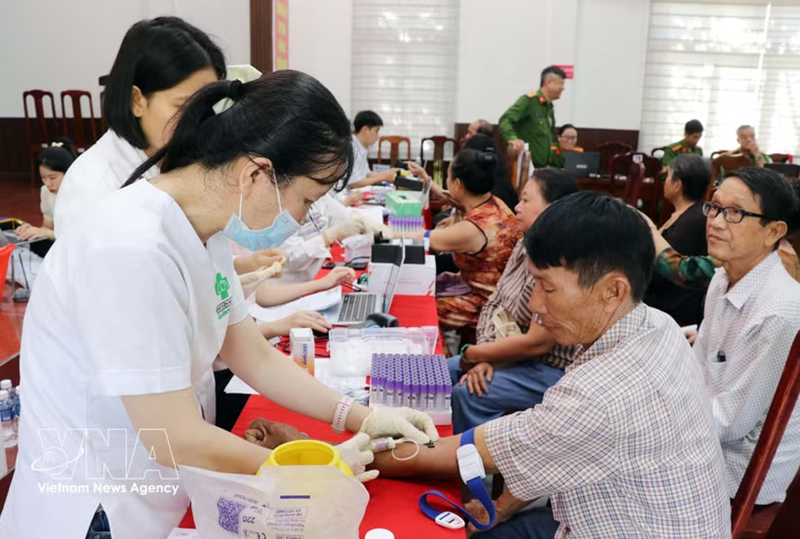
DNA samples collected from relatives will be used to build a database to help identify the remains of fallen soldiers. |
Participants were guided through identity verification, document completion and DNA sample collection in line with standard procedures. Police officers, local authorities and community organizations worked together to ensure the process was smooth and accurate, while medical staff were on hand to assist elderly participants and those with underlying health conditions.
Pham Thi Quy, whose sister Pham Thi Tam died during the resistance war against the U.S., expressed gratitude for the Party and State's continued support for families of fallen soldiers.
She said the initiative brings comfort to martyrs' relatives and expressed hope that the identities of those who made the ultimate sacrifice would soon be confirmed so they could be laid to rest near their families and comrades.
According to Colonel Tran Minh Truc, Deputy Director of the Khanh Hoa Department of Public Security, the province has selected the headquarters of 12 commune- and ward-level People's Committees as DNA collection stations based on the number of registered participants and local conditions.
The campaign aims to build a DNA database of martyrs' relatives and enrich the national gene bank to support the identification of unidentified remains.
Source: VNA