In an interview with the press ahead of the visit, Deputy Minister Nguyen Minh Vu highlighted three major strategic objectives. First, the visit will help establish an overall strategic direction for bilateral relations in the new period, with the leaders of both countries identifying long-term cooperation orientations and priorities that meet their respective development needs.
Second, it will promote a shift from conventional economic, trade, and investment cooperation toward deeper connection between the two economies. Greater emphasis will be placed on the spirit of “partnership and co-creation,” while strengthening each country's economic autonomy and resilience.
    |
 |
|
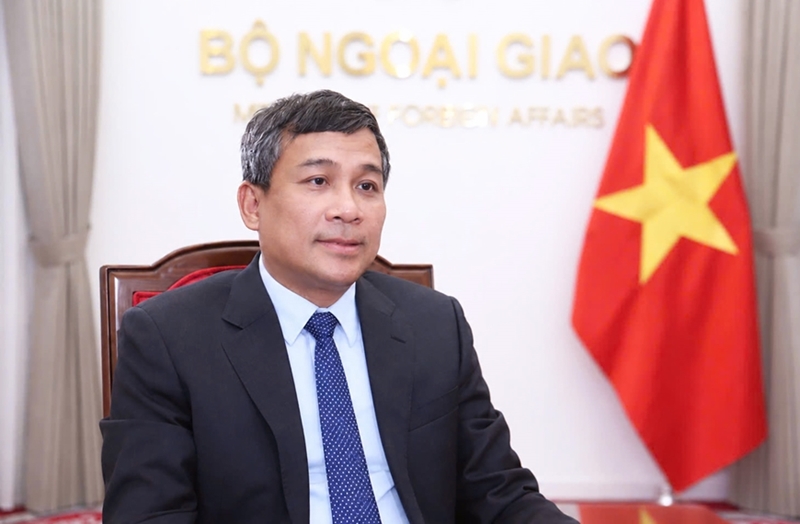
Permanent Deputy Minister of Foreign Affairs Nguyen Minh Vu (Photo: the Ministry of Foreign Affairs) |
Deputy Minister Nguyen Minh Vu said that against the backdrop of global supply chain restructuring, closer economic integration with partners such as Japan will help Viet Nam enhance its production capacity and participate more deeply in global value chains.
Third, the visit is expected to generate momentum for breakthroughs in science and technology, innovation, and the transformation of development models. Japan's strengths in technology, capital, management expertise, and manufacturing complement Viet Nam's young workforce, dynamic market, development potential, and determination to promote innovation.
Combining these advantages will create opportunities for cooperation in strategic technologies, digital transformation, green transformation, energy, and high-quality human resource development. Such cooperation will also help Viet Nam acquire and master technologies, strengthen its domestic capabilities, and improve the long-term competitiveness of its economy.
The planned program reflects these strategic priorities. In addition to meetings with the Emperor and Empress of Japan, the Prime Minister, the President of the House of Councilors, and the Speaker of the House of Representatives, General Secretary and President To Lam is expected to meet leaders of Japanese economic organizations and major corporations. He will also attend and deliver remarks at the Viet Nam-Japan Public-Private Forum on Economic and Science and Technology Cooperation and visit Japanese high-tech enterprises.
These activities are intended to strengthen connections and promote concrete cooperation opportunities, particularly in areas of strategic importance to the long-term development of both countries.
Assessing bilateral relations, Deputy Minister Nguyen Minh Vu noted that Viet Nam and Japan have made remarkable progress over more than 50 years of diplomatic relations and three years since upgrading their ties to a Comprehensive Strategic Partnership. Their relationship has become increasingly comprehensive, substantive, and effective.
He identified three key foundations underpinning the partnership: growing political trust, increasingly intertwined economic interests, and stronger people-to-people ties. These provide favorable conditions for both countries to further advance their Comprehensive Strategic Partnership.
Political trust has continued to deepen through regular high-level exchanges and cooperation across various channels, including the Party, Government, and National Assembly. Both countries attach great importance to each other in their respective foreign policies. Dialogue mechanisms remain effective, while shared understandings, commitments, and agreements reached by senior leaders and relevant ministries and agencies are being implemented seriously.
Economic cooperation has also expanded significantly. Japan remains one of Viet Nam's leading economic partners and its largest provider of official development assistance (ODA). An increasing number of Japanese companies in high-tech sectors, particularly artificial intelligence (AI), are showing interest in and expanding their operations in Viet Nam.
Major Japanese retail groups, including AEON, consider Viet Nam a key market while helping Vietnamese products gain greater access to Japan's market, which has stringent quality requirements. Cooperation in energy security and green transformation, particularly projects under the Asia Zero Emission Community (AZEC) initiative, is also being actively promoted.
Science and technology and innovation have emerged as new pillars of bilateral cooperation. The two countries are implementing practical initiatives in joint research, semiconductor workforce training, and space technology, while exploring opportunities to expand cooperation into AI and quantum technology.
Other areas of cooperation include digital transformation, green transformation, renewable energy, and disaster prevention and mitigation. These initiatives are expected to deepen bilateral ties while directly supporting the development goals of both countries in the new period.
People-to-people exchanges and cooperation between localities have also become increasingly close. Viet Nam and Japan have established more than 100 pairs of cooperating localities. In 2026 alone, more than 10 major festivals were held in the two countries, promoting mutual understanding, cultural exchanges, and friendship.
The nearly 700,000 Vietnamese people living, studying, and working in Japan have also become an important bridge between the two countries and their peoples. According to Deputy Minister Nguyen Minh Vu, these increasingly close people-to-people ties represent one of the most sustainable and dynamic foundations of Viet Nam-Japan relations.
Beyond bilateral cooperation, the two countries have strengthened coordination at regional and international forums. They regularly exchange views on issues of mutual concern and enhance cooperation on regional and international matters, contributing to peace, stability, cooperation, and development in the region and around the world.
Deputy Minister Nguyen Minh Vu expressed his expectation that, building on their achievements, Viet Nam and Japan would continue to uphold trust, sincerity, and mutual benefit. He said bilateral relations should develop toward deeper political trust, closer economic cooperation, greater breakthroughs in science and technology, and stronger people-to-people ties.
He emphasized that nurturing the spirit of “partnership and co-creation” would be essential to advancing the partnership for the benefit of both peoples and for peace, stability, cooperation, and prosperity in the region and the world.
Translated by Tran Hoai