According to the ambassador, Cuba is facing significant difficulties following a January 29, 2026 executive order signed by the U.S. President, allowing the imposition of trade tariffs on imports from countries supplying oil to Cuba. The measure, he noted, has intensified the economic blockade and embargo to an unprecedented level, effectively creating a comprehensive energy siege that severely impacts the Cuban economy.
    |
 |
|
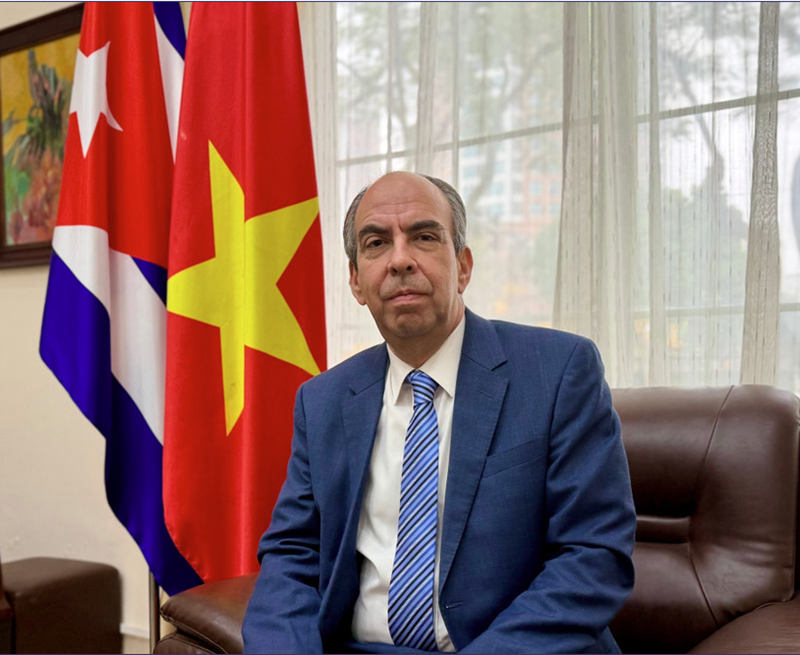
Cuban Ambassador to Vietnam Rogelio Polanco Fuentes (Photo: Cuba Embassy in Vietnam) |
The situation has disrupted key sectors, including electricity generation, transportation, production, and service provision, particularly healthcare. In addition, U.S. threats of the use of force have further complicated the situation.
In response, the Cuban Party and State have implemented a range of measures aimed at maintaining national operations under extraordinary conditions. These include rationalizing fuel use, adjusting labor and education activities, restricting travel, and promoting remote work. Priority has also been given to boosting domestic food production, especially at the local level, and accelerating the transition to renewable energy sources.
At the same time, Cuba is advancing reforms to enhance the autonomy of enterprises and local governments, restructure the state apparatus, and facilitate foreign direct investment. Efforts are also underway to promote economic linkages between the state and private sectors and to encourage business activities by Cubans living abroad. Alongside these measures, the country has raised its defense readiness in response to potential security risks.
Despite ongoing tensions, Cuba has maintained its willingness to engage in dialogue with the United States. Ambassador Fuentes emphasized that Havana seeks to resolve differences on the basis of respect, equality, and non-interference in national sovereignty, in accordance with international law. Over the years, both sides have engaged in exchanges and reached mutually beneficial agreements in areas of shared interest.
Recent initial contacts between Cuban and U.S. representatives have focused on identifying bilateral issues, seeking common ground to reduce tensions, and potentially opening avenues for cooperation in the interest of peace and security. However, the ambassador described these processes as sensitive and often prolonged, requiring sustained goodwill and effort.
Cuba has also introduced policies to allow its citizens living abroad to participate more actively in domestic economic activities. These measures are designed to mobilize capital, stimulate the economy, and strengthen ties with the Cuban diaspora. Overseas Cubans can now engage as partners or owners of private enterprises, including large-scale projects, such as infrastructure, even without permanent residency. They are also permitted to collaborate with both state-owned and private enterprises, access land-use rights for production, and participate in the national financial and banking system. However, the U.S. embargo remains a key obstacle to expanding such economic ties, including those with U.S. businesses.
Highlighting bilateral relations, Ambassador Fuentes underscored Vietnam’s enduring solidarity with Cuba in its efforts to end the blockade. This support has been reflected in consistent political and diplomatic backing as well as timely and practical material assistance.
Over the past year, a support campaign organized by the Vietnam Red Cross has mobilized more than 2 million contributions, with a total value of approximately USD 25 million. The funds have helped address urgent needs in food supply, electricity generation, and water systems, while also serving as a strong expression of public solidarity.
During a visit to Vietnam in early February by Cuban Foreign Minister Bruno Rodríguez Parrilla, acting as a special envoy of the Cuban Party and State, both sides reaffirmed the strong state of bilateral cooperation. Vietnamese leaders reiterated their commitment to standing with Cuba and assisting the country in overcoming current difficulties.
Looking ahead, the two countries are expected to further strengthen their special friendship and traditional solidarity, advancing toward a new phase of comprehensive, effective, and sustainable cooperation. Existing cooperation mechanisms continue to play a key role, with party-to-party relations providing strategic direction.
Vietnamese enterprises have maintained investments in Cuba despite ongoing challenges. Notably, rice production projects contribute directly to Cuba’s food security through technology transfer and modern management practices. Vietnam is also supporting Cuba’s energy transition and helping alleviate electricity shortages through the development of an 80MW solar power plant in Mayabeque province.
In addition, a recently established Cuba-Vietnam joint venture in biopharmaceutical production, located at Hoa Lac Hi-Tech Park in Hanoi, is expected to boost Cuba’s biotechnology sector while improving healthcare quality in both countries.
After more than a year serving in Vietnam, Ambassador Fuentes expressed deep admiration for the Vietnamese people. He highlighted their diligence, resilience, patriotism, and strong cultural identity, as well as their respect for history and tradition. He also noted the country’s ongoing efforts to achieve socio-economic development goals and build a prosperous, democratic, and equitable society.
The ambassador also conveyed his congratulations to Vietnam on recent political milestones, including the successful conclusion of the 14th National Party Congress and the election of deputies to the 16th National Assembly and People’s Councils for the 2026–2031 term, expressing confidence in the country’s continued success.
Translated by Tran Hoai