The reversal spotlights not only a production-fueled import surge but also the mounting urgency to sharpen domestic capabilities, nurture supporting industries and lift local production value. Without steadily weaning the economy off imported inputs, experts warned that exports alone can’t anchor durable growth.
Momentum holds
The half-year played out against a backdrop of deepening trade uncertainty. Geopolitical tensions dragged on, protectionism hardened, and trade barriers proliferated while green manufacturing, emissions cuts and product traceability emerged as must-have credentials in key markets.
Against this backdrop, export growth topping 20% signaled more than recovering global demand, but showed the economy’s improving resilience, adaptability and competitive muscle.
    |
 |
|
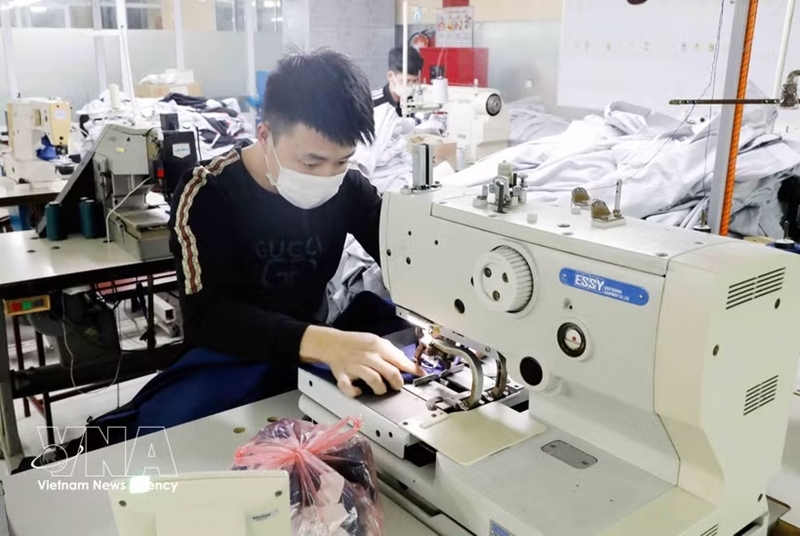
At an export-oriented apparel factory in Hung Yen province |
Key export categories, including electronics, computers, machinery, garments, wooden furniture, and farm produce, all posted vigorous gains, underscoring that Vietnamese firms are seizing reviving orders across major destinations.
Nguyen Anh Son, Director of the Agency for Foreign Trade (AFT) under the Ministry of Industry and Trade (MoIT), noted that nearly 88% of imports are machinery, equipment, raw materials, energy and production components rather than consumer goods. That composition points to companies actively expanding output and stocking up for future orders, laying the runway for an even stronger export performance in the second half.
Cutting trade deficit through stronger domestic capacity
While global trade growth looks to slow down, Vietnam’s ability to sustain robust export gains is encouraging, Son said. Still, obsessing over the deficit number alone would be shortsighted; the real story is what’s inside the import flows.
According to the MoIT, imports of production inputs are outrunning exports as the country, though deeply woven into global supply chains, remains concentrated in processing and assembly. Key components, materials and core technologies still largely come from abroad.
The priority, thus, is not just keeping exports humming but building out domestic manufacturing muscle, raising localization rates and converting export expansion into broader, better-quality economic growth.
Analysts see electronics and agricultural commodities remaining the twin engines in the second half, with electronics continuing to lead the way. Big-tech names keep pouring investment into Vietnam, supercharging demand for imported machinery, equipment and spare parts. As those projects hit full stride, export volumes should follow.
Agricultural shipments are poised to pick up more speed as demand recovers in several markets and commodity prices improve, both tailwinds that should boost export receipts and underpin overall trade growth through year-end.
Do Thi Thuy Huong, member of the Vietnam Electronic Industries Association’s executive board, said global demand for goods tied to artificial intelligence, data centers and networking gear is still climbing, opening more room for an electronics sector that already accounts for over 30% of Vietnam’s total exports.
Many firms have locked in orders through the third quarter, some into the fourth, while capital flows from international tech groups continue to show strong forward momentum, she added.
Ngo Sy Hoai, Vice Chairman and Secretary General of the Vietnam Timber and Forest Products Association, said the second half will deliver both opportunities and challenges for wood exports. Consumer demand in several major markets is stirring, and Vietnamese producers are getting more aggressive on market diversification and digital transformation. Those shifts should lend support to the industry’s export trajectory.
Tran Thanh Hai, AFT Deputy Director, said the bedrock fix is building up the domestic production base. Priority should be given to developing supporting industries, expanding homegrown raw material sources, raising added value and squeezing more benefits from free trade agreements by meeting rules of origin.
The MoIT, for its part, will step up trade promotion, diversify markets, help firms navigate headwinds and adjust to tightening requirements around green output, traceability, intellectual property and emerging trade barriers.
Looking to the rest of the year, Son struck an optimistic note, expecting the trade environment to improve gradually as logistics costs ease, raw material supplies stabilize and firms integrate more deeply into global chains. That path would help Vietnam hold export growth above 15%, keep the trade deficit manageable and reach the milestone of 1 trillion USD in total trade turnover this year.
To get there, Minister Le Manh Hung directed the ministry to upgrade foreign trade management through faster digitization, reinforce market forecasting and early warning systems, expand export markets and squeeze maximum advantage from free trade deals.
He also stressed the need to forge an integrated manufacturing ecosystem tied to supporting industries, overhaul the institutional framework and bolster governance so that export growth endures and the economy becomes more resilient, better quality and deeply competitive.
Source: VNA