    |
 |
|
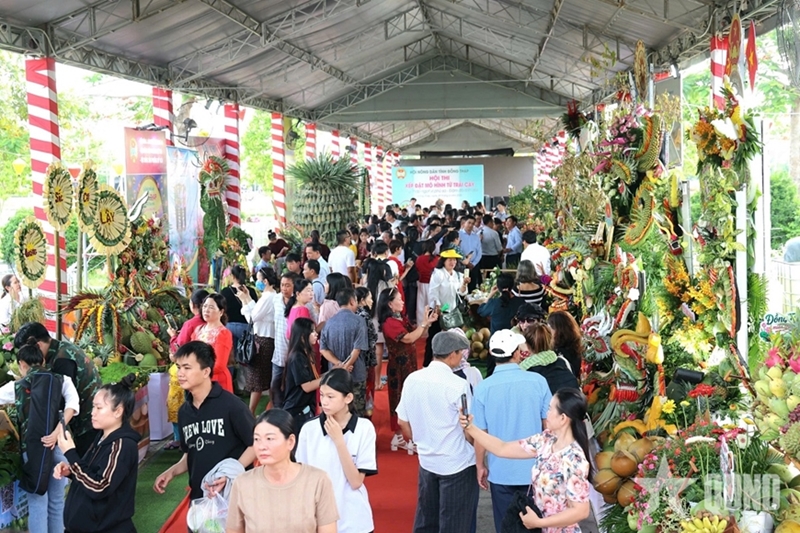
Visitors explore the first Dong Thap Fruit Festival. |
Blessed with fertile alluvial soil from the Tien River, Dong Thap has long been one of Vietnam’s leading fruit-producing regions. Vast mango orchards, thriving durian plantations, and abundant longan and citrus gardens have helped make the province the largest fruit-growing area in the Mekong Delta.
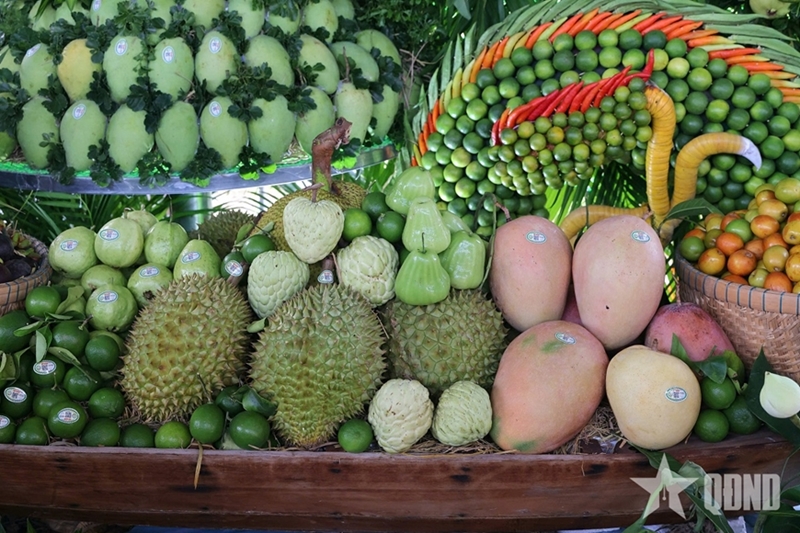
According to Vo Phuong Thuy, Director of the Dong Thap Department of Industry and Trade, the province has more than 135,331 hectares of fruit-growing land as of June 2026, producing over 2.5 million tons annually. Durian has emerged as the highest-value crop, covering about 34,000 hectares and yielding more than 557,000 tons each year. Mango remains a key commodity, with over 16,800 hectares and annual production of approximately 224,300 tons. Other major fruits include jackfruit, dragon fruit, pineapple, longan, and citrus varieties.
Despite these advantages, fruit production has long faced challenges. Traditional farming practices, fragmented production, and limited market coordination have often resulted in inconsistent quality and recurring cycles of oversupply and falling prices. Farmers have also struggled with rising input costs and market fluctuations.
|
|
 |
|
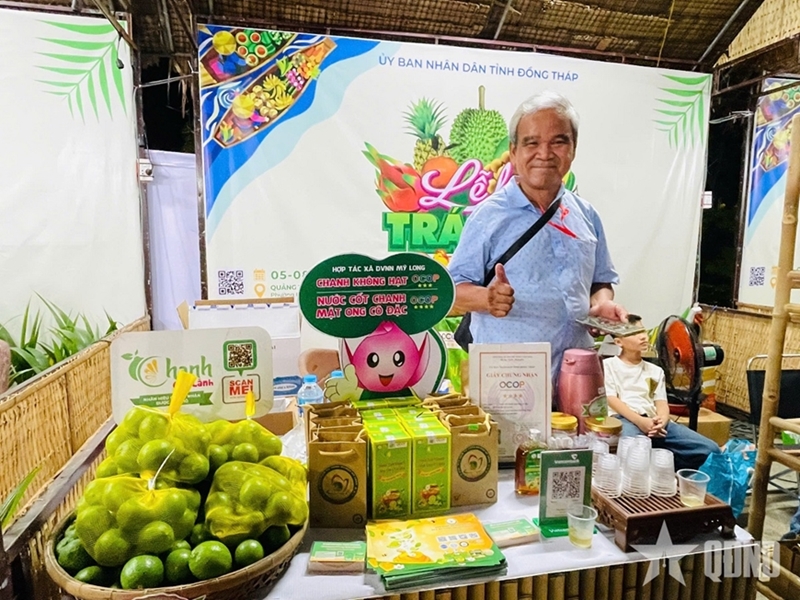
A booths showcasing fruits from a cooperative during the event |
To address these issues, Dong Thap is shifting from a focus on agricultural production to an agricultural economy model that places market demand and value creation at the center of development. The province is promoting sustainable value chains, expanding standardized production areas, and increasing the application of science and technology in cultivation.
The first Dong Thap Fruit Festival in 2026 was organized as part of that effort. Along with trade promotion activities, the event aimed to strengthen links among farmers, cooperatives, and businesses while helping build brands for the province’s signature fruit products.
Dong Thap has also expanded traceability and export readiness through the issuance of more than 3,450 planting area codes covering over 100,000 hectares. These measures have improved market access and strengthened confidence in the quality of local produce.
According to Le Ha Luan, Director of the Dong Thap Department of Agriculture and Environment, the province possesses strong advantages in key sectors such as rice, mangoes, durians, pangasius, lotus, and 889 OCOP products. However, the value generated by these brands has yet to fully reflect their potential. Commercialization of intellectual property remains limited, while connections among production areas, processing facilities, and consumer markets require further improvement.
|
|
 |
|
Several specialty fruits of Dong Thap province |
To overcome these challenges, the province is promoting a “five-party linkage” model that brings together farmers, scientists, businesses, financial institutions, and logistics providers. The initiative seeks to address issues related to technology, financing, post-harvest preservation, and product distribution while supporting long-term growth.
A notable example is My Long Agricultural Service Cooperative in My Hiep commune. The cooperative has moved beyond selling fresh seedless lemons by producing concentrated lemon-honey juice, creating additional value for local agricultural products. Supported by modern production technology, the product has established a stable market presence while providing a reliable outlet for farmers.
Over the past decade, the model has helped increase the value of seedless lemons and create stable market access for hundreds of farming households. Processing has reduced dependence on fresh-fruit markets and lessened the impact of price fluctuations.
Farmers are also adapting to market-oriented production. Nguyen Van Cuong, a member of My Tinh An Cooperative, said cooperative support has helped his family improve production practices and product quality. He currently cultivates durian, dragon fruit, and passion fruit under increasingly standardized and safe production methods.
The first Dong Thap Fruit Festival marked an important milestone in the province’s fruit industry development. During its four-day run, the event attracted about 500,000 visitors. Nearly 120 exhibition booths from businesses, cooperatives, and producers provided opportunities to promote products, establish partnerships, and expand market access.
|
|
 |
|
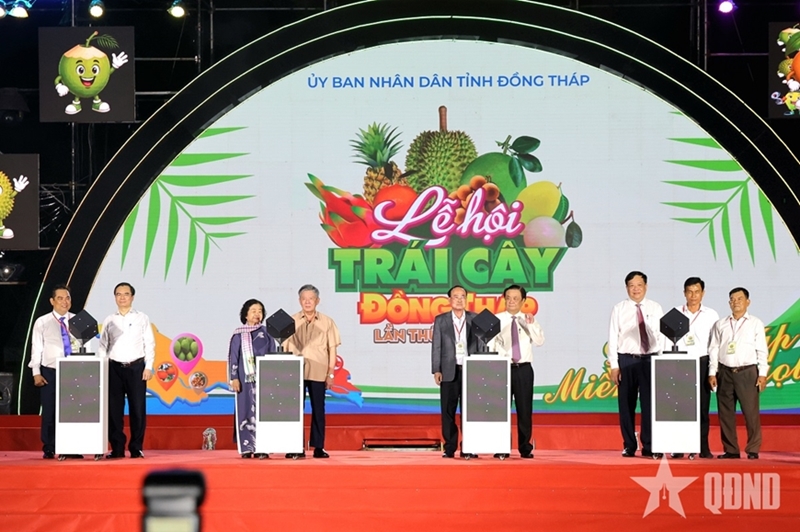
A view of the opening ceremony |
Pham Thanh Ngai, Chairman of the Dong Thap Provincial People’s Committee, said the festival was more than a showcase of agricultural products. It also served as a platform for the province to reassess its development strategy amid digital transformation and climate change, while creating momentum for improvements in production and marketing.
By hosting its first fruit festival, Dong Thap demonstrated its commitment to building a modern, efficient, and sustainable agricultural sector. Through stronger value chains and greater market integration, the province aims to increase the value of its fruit products, expand market opportunities, and provide more stable incomes for local farmers.
Translated by Tran Hoai