Thang, who is a lecturer at the Crawford School of Public Policy under the Australian National University (ANU) and Deputy Director of the ANU’s Vietnam Policy Studies Hub, told the Vietnam News Agency that as the Middle East conflict enters its fourth week, global energy supply chains, transport and trade continue to face significant disruptions. In response to emerging fuel shortages at more than 600 petrol stations nationwide, Australia has rolled out a series of emergency measures, reflecting a structured three-tier approach to energy security.
    |
 |
|
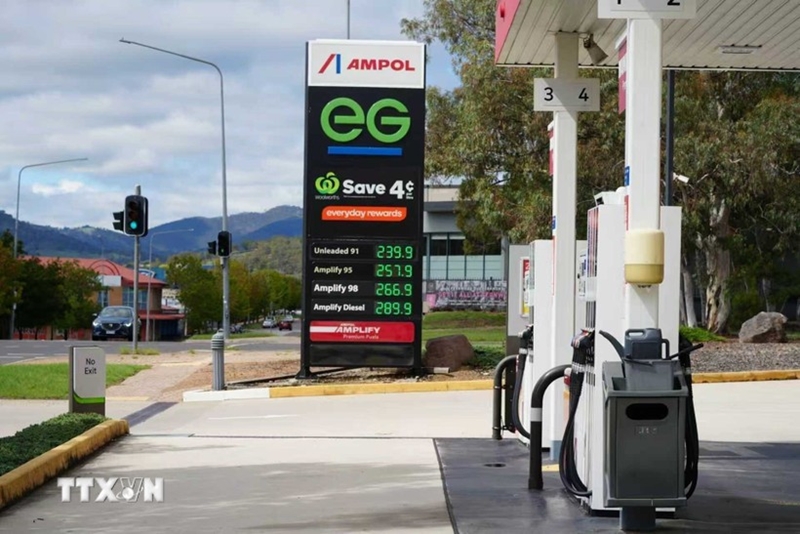
A petrol station in Canberra, Australia |
According to him, Australia’s first layer of response involves immediate market intervention. The government temporarily reduced minimum stockholding obligations for fuel importers by 20%, releasing an additional 760 million litres into the market, prioritising remote areas. Environmental fuel standards were also relaxed in the short term, while an emergency fuel task force was established to coordinate supply, monitor hoarding and price manipulation, and provide more frequent policy updates.
The second layer focuses on reinforcing domestic refining capacity. With only two major refineries remaining and around 90% of fuel consumption reliant on imports, Australia has extended financial support mechanisms to maintain local processing capability.
The third layer aims to strengthen gas and electricity security as a buffer for the broader energy system. The government is gradually shifting towards mechanisms that ensure domestic gas supply, though these are still being refined. Despite being one of the world’s top LNG exporters, alongside the US and Qatar, domestic gas prices, especially in eastern regions, remain closely linked to global markets.
According to Thang, these measures have helped stabilise supply chains and market sentiment in the short term but fall short of addressing structural vulnerabilities, notably heavy dependence on imported refined fuel and exposure to international price fluctuations.
Drawing lessons for Vietnam, Thang recommended strengthening short-term resilience through diversified supply, strategic reserves and long-term contracts. He also emphasised the need for a holistic power system approach, prioritising transmission, storage and market reforms.
In the longer term, Vietnam should align clean energy industrial policy with supply chain security, while enhancing institutional coordination to ensure a balanced approach to growth, affordability, sustainability and energy security.
Source: VNA