The move follows an official dispatch signed by Deputy Prime Minister Bui Thanh Son, head of the National Steering Committee for Anti-smuggling, Counterfeit Goods and Trade Fraud (National Steering Committee 389), which calls for intensified action against smuggling, trade fraud, and illegal trading of petroleum products in the context of volatile energy market.
    |
 |
|
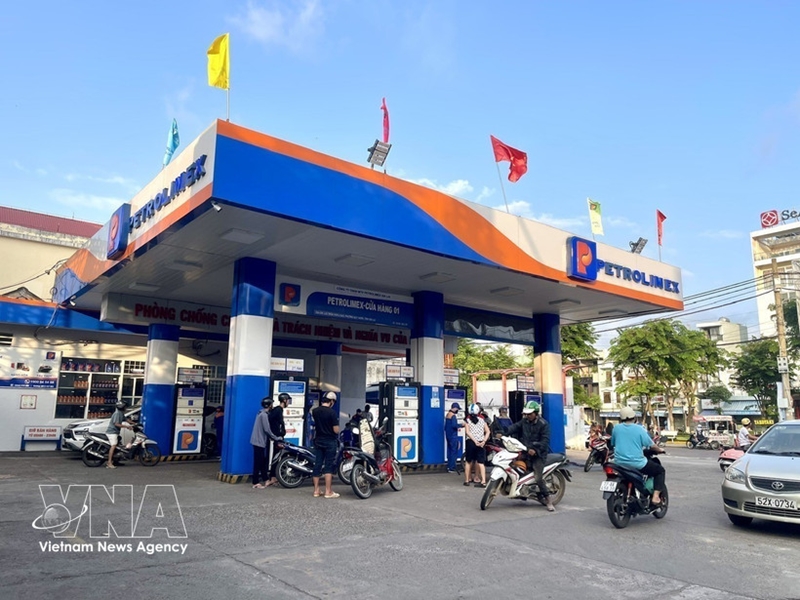
At a petrol retail outlet |
Under the directive, customs units, particularly those operating at land border gates, inland waterways and seaports, have been instructed to step up patrols and inspections of vehicles entering and exiting Vietnam. Special attention will be given to boats, barges, trucks and other means of transport suspected of concealing fuel in modified tanks or hidden compartments.
Authorities are also required to strictly prevent foreign vehicles from entering Vietnam to purchase fuel beyond standard tank capacity, storing it in additional containers before exiting the country.
Enhanced monitoring will be carried out at anchorage and gathering areas where vessels and boats show suspicious signs. During exit procedures, customs officers are tasked with carefully verifying declarations on fuel volumes in use and supplied, in order to detect and prevent illegal trading or export of petrol.
The customs force has been requested to pro-actively coordinate and share information with local authorities and relevant agencies to better understand evolving smuggling tactics and deploy timely and effective countermeasures.
Earlier, on March 19, the Government Office issued an official dispatch requesting ministries, agencies and localities to intensify the fight against smuggling, trade fraud and counterfeit goods in petroleum trading.
Relevant forces, including customs, tax authorities, border guards, coast guard, market surveillance units and police, have been directed to strengthen inspections and promptly detect and prevent illegal activities such as smuggling, hoarding, price manipulation, policy abuse, and violations of fuel trading regulations. Violators must be handled strictly in accordance with the law, while inter-agency coordination and information sharing are to be enhanced.
Preliminary data from the Customs Department shows that from the beginning of the year to March 15, Vietnam imported nearly 2.71 million tons of petroleum products, worth over 1.94 billion USD. This represents a year-on-year increase of 42–43% in both volume and value.
The sharp rise in fuel imports has been attributed to escalating tensions in the Middle East, which have disrupted global energy markets and heightened supply uncertainties.
Source: VNA