    |
 |
|
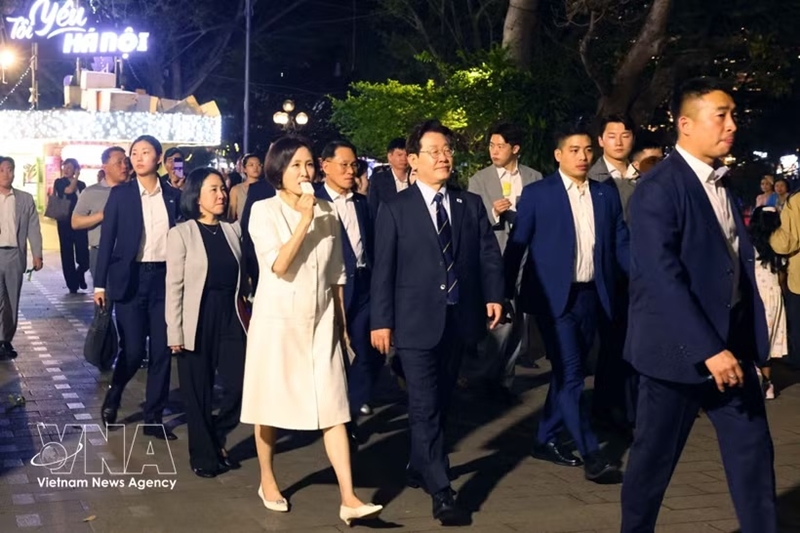
President of the Republic of Korea Lee Jae Myung and his spouse take a stroll around Hoan Kiem Lake in Hanoi during a visit to Vietnam in April 2026. |
Such moments are not new. In May, 2016, then U.S. President Barack Obama sat on a plastic stool to savor bun cha (rice vermicelli with grilled pork) in Hanoi alongside chef Anthony Bourdain, creating an image that went viral around the world. Former U.S. President Bill Clinton also tasted pho during his Vietnam visit in 2000, while Canadian Prime Minister Justin Trudeau and Australian Prime Ministers Malcolm Turnbull and Anthony Albanese were seen enjoying local staples such as iced coffee, banh mi, and draft beer during their Vietnam visits.
Notably, these experiences took place not in luxury venues but at modest eateries serving familiar dishes like pho, bun cha, banh mi (Vietnamese baguette), and iced milk coffee, foods deeply embedded in daily Vietnamese life.
Vietnamese cuisine is increasingly acting as a cultural ambassador, Duong Thanh Dao, Vice Chairman for Communications of the Food and Beverage Association of Ho Chi Minh City, told Thanh Nien (Young People) newspaper.
Duong Duc Minh, Deputy Director of the Institute for Economic and Tourism Development Research, said Vietnam’s food culture remains closely tied to family life, sharing, and social connection, unlike the fast-food orientation seen in many countries. This cultural depth helps explain why images of foreign leaders dining at casual venues resonate strongly with the public.
“They are not just tasting food but experiencing a very authentic, everyday cultural space,” he said.
From natural diffusion to a systematic strategy
In recent years, Vietnamese dishes have gained wider global recognition through travelers and international rankings. A social media group named “Vietnam Banh Mi Appreciation Society,” with nearly 200,000 foreign members, is dedicated to reviewing banh mi from street stalls to established shops, reflecting growing international enthusiasm for the dish.
Most recently, banh mi was again listed by CNN among the world’s best sandwiches, underscoring its sustained appeal.
According to culinary artisan Ho Dac Thieu Anh, the strength of Vietnamese cuisine lies in its balance of flavors, such as salty, sweet, sour, and spicy, combined with diverse local ingredients. While some Asian cuisines emphasize a dominant taste, Vietnamese food prioritizes balance and health.
Each region offers distinct variations, from Hanoi-style pho to central and southern interpretations of dishes such as banh xeo (sizzling pancake) and bun bo Hue (Hue-style beef noodle soup), giving visitors a rich and varied culinary journey, he said.
However, much of Vietnam’s culinary wealth remains underexplored. With 54 ethnic groups and a wide range of seasonal specialties, the country holds significant potential to develop unique food-based tourism experiences.
|
|
 |
|
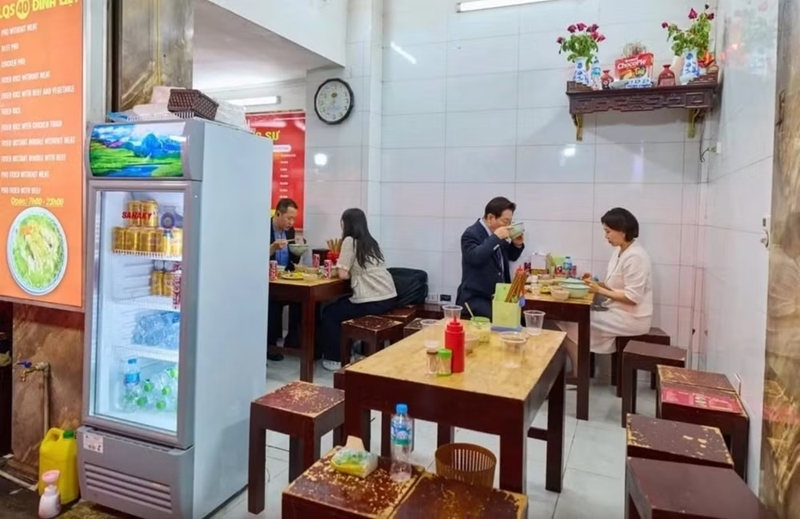
President of the Republic of Korea Lee Jae Myung and his spouse have dinner at a restaurant in Hanoi on April 23. (Photo: President Lee Jae Myung's Instagram) |
Minh noted that simply including local dishes in tour menus is not enough to leave a lasting impression. Instead, visitors should be offered immersive and emotionally engaging experiences that inspire them to share their journeys and return.
Dao stressed that now is a crucial time to elevate Vietnamese cuisine globally. He called for a shift towards a more strategic approach focusing on standardizing quality while preserving authenticity, strengthening links between cuisine and tourism, and promoting the sector through communication and creative industries. Such efforts would help position Vietnamese cuisine as a key pillar of national soft power, aligned with global trends towards “delicious, green, and sustainable” development.
Source: VNA