Familiar shapes, such as carps, dragonflies, and crabs, once a source of excitement for children, now exist only as faint memories. Driven by that longing, Thuy set out to rediscover old lantern designs, not only to preserve their forms but also to retrace how earlier generations embedded beliefs and aspirations into each piece.
    |
 |
|
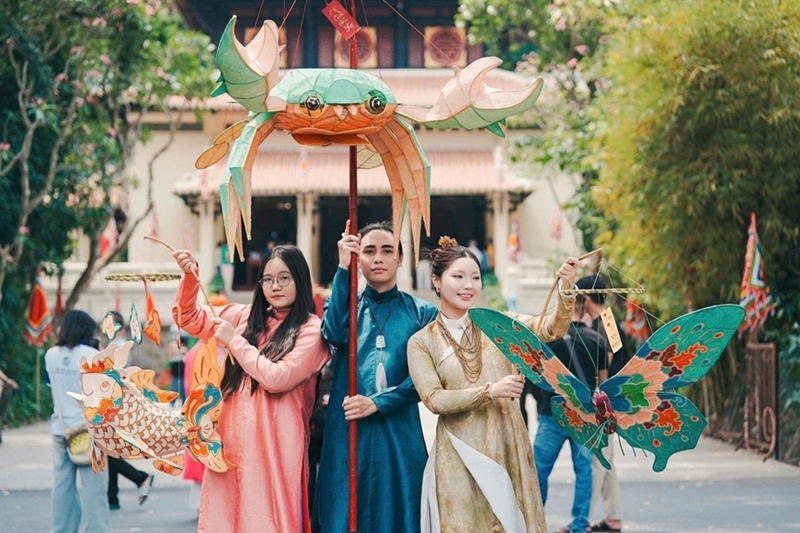
Many young people enjoy using lantern designs from Kim Thuy’s workshop |
The journey, she says, has not been easy. Traditional lanterns have nearly disappeared, and the artisans who once crafted them are no longer around. Her only references are a few faded photographs kept for years. From these fragments, she studies, experiments, and refines, assembling, adjusting, and remaking whenever necessary. While some details may not be entirely accurate, she strives to preserve the “soul” of each lantern, from its lines to the meanings once entrusted to it.
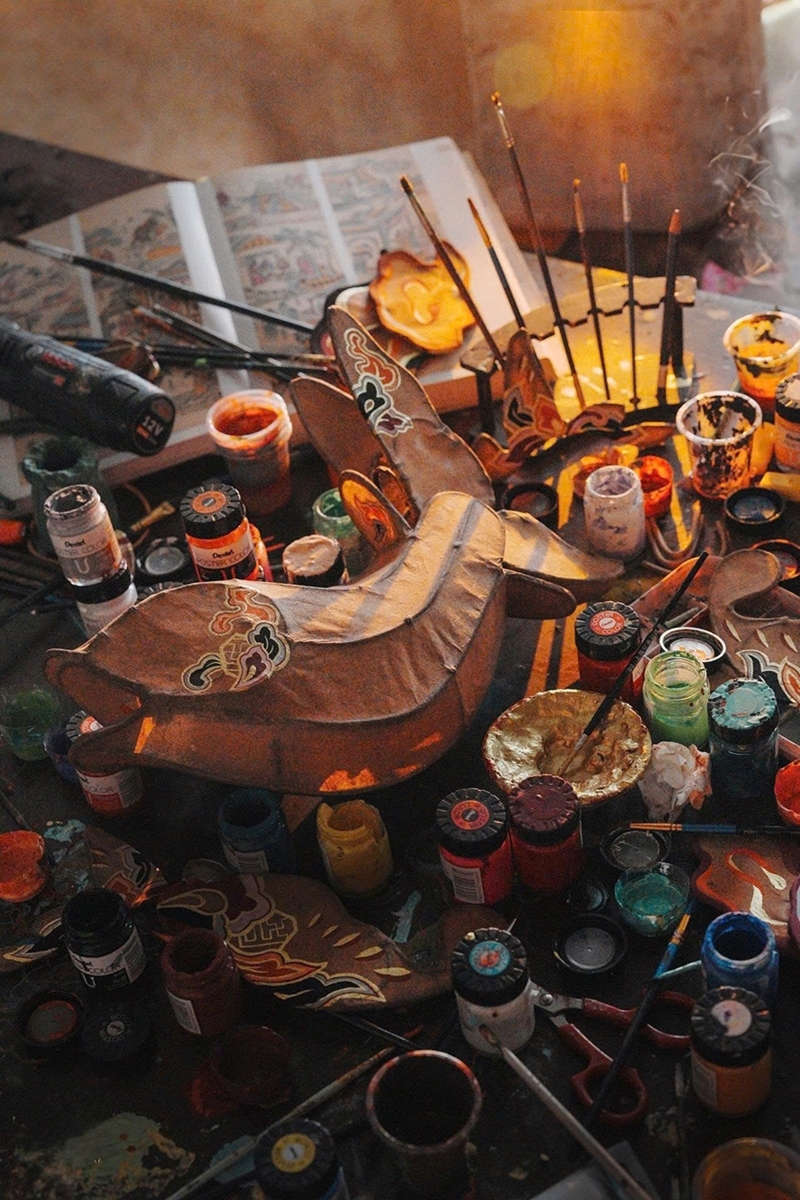
At her workshop, lanterns are meticulously handcrafted using bamboo strips, cellophane, and Do paper. Frames are shaped piece by piece before the processes of pasting, layering, and painting. Each stage requires precision and cannot be rushed; a flawed frame affects the paper, and uneven paper ruins the painted details. Making a lantern demands slowness, care, and immense patience.
|
|
 |
|
The lanterns are meticulously handcrafted. |
The materials create distinct visual effects. Cellophane produces bright, vivid colors that reflect light and cast lively patterns, while Do paper diffuses light softly, creating a warm, calm atmosphere. Depending on the intended space, materials are carefully selected to preserve each lantern’s character.
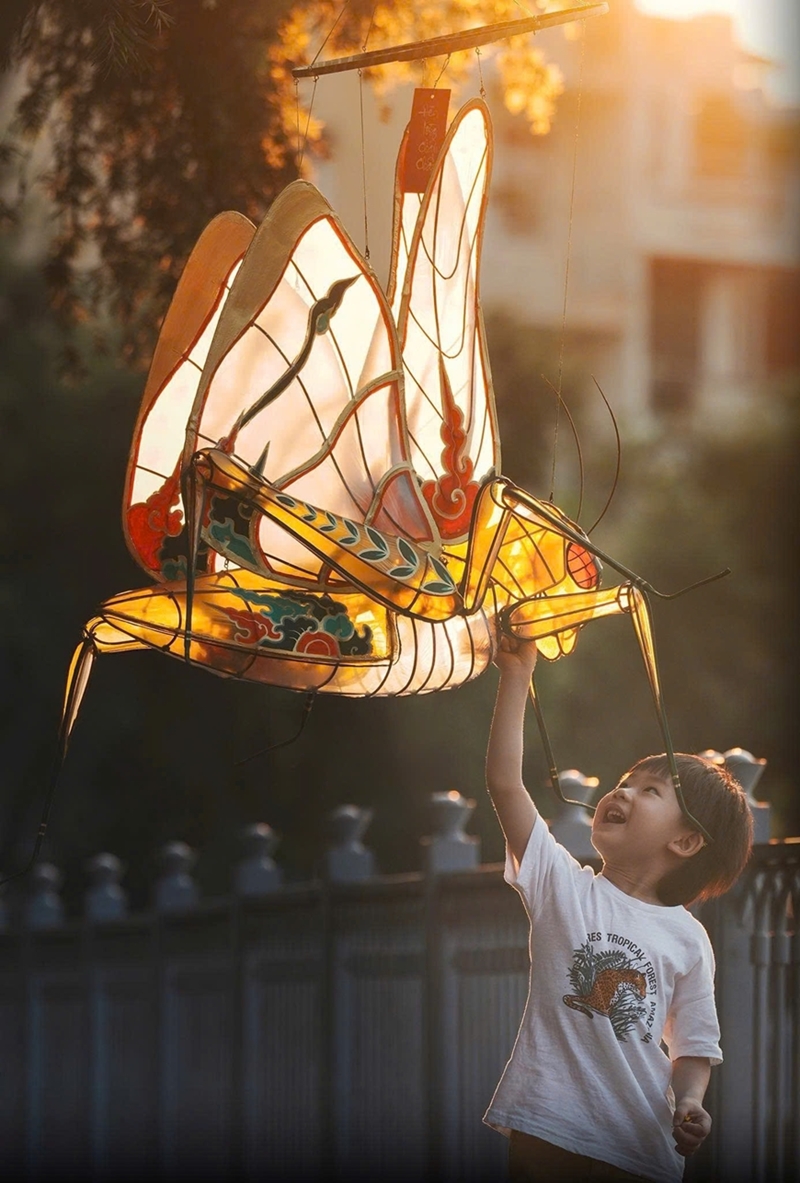
Many traditional designs have been restored and further developed. Some are simple and small, evoking childhood memories, such as crab-shaped lanterns symbolizing hopes for academic success. Others are larger and more intricate, including fish and dragon lanterns with sophisticated details. These objects are no longer just decorations but have become part of modern living spaces, carrying cultural stories across generations.
Today, her work continues to attract interest. Some are drawn to their rustic yet refined beauty, while others seek a connection to their past or want their children to experience objects once cherished by earlier generations. In this way, traditional lanterns endure in everyday life in a simple, lasting form.
However, the craft demands patience over technique. It is repetitive work that requires intense focus, where a small mistake can mean starting over. Not everyone stays; some leave, while others take time to adapt to the slow rhythm. In a challenging economy, such meticulous work is easily set aside as it does not yield quick returns. Without those dedicated to its preservation, these traditional values risk fading away.
For that reason, Thuy does not focus on widespread recognition. She seeks “the right people,” those who truly appreciate the craft and are willing to learn step by step. She is always ready to guide them. Likewise, visitors who come seeking the familiar light of childhood help sustain the craft. As long as these connections exist, the lanterns will continue to be lit.
|
|
 |
|
An old lantern design fascinating children |
Thuy continues to develop new designs, hoping her work will highlight another facet of Vietnamese culture. For her, preservation begins with everyday actions. She lets her children stay beside her, observing and engaging with the process so they can gradually appreciate their heritage.
To her, making lanterns is more than producing handmade objects; it is a way of preserving memory and a way of life. When a lantern is lit, it does more than illuminate a room and evokes a quiet reminder that traditional values remain, finding new ways to endure.
Translated by Tran Hoai