With an area of over 6,772 sq.km and a population exceeding 14 million, the city faces strong demand for a modern and comprehensive network of cultural and sports facilities, especially in suburban, rural, coastal and newly merged areas.
    |
 |
|
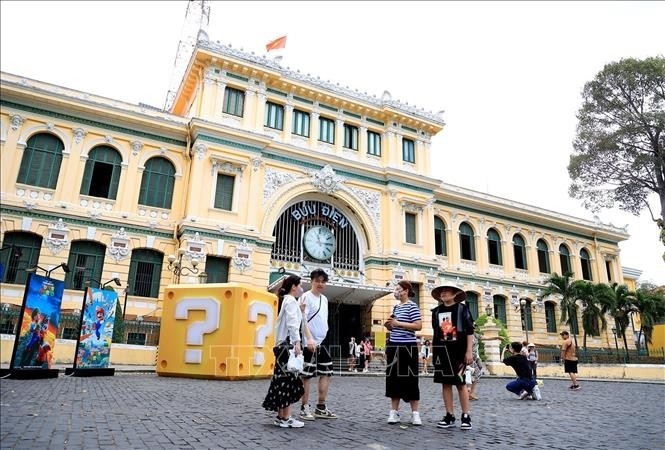
The Central Post Office, a distinctive architectural landmark in the heart of Ho Chi Minh City |
However, only about 43% of local wards and communes currently have such facilities, a rate much lower than some neighboring provinces, according to the municipal Department of Culture and Sports.
Beyond shortages and ageing infrastructure, the system is constrained by overlapping management regulations on land, public assets and finance, unclear legal and financial mechanisms, and a lack of qualified human resources amid rapid urbanisation and digital transformation.
Experts said Ho Chi Minh City should promptly tackle bottlenecks and complete the system of cultural facilities so as to create a healthy cultural environment where residents can both create and enjoy cultural values.
This is also reflected in the targets specified in Resolution No.80, which seeks to ensure that all local administrations and units of the armed forces have cultural facilities meeting local residents and members of the armed forces’ creative needs and culture enjoyment demand, and that 90% of grassroots cultural institutions operate regularly and effectively.
Many insiders pointed out that the entertainment industry is facing a lack of large-scale venues capable of hosting events for tens of thousands of people. Meanwhile, existing stadiums such as Thong Nhat or Go Dau accommodate only around 20,000 spectators and are outdated. This fact becomes a major challenge given the city’s status as Vietnam’s leading entertainment and sports center.
For the 2026–2030 period, with a vision to 2045, Ho Chi Minh City aims to become a hub for services, culture, creativity, finance, trade, and science-technology in Southeast Asia.
Secretary of the municipal Party Committee Tran Luu Quang stated that Ho Chi Minh City is striving for not only double-digit growth but also cultural advancement to improve people’s life quality, thereby contributing to overall national development.
The Department of Culture and Sports said municipal authorities are finalizing a plan to develop modern and efficient grassroots cultural and sports facilities through 2035, aligned with the city’s master plan and the goal of building a creative and smart city.
Major projects are already underway. In January 2026, the municipal People’s Committee and Sun Group broke ground on the Rach Chiec National Sports Complex, a project worth more than 145 trillion VND (over 5.5 billion USD). Its centerpiece will be a 70,000-seat stadium with a retractable roof and multifunctional design capable of hosting international sporting events, large-scale concerts and major entertainment programs. The complex will also include commercial, service and convention spaces to support event tourism and the night-time economy.
In August 2025, the Phu Tho circus and multi-purpose performance theater was inaugurated, serving as both a performance venue and a center for training, international cooperation and cultural exchange.
Dr. Huynh Van Sinh from the Ho Chi Minh City Cadre Academy held that the launch of large-scale cultural and sports projects reflects a policy shift from purely physical infrastructure toward social infrastructure.
Beyond improving public access to cultural and recreational services, these investments are expected to help create spillover effects for the economy, promote Vietnam’s stature, lay a cornerstone for hosting major events, and develop a world-class cultural and sports ecosystem in the new era, he added.
Source: VNA