Ahead of the visit, Deputy Minister of Foreign Affairs Dang Hoang Giang spoke to the press about the significance, objectives, and priorities of the upcoming meetings, as well as Viet Nam’s contributions to ASEAN cooperation.
The 49th ASEAN Summit and related summits, scheduled for November 14-17 in Manila, will provide an important opportunity for leaders to review the Philippines’ ASEAN Chairmanship year, assess the first year of implementing the ASEAN Community Vision 2045, and identify cooperation priorities for the period ahead, Deputy Minister Dang Hoang Giang said.
    |
 |
|
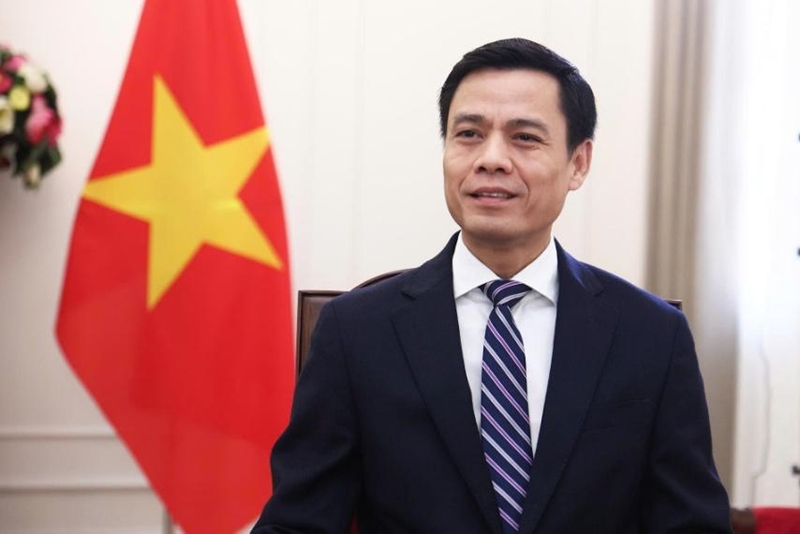
Deputy Minister of Foreign Affairs Dang Hoang Giang (Photo provided by the Ministry of Foreign Affairs) |
The summits will take place amidst rapid and complex developments in the global and regional landscape. Strategic competition, economic uncertainties, and cross-border challenges require ASEAN to enhance its immediate response capacity while strengthening the foundations for long-term development. Against this backdrop, the Philippines has made efforts to fulfill its role as ASEAN Chair, working with member states to advance priorities related to peace, security, economic integration, and improved livelihoods.
During the first year of implementing the ASEAN Community Vision 2045, ASEAN has continued to promote intra-regional integration, develop new economic cooperation frameworks, and strengthen relations with its partners. However, greater coordination and more effective implementation of commitments are needed to translate cooperation outcomes into tangible benefits.
At the 48th ASEAN Summit in Cebu, leaders agreed on various measures to strengthen the bloc’s collective response capacity, particularly in energy security, food security, supply chain stability, and citizen assistance. Building on these outcomes, the upcoming summits are expected to generate further momentum for translating decisions into action and commitments into results, while maintaining the pace of ASEAN Community building amidst ongoing changes.
Building on the priorities of the 2026 ASEAN Chairmanship and the cooperation achievements to date, the summits are expected to focus on three major directions.
First, ASEAN will seek to strengthen unity, resilience, and strategic autonomy, while enhancing consultation, coordination, and mutual support in preventing and responding to challenges, thereby maintaining a peaceful, secure, and stable environment for development.
Second, the bloc will promote the effective implementation of the ASEAN Community Vision 2045, ensuring greater coherence and complementarity among commitments, initiatives, and the three pillars of cooperation. Priorities will include economic integration and connectivity, tapping new growth drivers, and coordinating efforts to address cross-sectoral and transnational issues, ensuring that people and businesses benefit tangibly from the Community-building process.
Third, ASEAN will reinforce its central role in the regional architecture and expand and deepen relations with partners on the basis of equality and mutual benefit, mobilizing resources to support development priorities. The bloc will also seek to strengthen its common voice and role in promoting dialogue and cooperation, upholding international law, and contributing to peace, stability, and prosperity in the region and the world.
In addition, the 15th ASEAN Leaders’ Interface with the ASEAN Inter-Parliamentary Assembly (AIPA), scheduled for November 14-15, and the 47th AIPA General Assembly (AIPA-47), to be held from November 17-18, will provide opportunities to enhance complementarity between intergovernmental and inter-parliamentary cooperation.
Through their legislative, supervisory, and representative functions, national parliaments help create favorable conditions for the effective implementation of regional commitments. Closer coordination between the two mechanisms will help translate cooperation orientations into action at the national level, bringing the ASEAN Community-building process closer to the people.
Regarding the significance, objectives, and priorities of Prime Minister Le Minh Hung’s participation in the summits, Deputy Minister Dang Hoang Giang said the visit represents a concrete step in implementing Viet Nam’s foreign policy of independence, self-reliance, resilience, and multilateralization and diversification of external relations, in line with the spirit of the 14th National Party Congress and the guidelines and orientations of the Politburo and Secretariat on foreign affairs and international integration. It also reaffirms that ASEAN remains a top strategic priority in Viet Nam’s foreign policy.
Building on Viet Nam’s proposals and contributions at the 48th ASEAN Summit, the country will focus on promoting the implementation of commitments, removing bottlenecks, and improving cooperation effectiveness. The overarching approach is to strengthen unity to enhance collective strength, promote integration to boost resilience, and use the interests of people and businesses as the measure of results.
Accordingly, Viet Nam will focus on three priorities.
First, Viet Nam will work with other member states to maintain a peaceful, secure, and stable environment, laying a strategic foundation for building an ASEAN Community by 2045 that is resilient, innovative, dynamic, and people-centered. Viet Nam will continue to promote consensus, narrow differences, uphold ASEAN’s fundamental principles and international law, advance dialogue and ASEAN-led mechanisms, and strengthen the bloc’s unity and centrality.
Second, Viet Nam will seek tangible progress in integration and enhance ASEAN’s competitiveness and resilience. Key areas will include economic, trade, infrastructure, and supply chain connectivity; removing intra-regional barriers; and promoting science and technology, innovation, digital transformation, and green transition. At the same time, Viet Nam will strengthen coordination in ensuring energy security, food security, and human security, thereby reinforcing the foundations for sustainable regional development.
Third, Viet Nam will further deepen cooperation with partners and make effective use of available resources to support ASEAN’s development priorities. Prime Minister Le Minh Hung’s co-chairing of the Mekong-Japan Summit with the Japanese Prime Minister will be a concrete and practical initiative to promote connectivity, sustainable development, and the narrowing of development gaps, contributing to ASEAN Community building.
Meanwhile, bilateral meetings between the Prime Minister and leaders of other countries and international organizations on the sidelines of the summits will help strengthen political trust between Viet Nam and its partners, promote the implementation of agreements, address outstanding issues, and expand cooperation opportunities. These engagements will also help Viet Nam effectively combine multilateral diplomacy with the advancement of bilateral relations, maximizing resources for national development.
Notably, the participation of National Assembly Chairman Tran Thanh Man and a high-level delegation of the Vietnamese National Assembly in AIPA-47 and related activities will provide an opportunity to enhance synergy and complementarity between State diplomacy and parliamentary diplomacy.
The two Vietnamese delegations will work together to advance shared priorities, linking cooperation orientations with legislative improvements, oversight, and the implementation of commitments, thereby translating regional cooperation into practical outcomes.
Through its participation in ASEAN and AIPA activities, Viet Nam will consistently convey the message of proactively putting forward initiatives, responsibly honoring commitments, and translating them into practical action, while working with other member states to build a united, resilient, and prosperous ASEAN for the people.
Translated by Song Anh