Speaking about the outcomes of National Assembly (N.A.) President Tran Thanh Man's working visit to the Philippines, Van said the trip achieved all its objectives and made a meaningful contribution to the overall success of the assembly.
She identified three key outcomes, beginning with Viet Nam's efforts to demonstrate its active and responsible engagement in AIPA and strengthen its position within the regional parliamentary forum.
    |
 |
|
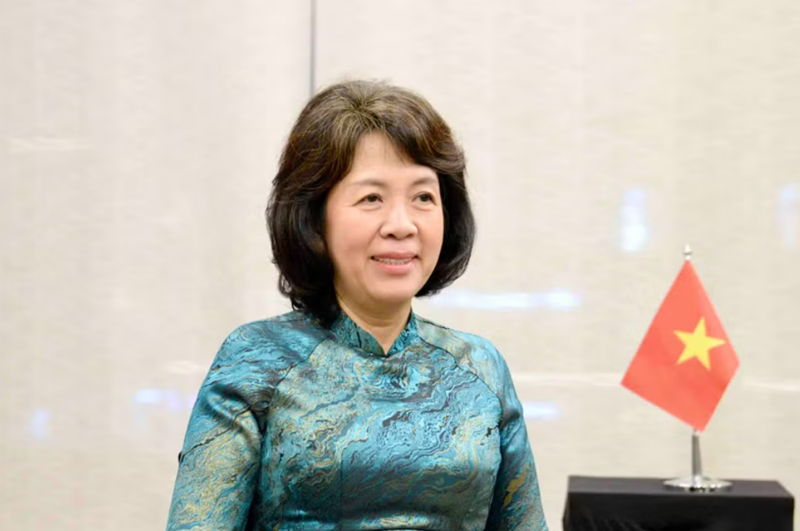
Deputy Minister of Foreign Affairs Nguyen Thi Hong Van (Photo: Ministry of Foreign Affairs) |
Viet Nam's commitment was reflected in a message from General Secretary of the Communist Party of Viet Nam Central Committee and State President To Lam to AIPA-47, as well as in the speech delivered by N.A. President Tran Thanh Man at the plenary session. Both messages set out Viet Nam's perspectives and proposals for enhancing AIPA's contribution to building a peaceful, prosperous and people-centered ASEAN.
In his message, General Secretary and State President To Lam called for member parliaments to make fuller use of their legislative and oversight functions. He also stressed that parliamentary activities should reflect the aspirations of the people, promote the harmonization of legal systems and help establish institutional conditions conducive to inclusive and sustainable development.
Addressing the assembly, N.A. President Tran Thanh Man outlined three priorities for AIPA as ASEAN faces an evolving regional and global landscape.
He called for parliaments to help preserve peace, stability and the rule of law by promoting dialogue, fostering trust, reinforcing solidarity and upholding ASEAN centrality.
He also highlighted the need for an appropriate legal framework to support new sources of growth, including the green and digital economies, AI governance, a just energy transition and food security. Such frameworks would help lay the groundwork for a more prosperous ASEAN.
Equally important, he said, was ensuring that people remain at the center of parliamentary decision-making, enabling citizens and businesses to benefit directly from regional integration.
The Vietnamese delegation also introduced four draft resolutions addressing shared regional concerns. The proposals covered closer inter-parliamentary coordination in preventing and managing interconnected security risks; more innovative development models to enhance the resilience and competitiveness of ASEAN economies and promote inclusive growth; stronger people-to-people understanding and information-sharing through parliamentary cooperation; and greater participation and leadership by women in developing responsible, safe, inclusive and human-centered AI governance in ASEAN.
Van said these initiatives reflected Viet Nam's proactive and innovative approach to regional issues, with people-centered development at their core. They also provide a foundation for expanding cooperation with AIPA members, contributing to regional peace and stability, and mobilizing resources for Viet Nam's development targets through 2030 and 2045. At the same time, the country's engagement is expected to further raise the profile of the Vietnamese National Assembly within AIPA and other regional and international parliamentary mechanisms.
The second major outcome was the visit's contribution to closer relations with the Philippines, which holds the ASEAN chairmanship and AIPA presidency in 2026. Viet Nam's participation demonstrated its support for the Philippines while creating further momentum for the two countries' Enhanced Strategic Partnership and cooperation between their legislative bodies.
In talks with the Presidents of the Philippine Senate and House of Representatives, N.A. President Tran Thanh Man discussed ways to maintain regular exchanges at all levels. The leaders also emphasized the importance of parliamentary institutions in completing the action plan for the Enhanced Strategic Partnership and overseeing its implementation.
Their discussions extended to practical cooperation in areas of mutual interest, particularly agriculture, food security, science and technology, education, culture, tourism, digital transformation and people-to-people exchanges. Both sides also pledged to strengthen coordination and support each other at multilateral forums.
The third outcome stemmed from Viet Nam's bilateral engagements with international partners during the visit. These meetings provided an opportunity to explain the Party and State's policies, share the country's development achievements following the 14th National Party Congress and highlight the National Assembly's role in socio-economic development.
The exchanges also offered opportunities for Vietnamese representatives to learn from international experience in parliamentary organization and operations. Discussions helped strengthen mutual understanding, trust and friendship with legislators from other countries, while identifying new directions for cooperation between their respective legislatures.
In addition to parliamentary engagement, the meetings addressed sectors of strategic importance to the development priorities of the countries concerned. These included economic and trade cooperation, finance, energy, digital transformation, high-tech agriculture, processing industries and logistics.
Turning to the next steps, Van said relevant National Assembly agencies, ministries and sectors would coordinate efforts to implement the resolutions adopted at AIPA-47 in a timely manner, ensuring that regional commitments are translated into domestic policies and legislation.
She emphasized that parliamentary diplomacy would continue to go hand in hand with legislative work, oversight activities and decisions on major national issues. Viet Nam would also prepare its national report on the implementation of AIPA resolutions, helping strengthen accountability and improve the fulfillment of common commitments.
The Vietnamese National Assembly will maintain an active and responsible presence within AIPA, working alongside member parliaments to enhance the assembly's contribution to the building of the ASEAN Community.
Viet Nam will also coordinate closely with Singapore and support its work as AIPA Chair in 2027. Closer links between parliamentary and governmental channels will be pursued to help ensure the effective implementation of the ASEAN Community Vision 2045.
Meanwhile, the outcomes of bilateral meetings with international partners will be followed up through concrete cooperation activities. Relevant agencies will work to turn agreements and shared understandings into practical initiatives, further strengthening Viet Nam's relations with other countries, including ties between their respective legislative bodies.
Van added that Viet Nam would continue facilitating parliamentary exchanges at all levels and broadening cooperation among parliamentary committees, friendship parliamentary groups, women parliamentarians and young parliamentarians. The country would also maintain coordination and mutual support with partners at regional and international inter-parliamentary forums.
Translated by Chung Anh