March 20, 2026 | 20:53 (GMT+7)
Cambodia successfully restores Shiva statue from 10,000 fragments
Cambodia’s Ministry of Culture and Fine Arts on March 19 announced the successful restoration of a 1,000-year-old statue of the dancing god Shiva from more than 10,000 fragments collected over several decades.
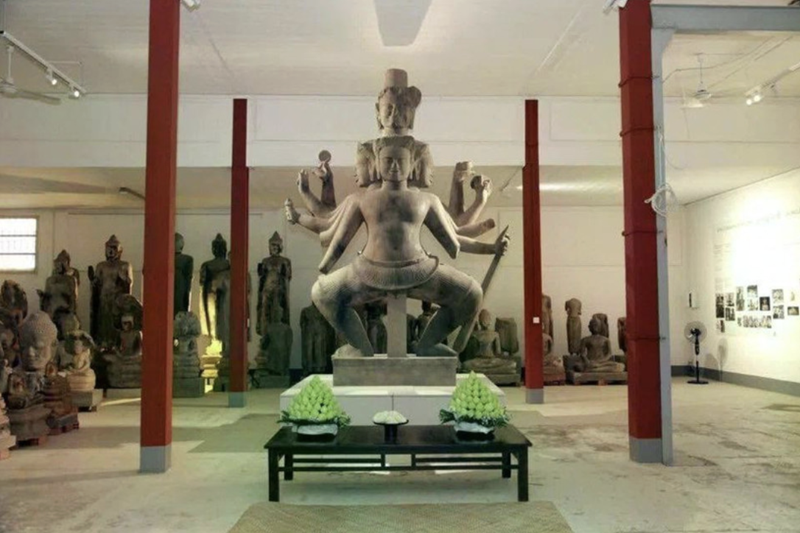
The 5m and 7-ton sandstone sculpture, with 10 arms and five faces, dates back to the 10th century from the site of an ancient capital of the Khmer empire, Koh Ker.
The temple ruins of Koh Ker in northern Cambodia were listed as a UNESCO World Heritage Site in 2023.
    |
 |
|
Cambodian experts in cooperation with the French School of the Far East spends five years restoring the Dancing Shiva, unveiled on March 18, 2026. (Photo: Royal Embassy of Cambodia to the Republic of Bulgaria) |
The Dancing Shiva was unveiled on March 18 at the Angkor Conservation Centre in Siem Reap city, home of the renowned Angkor Wat heritage site, the ministry said.
Cambodian experts in cooperation with the French School of the Far East (EFEO) spent five years restoring the immense artwork, it added.
The statue “was toppled in the 14th century and shattered into more than 10,000 fragments by looters” during the country’s years of civil war, according to a statement from the culture ministry, EFEO and others involved in its reconstruction.
During the process, restorers recorded 2,750 fragments with sculpted surfaces and identified more than 700 joins, the statement said.
Officials hope to return the sculpture to Koh Ker in an effort to attract more tourists to the site, the ministry said.
Cambodia welcomed home 74 cultural artefacts in February, returned to the country after being plundered by notorious British antiques smuggler Douglas Latchford.
Thousands of relics are believed to have been trafficked out of Cambodia over the years. Experts say the trade thrived from the mid-1960s to the 1990s.
Source: VNA