April 15, 2026 | 22:46 (GMT+7)
ASEAN promotes crisis response mechanisms to cope with Middle East conflict
Member states of the Association of Southeast Asian Nations (ASEAN) have agreed to strengthen coordination to mitigate the impact of the conflict in the Middle East on trade, energy, and food security in the region.
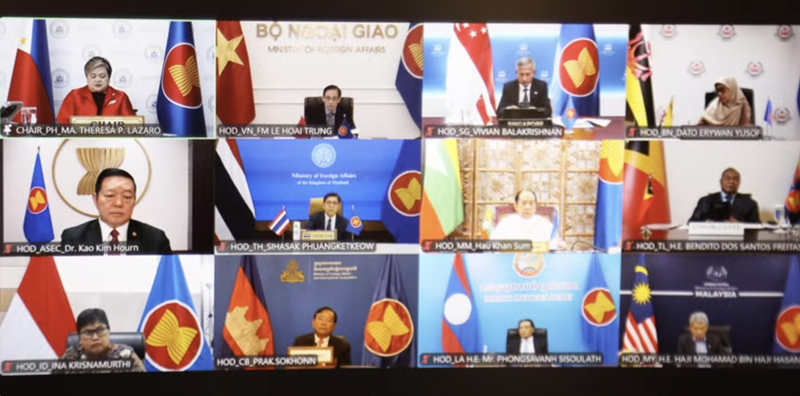
At the second Special ASEAN Foreign Ministers' Meeting on the situation in the Middle East, held online on April 13, senior diplomats emphasized the need to maintain intra-ASEAN trade and investment flows while strengthening supply chain connectivity, according to a statement from the Philippines – ASEAN Chair in 2026.
The ministers stressed the need to ensure timely, reliable, and secure access to essential goods, raw materials, and energy supplies while avoiding unnecessary trade restrictions.
    |
 |
|
ASEAN foreign ministers meet virtually to exchange views and coordinate ASEAN responses to the complex and rapidly evolving situation in the Middle East. (Photo: baochinhphu.vn) |
Regarding energy, they proposed that ASEAN make full use of existing cooperation mechanisms such as the ASEAN Petroleum Security Agreement (APSA), the ASEAN Power Grid initiative, and the Trans-ASEAN Gas Pipeline to enhance emergency response capacity. They also called for promoting energy diversification, including renewable and alternative sources, and prioritizing mutual support in times of supply disruption.
On food security, the meeting underscored the importance of strengthening alternative transport and logistics routes to ensure the smooth flow of food, agricultural inputs, and other necessities. ASEAN should also consider establishing joint coordination mechanisms, including regional stockpiling options, to safeguard essential supplies.
In addition, the ministers agreed to study the development of a ministerial-level crisis communication mechanism to enhance information sharing and coordinate the bloc’s response to large-scale emergencies.
Source: VNA