The achievement, made by researchers from the Vietnam Academy of Science and Technology (VAST), not only opens up new research directions into the evolutionary history of human populations but also provides valuable genetic data to help clarify links between ancient and modern populations in the region.
    |
 |
|
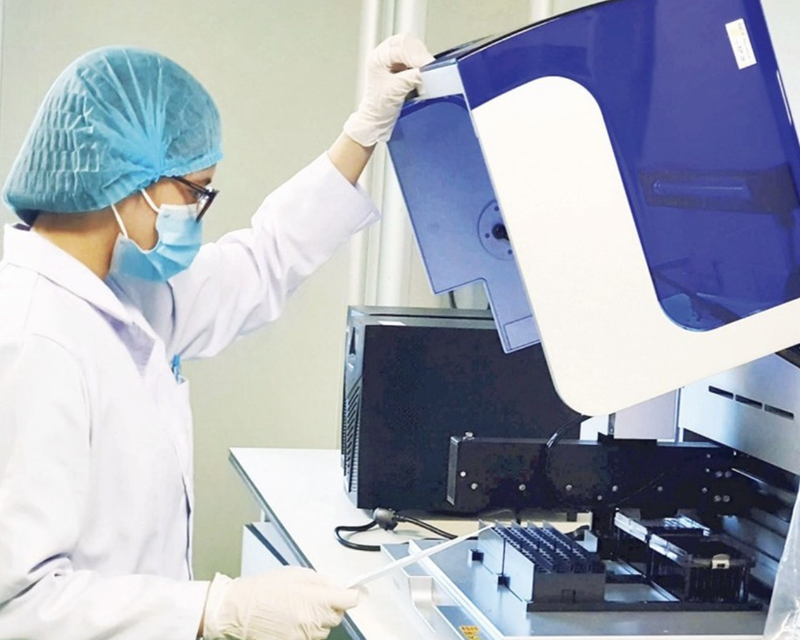
Research on ancient human genes at the Vietnam Academy of Science and Technology (Photo: nhandan.vn) |
Along with advances in biology and biotechnology, gene sequencing technology has been increasingly applied, particularly in forensic identification and the analysis of long-buried human remains. It has become a key tool for accessing ancient genetic data, offering strong support for archaeological research and studies of human evolution.
Southeast Asia, where humans have inhabited for more than 65,000 years, is regarded as a hotspot of human diversity.
As part of this region, Vietnam has a multi-ethnic population structure shaped by the interaction of five major language families and is home to many important archaeological sites. However, studies of ancient human remains in Vietnam have largely been confined to archaeology, with limited genetic data, leaving major gaps and debates in reconstructing settlement and evolutionary histories.
To address this gap, Dr. Hoang Ha, deputy head of the Department of Technology Application and Deployment at VAST, together with researchers from the academy's Institute of Biology, carried out a project on sequencing genes from archaeological human remains in Vietnam to support research on human biodiversity and archaeology.
The project, which was conducted from August 2020 and completed in December 2024, applied advanced sequencing and analytical techniques to human bone samples dating approximately 1,000 to 6,000 years ago.
One of the most important outcomes was the successful sequencing of complete mitochondrial genomes from two ancient human bone samples over 2,000 years old excavated at the Dong Xa archaeological site, now in Luong Bang commune of Hung Yen province. The study produced high-coverage and high-accuracy mitochondrial genome sequences, meeting requirements for further genetic analysis.
Dong Xa is a representative site of the late Dong Son Civilization. Although discovered and excavated in the 1980s, it had never before been studied from a genetic perspective.
Recovering genetic material from ancient human remains at Dong Xa and applying modern analytical techniques, such as mitochondrial genome sequencing, short tandem repeat (STR) genetic markers commonly used in forensic science, and nuclear genome analysis—are expected to generate valuable insights for interdisciplinary research combining archaeology and genetics in Vietnam.
Researchers tested mitochondrial DNA extraction and sequencing on 10 human bond samples dated between 1,000 and 2,000 years ago. These samples had previously been assessed by archaeologists and dated using radiocarbon (carbon-14) methods.
The project also collected genetic samples from modern population groups representing Vietnam’s five major language families, including Kinh, E De, H’mong and Tu Di, and established STR databases for several ethnic minorities to support population genetics, biodiversity studies and comparisons with ancient Vietnamese populations.
The findings have been published on prestigious international journals such as Molecular Genetics and Genomics, Legal Medicine, and American Journal of Human Biology.
According to Dr. Hoang Ha, one of the greatest challenges was extracting DNA from heavily degraded archaeological bones under Vietnam’s hot and humid tropical climate. The team tested more than three extraction methods, with the most effective being a large-capacity filtration column combined with complete demineralization, enabling the recovery of short DNA fragments under 100 base pairs, typical of degraded ancient DNA.
The method was later applied to samples from the Da But era, dating back nearly 6,000 years. Analysis revealed that these individuals belonged to distinctive haplogroups closely related to ancient Southeast Asian populations but rare among modern Vietnamese. This finding suggests significant changes in population genetic structure over time, reflecting migration, admixture or the disappearance of certain maternal genetic lineages.
The results provide new insights into the evolutionary history of human populations in the region and highlight the possibility that some ancient genetic lineages once present have either vanished or been fully absorbed into other populations.
Source: VNA