This initiative is the first of its kind in Vietnam to combine postal logistics with low-altitude aviation technology for medical purposes. Under the pilot scheme, Vietnam Post deploys small UAVs specifically designed for medical transportation. These aircraft meet all required safety and legal conditions for licensed flights within a radius of around 10 kilometers. Each route is expected to operate two flights per day, with flexibility to increase the number of UAVs and flight frequency in response to urgent or unexpected demands from healthcare facilities, subject to approval by relevant authorities.
    |
 |
|
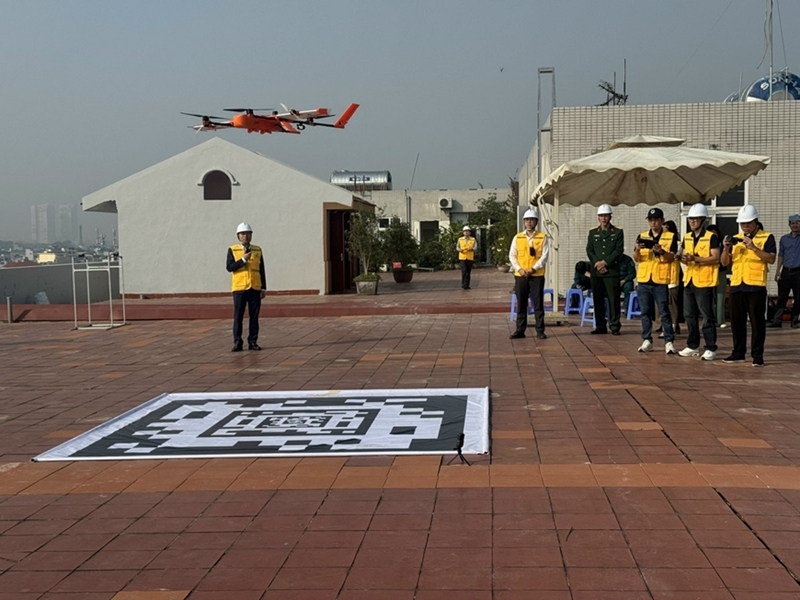
Duc Giang General Hospital applies UAVs to transporting medical supplies. |
The UAVs have a speed of up to 60 kilometers per hour and an operational radius of 15 kilometers. They are equipped with real-time flight monitoring cameras, while their specialized cargo compartments are designed to ensure appropriate conditions for transporting medicines, medical supplies, and biological samples. The trial aircraft are expected to be upgraded to achieve a range of approximately 20 kilometers and a payload of around 10 kilograms, suitable for medical logistics. All flights follow predefined routes that are closely monitored, comply with urban low-altitude airspace regulations, and fully adhere to safety and security requirements.
The application of UAVs in medical transport brings clear benefits. By shortening delivery times, patients can receive test results sooner, reducing waiting periods and supporting more timely and effective treatment. The model also strengthens connections between grassroots healthcare facilities and higher-level hospitals, improving access to medical services for the public. In addition, the delivery process is managed transparently, with shipment tracking to ensure proper use and a clear focus on community health.
Introducing UAVs into healthcare operations demonstrates the innovative and proactive spirit of Duc Giang General Hospital in advancing digital transformation within the medical sector. The initiative aligns with the orientation of developing new economic sectors associated with science, technology, innovation, and high-tech applications that directly serve people’s needs.
According to Nguyen Trong Dien, Director of the Hanoi Department of Health, the deployment of UAVs in medical transportation is a concrete step by Duc Giang General Hospital in applying science and technology, contributing to improved efficiency in managing the medical supply chain, shortening delivery times, enhancing pro-activeness, and ensuring safety in patient care. This model is particularly meaningful in emergency situations, natural disasters, epidemics, or when urban transport systems are disrupted.”
In pilot flights transporting medical supplies between Duc Giang General Hospital and Thuan An commune Health Station, UAVs completed deliveries in approximately eight minutes, compared with 15–20 minutes by car or motorbike. Hospital leaders noted that the UAV-based transportation of biological samples is expected to be particularly valuable in emergency situations, natural disasters, epidemics, or when urban traffic is disrupted. Beyond reducing delivery times, the model enhances biosafety, limits direct contact, and supports lower-level healthcare facilities, especially in areas with limited infrastructure, contributing to the gradual formation of a smart and integrated healthcare ecosystem.
Translated by Tran Hoai