According to the infectious disease surveillance system, nearly 100,000 cases were reported so far this year, more than 2.5 times over the same period last year. The number of cases remains high in southern cities and provinces.
The Department of Disease Control under the Ministry of Health, said HFMD is common among young children and can spread rapidly in families, communities and childcare and preschool settings.
    |
 |
|
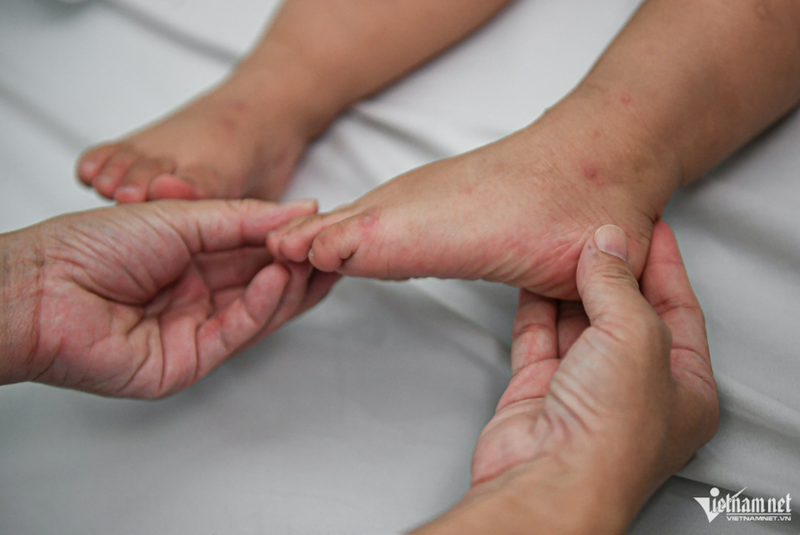
With an increase in hand, foot, and mouth disease cases at the beginning of the school year, the Department of Disease Prevention has issued an urgent warning. (Photo: Vietnamnet) |
The disease occurs year-round and typically sees a sharp increase in September and October. This period also coincides with the start of the new school year, when children have more frequent contact and participate in group activities.
The department urged families and schools to follow the “three cleans” principle: clean food and water, clean surroundings, and clean hands.
Families should ensure children eat cooked food, drink clean water, maintain hygiene in homes and play areas, and regularly wash hands with soap, especially before meals and after using the toilet or changing diapers.
Childcare centers and preschools should provide adequate clean water, soap and convenient hand-washing facilities, while regularly cleaning classrooms, toys, learning materials and frequently touched surfaces.
Schools should monitor children’s health and promptly notify parents if children develop fever, mouth ulcers or blisters on the palms, soles, knees or buttocks so they can receive medical attention.
Children suspected of having the disease should stay home, avoid close contact with others and be taken to medical facilities for examination and advice. Personal items and eating utensils should not be shared, while hands, toys and frequently touched surfaces should be cleaned regularly.
Parents should seek immediate medical attention if children develop high or persistent fever, frequent startling, limb tremors, unusual irritability or lethargy, repeated vomiting, abnormal breathing or worsening health.
With infections remaining high and the risk expected to increase in September and October, consistent hygiene practices and early detection at home and school are essential to limiting transmission and protecting children’s health.
Source: VNA