Chairing a working session with the home affairs sector on improving workforce quality, creating sustainable employment and developing human resources to meet the country's new development requirements, General Secretary and President Lam stressed the importance of addressing existing shortcomings candidly, saying Vietnam’s challenge is no longer a shortage of workers but a shortage of workers whose skills meet development requirements.
    |
 |
|
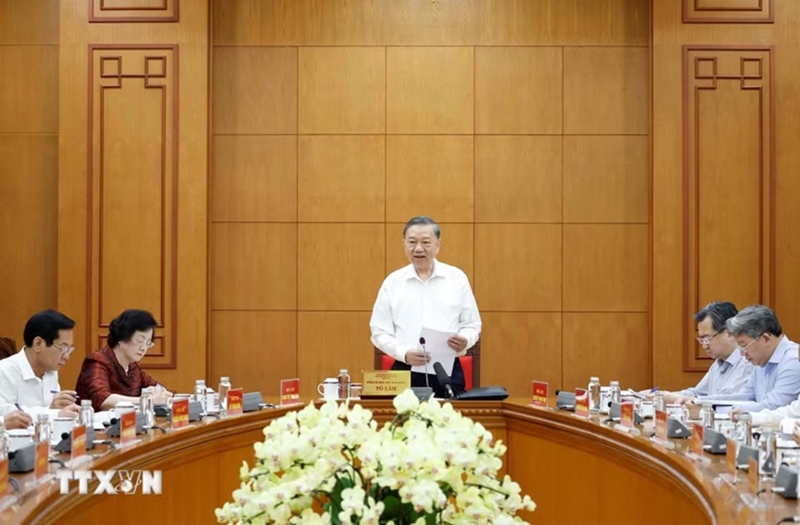
Party General Secretary and State President To Lam speaks at the working session on improving workforce quality, creating sustainable employment and developing human resources to meet the country's new development requirements. |
He pointed out shortcomings in vocational skills, labor discipline, industrial work culture, foreign language proficiency, digital and green skills, as well as shortages of skilled technicians, technology professionals and middle-level managers. Meanwhile, the informal labor sector remains large, youth unemployment is high, education and employment structures are mismatched, and population ageing is accelerating.
Therefore, workforce quality should be assessed not by the number of people in employment, but by the quality and productivity of jobs and workers’ contribution to national competitiveness, the top leader stressed.
The key question is not how many people have jobs, but whether those jobs are formal, sustainable, productive and provide workers with adequate income, social insurance and opportunities for lifelong learning and career development, he said.
The Party and State leader stressed that sustainable employment in urban areas should be linked to the country's new growth model, innovation, digital economy and green economy. Rather than simply creating more jobs, Vietnam should focus on generating better-quality employment with higher productivity, stable incomes, social protection and greater opportunities for skills development.
In rural areas, sustainable employment should aim to increase labor productivity and incomes by promoting the transition from low-value agriculture to high-value farming, processing industries, modern services and other emerging sectors. For ethnic minority areas, employment policies should support sustainable poverty reduction, unlock local potential and preserve cultural identity while improving access to education, vocational training, credit and employment services, he noted.
The top leader also called for reforms in human resources training through the development of a national skills system. Training should shift from responding to short-term demand to enhancing the country's long-term competitiveness, moving away from a diploma-oriented approach towards one based on occupational skills, market demand and training outcomes, he elaborated.
Alongside domestic job creation, he stressed the need to expand opportunities for Vietnamese workers in international labor markets and selectively attract highly qualified experts and talents to serve the country's strategic development goals.
|
|
 |
|
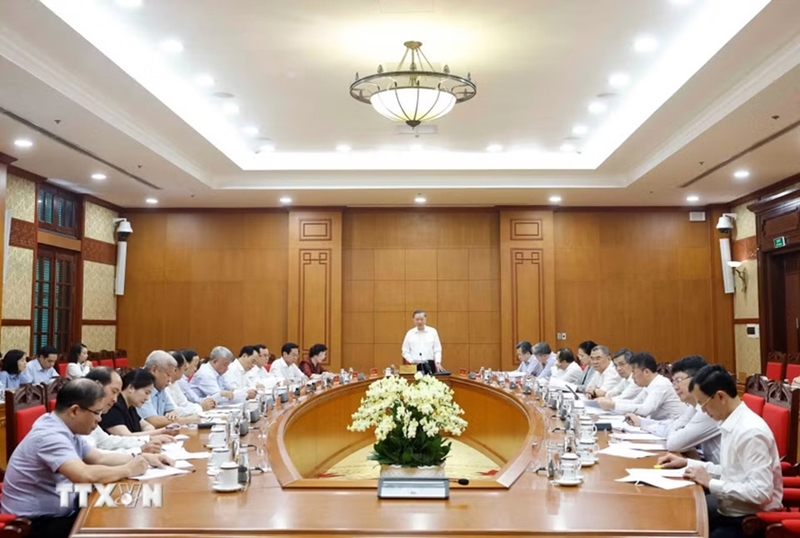
An overview of the working session |
General Secretary and President Lam assigned the Government's Party Committee to formulate a national strategy on human resources development and a modern labor market. Priority tasks include assessing workforce quality, mapping labor and skills shortages by sector and locality, identifying priority occupations, restructuring vocational education institutions, and implementing sustainable employment programs for young people, rural workers, informal urban workers, ethnic minority communities and workers affected by digital transformation and automation.
He also called for stronger policies to expand the formal labor market, improve overseas employment programs for Vietnamese workers, attract highly skilled professionals, and establish annual indicators to monitor workforce quality, sustainable employment, vocational training, income, social insurance coverage and worker and business satisfaction.
Attention should be paid to shifting Vietnam's competitive advantage from low labor costs to high-quality human resources, he said, emphasizing the importance of developing integrated labor market databases, modern employment services and a national forecasting system for labor and skills demand, and promoting an open and flexible lifelong learning system that enables workers to reskill and adapt to changing labor market demands.
Affirming that people are the center, driving force and ultimate goal of development, the top leader described Vietnam's workforce as one of the country's most valuable assets. He stressed that investing in human resources is not only a social policy, but also a strategic choice that will enable Vietnam to transform its demographic advantages into long-term drivers of rapid and sustainable development.
Source: VNA