Strengthening customs data connectivity
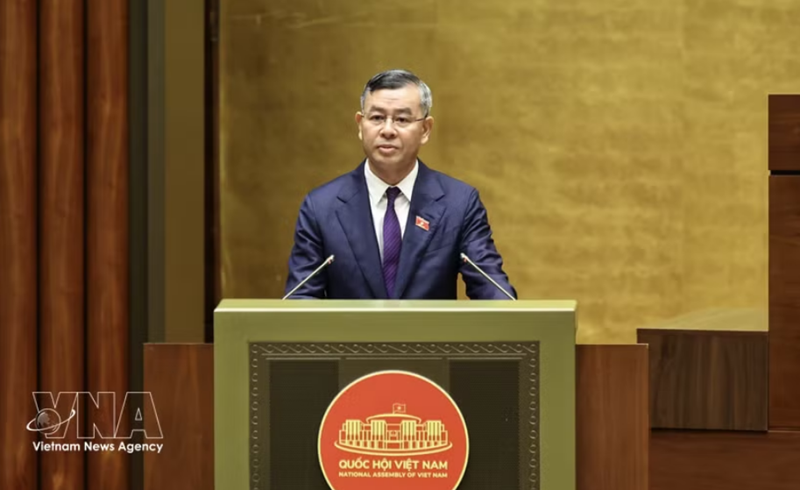
Presenting the draft amendments to the Law on Customs, Minister of Finance Ngo Van Tuan said the draft comprises four articles, including amendments and supplements to 15 existing provisions to align with the functions, duties and organizational structure introduced following the recent restructuring of the state apparatus.
The draft authorizes the Ministry of Finance to issue detailed regulations on customs procedures and supervision for goods imported and exported through postal and express delivery services. It also proposes amendments to Article 58, requiring operators of warehouses and port facilities to take responsibility for destroying environmentally hazardous goods when the owner of the means of transport, the driver, or an authorized representative cannot be identified. Customs authorities would oversee the destruction process.
    |
 |
|
Minister of Finance Ngo Van Tuan presents the draft Law amending and supplementing several articles of the Law on Customs at the 16th National Assembly's first extraordinary session in Hanoi on August 3. |
Presenting the verification report, Chairman of the N.A. Committee for Legal and Judicial Affairs Phan Chi Hieu expressed support for both the necessity and scope of the proposed amendments, as well as the draft’s direction towards simplifying administrative procedures, accelerating digital transformation, promoting data-driven and risk-based customs management, and strengthening decentralization.
The committee recommended that the drafting agency further refine provisions governing customs management of cross-border e-commerce, ensuring effective mechanisms for data connectivity and sharing. It also called for a review of provisions delegating authority to the Government to clearly define responsibilities, avoiding overlaps and facilitating implementation.
Reducing conditional business lines
According to the proposal on amendments to Article 6 and Appendix IV of the Law on Investment, the draft law consists of five articles and one appendix, including those regarding the removal of a number of conditional business lines from the existing list.
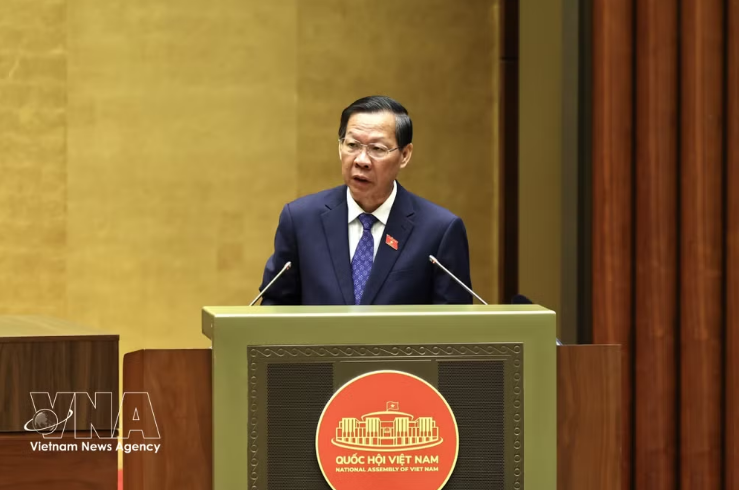
Presenting the verification report, Chairman of the N.A. Committee for Economic and Financial Affairs Phan Van Mai said the committee had urged the drafting agency to further review and fully justify the rationale, practicality and substance of the proposed reductions. He stressed that the objective of cutting at least 30% of conditional business lines should lead to genuine improvements in the investment and business environment and lower compliance costs, rather than focusing solely on numerical targets.
|
|
 |
|
Chairman of the National Assembly (N.A.)'s Committee for Economic and Financial Affairs Phan Van Mai speaks at the 16th N.A.'s first extraordinary session in Hanoi on August 3. |
Given the wide-ranging impact of the amendments, Mai also called for a comprehensive review of feedback from affected stakeholders and preparation of all conditions and guiding documents to ensure the law can be enforced consistently and effectively once it takes effect.
Regarding the proposed reductions, the committee agreed with the policy of shifting state management from pre-licensing controls to post-licensing inspections, with a view to creating a more transparent and business-friendly investment environment. However, some members recommended further careful assessment of the proposed cuts, particularly for business lines directly related to national defense, security, public order, social safety and public health.
Source: VNA