A roundtable discussion was also held to discuss the acceleration the convention’s entry into force and effective implementation.
The events gathered representatives from U.N. agencies along with nearly 90 ambassadors, heads of missions, and experts.
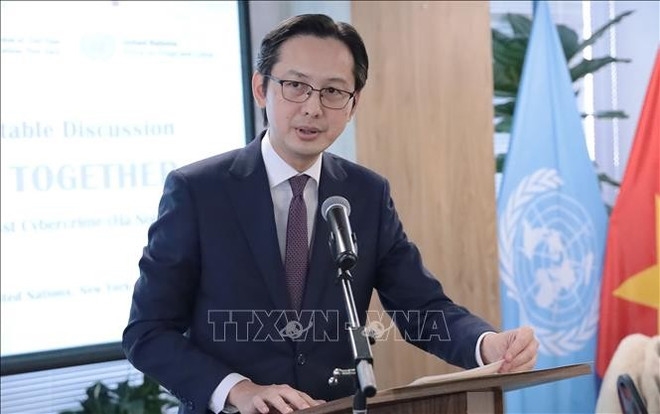
In his opening remarks, Ambassador Do Hung Viet, Permanent Representative of Vietnam to the U.N., affirmed that the signing ceremony and high-level conference of the Hanoi Convention was successful in every respect.
He attributed this achievement to host Vietnam’s close coordination with U.N. bodies, and the active participation of 119 countries as well as international organizations. The fact that 72 U.N. member states signed the convention in Hanoi demonstrated strong global commitment to and support for the first international legal instrument on cooperation in combating cybercrime.
He stressed that the successful signing ceremony was only the beginning. Countries must continue encouraging wider signatures, ensure swift ratification by signatories, and prepare the necessary national, regional and global conditions for effective implementation once the convention enters into force.
Upholding the “Hanoi Spirit,” Vietnam will remain an active partner, working closely with all countries, U.N. bodies, and international organizations to promote broad participation and full and substantive enforcement, the diplomat emphasized.
Speaking at the roundtable, representatives from the UNODC and the U.N. Office of Legal Affairs commended Vietnam’s proactive and constructive role throughout the negotiation process and its extensive contributions over the past year, which helped deliver a historic signing ceremony, the largest in almost a decade.
They affirmed that U.N. bodies will continue supporting member states with ratification and implementation through initiatives that strengthen law-enforcement cooperation, especially in experience sharing, technical assistance, capacity building, and technology transfer for developing countries.
Ambassadors, heads of missions, and cybercrime experts from various regions appreciated Vietnam’s leading role in initiating and hosting the signing ceremony and high-level meeting in Hanoi. They perceived that Vietnam's substantive contributions reflect the country's strong commitment to multilateralism and global efforts against cybercrime challenges.
Many viewed the Hanoi Convention as a historic milestone in global cooperation against cybercrime. The strong turnout at the signing ceremony, they noted, provided favorable momentum to translate commitments into action, foster global cooperation and build a safer cyberspace for all.
    |
 |
|
Ambassador Do Hung Viet, Permanent Representative of Vietnam to the U.N. addressing the ceremony |
Adopted on December 24, 2024, the Hanoi Convention is the U.N.’s first binding global legal framework on preventing, investigating, and addressing cybercrime. It covers the criminalization of cyberattacks, protection of critical information infrastructure, mechanisms for data and electronic-evidence sharing, extradition, mutual legal assistance, and technical cooperation. The convention also underscores the need to balance cybersecurity with human rights, privacy, and national sovereignty. It opened for signature in Hanoi on October 25, 2025 and will enter into force once 40 states have ratified it.
This marks the first time a location in Vietnam has been associated with a global multilateral treaty in a field of major international concern. The designation reflects the country’s rising global standing and active role in promoting multilateralism, contributing to the shaping of global digital governance frameworks, the safeguarding of cybersecurity and national sovereignty on cyberspace, and the advancement of its digital-transformation strategy for a prosperous future.
Source: VNA