Under the decision, Deputy Prime Minister Ho Quoc Dung will serve as head of the committee. Minister of Agriculture and Environment Trinh Viet Hung and Minister of Ethnic and Religious Affairs Nguyen Dinh Khang will act as deputy heads.
The Central Steering Committee is tasked with assisting the PM in directing and coordinating the implementation of the national target program during 2026–2030, particularly in addressing major inter-sectoral issues related to management and execution.
    |
 |
|
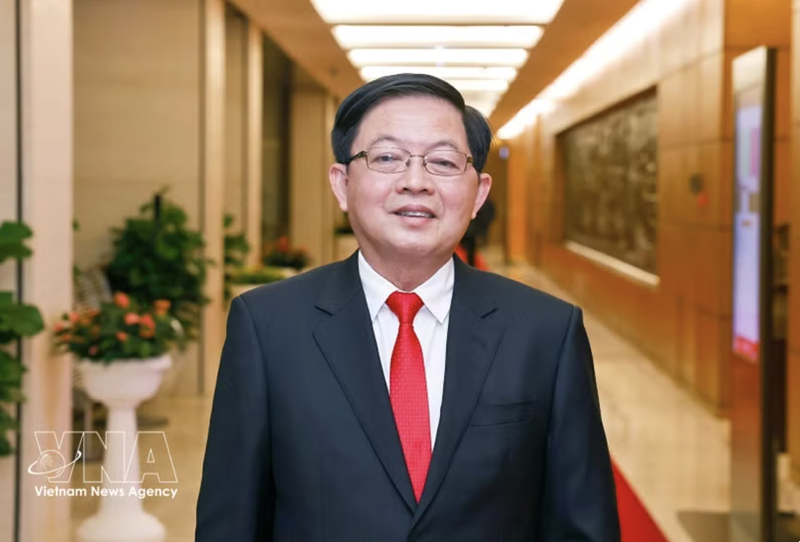
Deputy Prime Minister Ho Quoc Dung serves as head of the Central Steering Committee for the National Target Program on New-style Rural Area Development, Sustainable Poverty Reduction and Socio-economic Development in Ethnic Minority and Mountainous Areas for 2026–2030. |
The committee will study, advise and propose solutions to the Government leader on important matters concerning the program, while strengthening coordination among ministries, agencies, localities and related organizations. It will also supervise, inspect and evaluate the implementation process, including preliminary and final reviews of program outcomes nationwide.
The Ministry of Agriculture and Environment has been designated as the standing body of the committee. It will consolidate the national coordination office for the program into a unified coordination office responsible for assisting the committee in managing, coordinating and implementing the program. The restructuring aims to ensure streamlined and efficient operations without increasing administrative apparatus or staffing.
Meanwhile, the Ministry of Ethnic and Religious Affairs will reorganize its specialized unit based on the national office for ethnic and mountainous affairs to support its minister in monitoring, directing and implementing component 2 of the program, while ensuring streamlined and efficient operations without overlap or any increase in organizational structure or staffing.
At the local level, chairpersons of provincial People’s Committees will establish provincial steering committees and designate or consolidate standing agencies under provincial Departments of Agriculture and Environment to support the implementation.
Under the program, total funding to be mobilized for the 2026–2030 period is estimated at 1.044 quadrillion VND (40.2 billion USD). Of this amount, the central budget will provide 100 trillion VND (9.6%), local budgets around 300 trillion VND (28.7%), integrated funding from other programs and projects about 360 trillion VND (34.5%), policy credit approximately 23 trillion VND (2.2%), and contributions from enterprises and communities an estimated 261 trillion VND (25%).
The program aims to build modern, sustainable and culturally rich new-style rural areas while promoting comprehensive development in ethnic minority and mountainous areas. It also targets inclusive and multidimensional poverty reduction, gender equality and social security; and at the same time, advancing a green, circular and ecological rural economy linked with agricultural restructuring to raise incomes, improve living standards and narrow regional development gaps.
By 2030, it looks to increase average rural incomes by 2.5–3 times compared to 2020, with incomes of ethnic minority people reaching about half of the national average. Multidimensional poverty is expected to decline by 1–1.5% annually, reducing the household poverty rate in ethnic minority and mountainous areas to below 10%, and basically eliminating extremely disadvantaged communes and villages.
Nationwide, around 65% of communes are expected to meet new-style countryside standards, including 10% recognized as modern new-style rural areas. Meanwhile, five provinces and cities are hoped to complete rural development tasks.
Source: VNA