Challenging journey to find “taste of home”
To have a green "banh chung" (square glutinous rice cake) in a foreign land is a journey filled with effort and longing. Nguyen Dang Khanh, currently residing in Bristol, shared that the difficulty lies not only in arranging time since everyone has different schedules and routines, but also in finding a space large enough to recreate the Tet atmosphere.
    |
 |
|
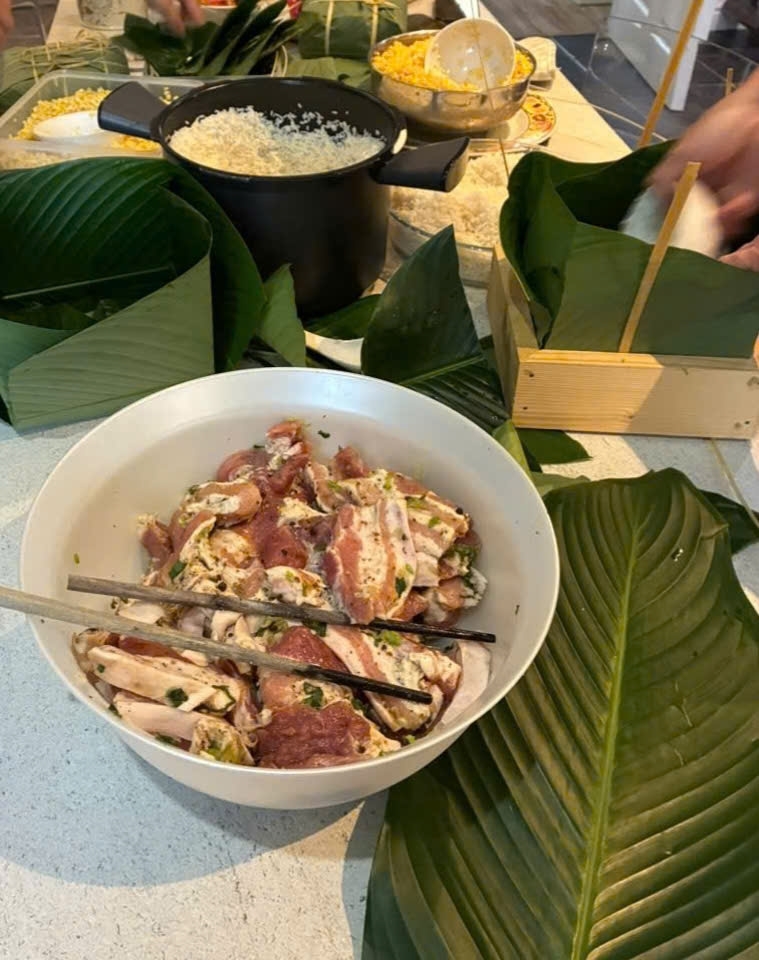
Ingredients for making "banh chung" include glutinous rice, mung beans, pork belly, and indispensable dong leaves. (Photo: Nguyen Khanh) |
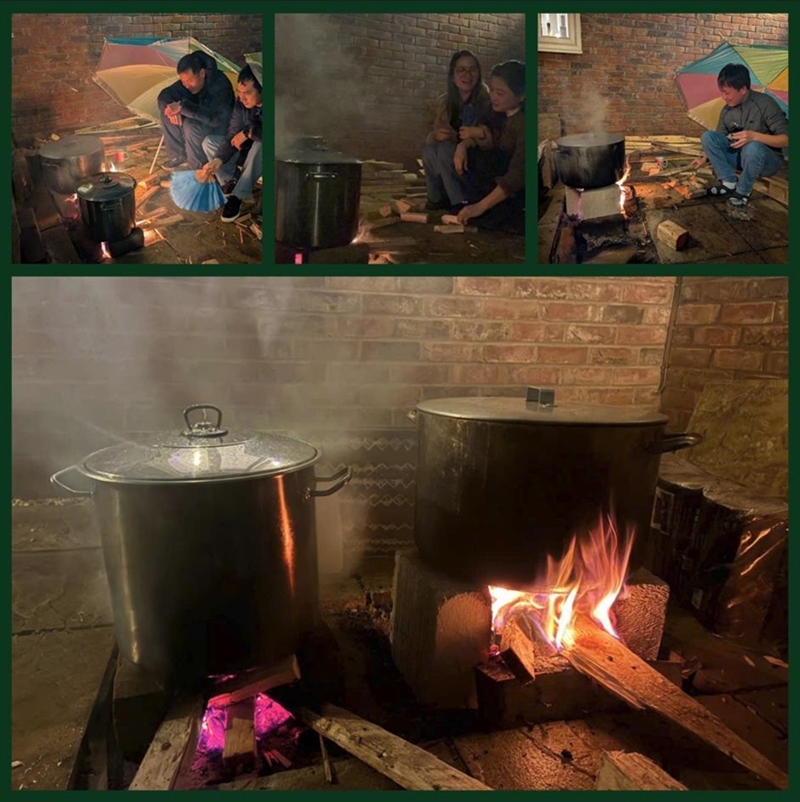
“Unlike in Vietnam, not every house here has enough space to make and boil banh chung,” Khanh explained. After discussion, five small families agreed to gather at the house of Bui Nguyen Hoang and Bui Thanh Khoi Nguyen in Taunton. Their house, with a spacious yard, proved ideal for setting up a wood fire to boil the cakes.
Yet the greatest challenge and the one that caused the most concern was ingredients. Glutinous rice, pork belly, and mung beans were not too much difficult to find, but fresh dong (phrynium) leaves were truly a “luxury item.” To obtain that distinctive green color and traditional aroma, Khanh had to place an early order from afar, paying as much as £15 per kilogram (about VND 400,000 for roughly 35 leaves). Though far more expensive than in Vietnam, the group still made the purchase to preserve the authentic Tet flavor.
|
|
 |
|
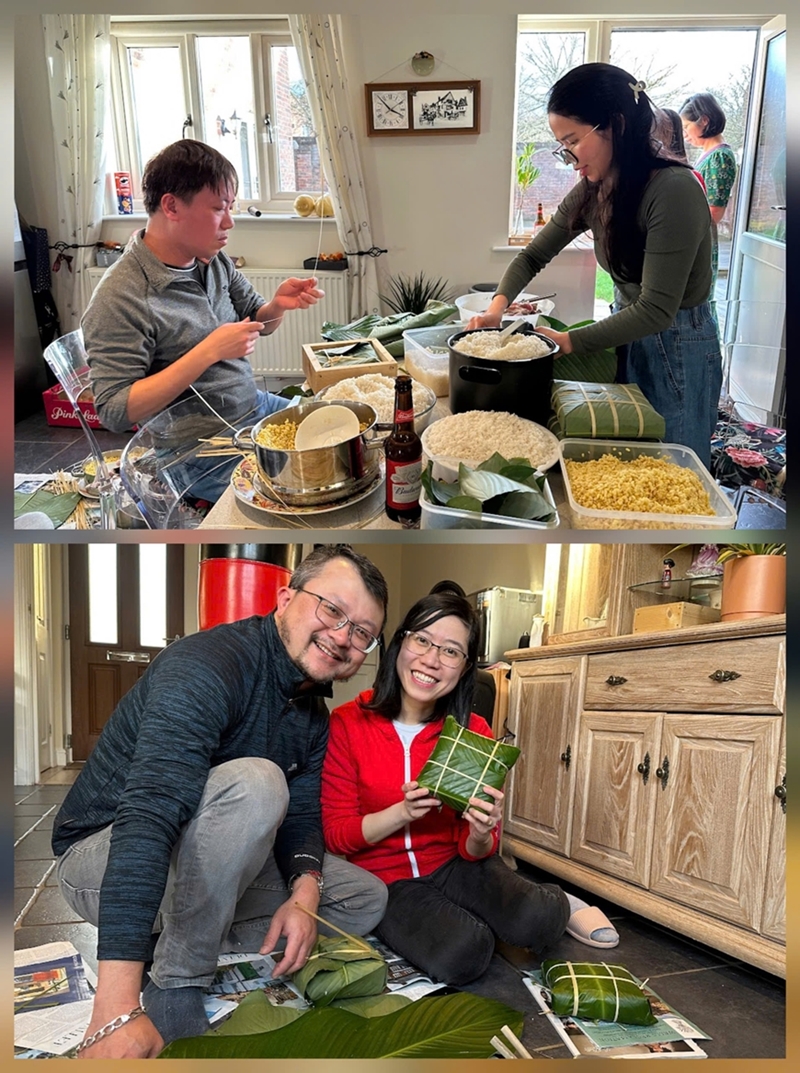
Reading and hearing the legend of “Banh chung, banh day,” especially directly making banh chung, helps younger generations better understand their roots. (Photo: Nguyen Khanh) |
|
|
 |
|
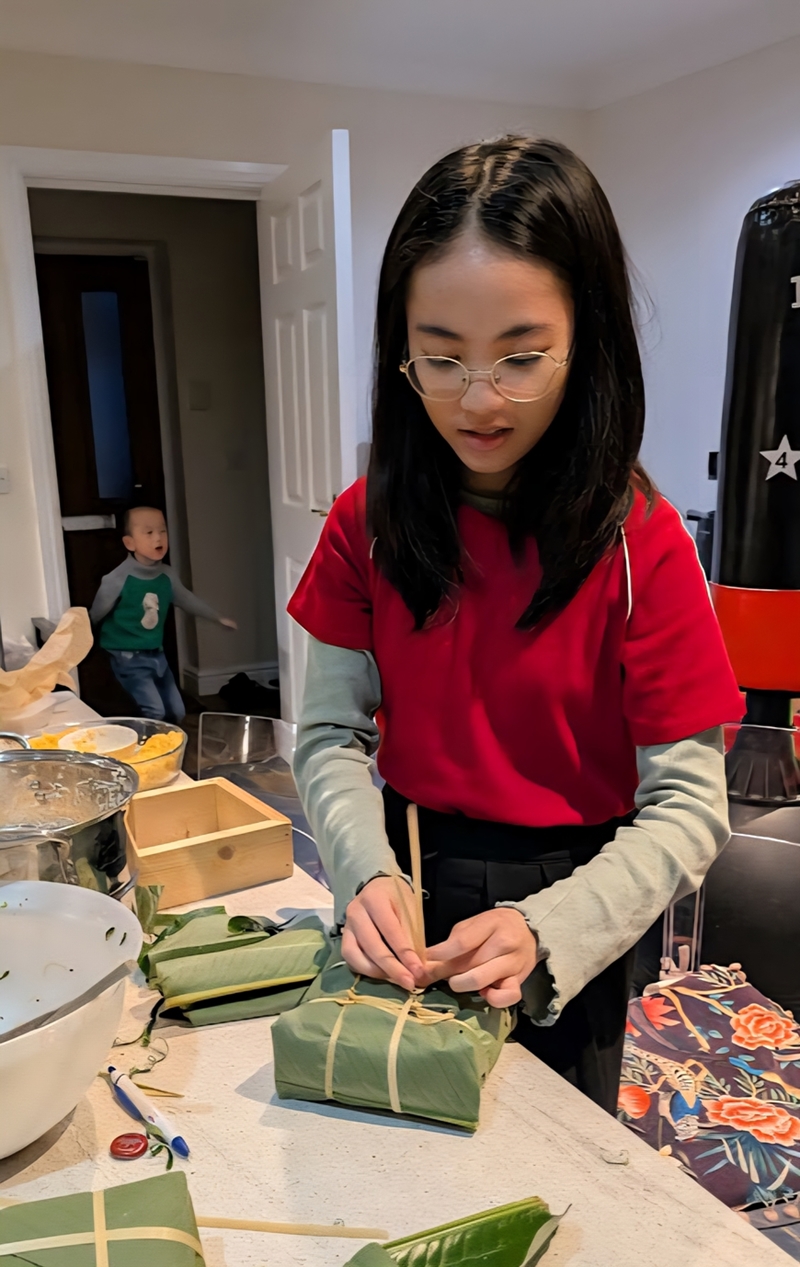
Making the “flavor of home country” together (Photo: Nguyen Khanh) |
Fire that warms souls
Tet is not merely a transition into a new year; it is a time for reunion. Gathering to tend the fire beneath a pot of "banh chung" has long become an invisible but enduring bond that connects the Vietnamese community in the U.K.
Nguyen Ngoc Mai from Cheltenham shared, “Tet is a moment of reunion with loved ones, and "banh chung" is the soul of Tet.” She recalled watching her grandparents and parents make cakes every Tet when she was in Vietnam. Now, in this foggy land, she wraps the cakes herself, experiencing the festive atmosphere from washing leaves and splitting bamboo strings to lighting the fire, chatting around the pot, and laughing with friends.
|
|
 |
|
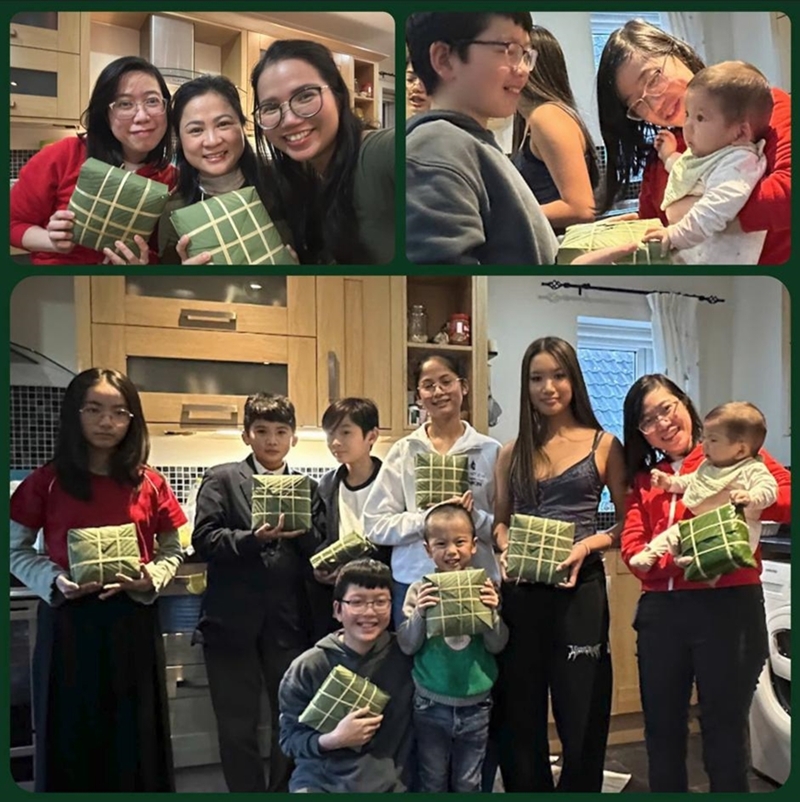
The joy of celebrating Tet spreads from adults to children. (Photo: Nguyen Khanh) |
|
|
 |
|
Pots of "banh chung" glowing red over the fire abroad (Photo: Nguyen Khanh) |
“Making "banh chung" together abroad not only eases homesickness but also preserves traditional flavors in a very genuine and heartfelt way,” Mai said.
For Mai, one of her favorite images is watching the men sit by the boiling pot in the cold weather, yet surrounded by unusual warmth filled with endless stories. Meanwhile, the women set aside any shyness to dance, take photos, record videos, and preserve beautiful memories.
Particularly fond of Tet, Bui Anh Tu (son of Bui Nguyen Hoang) explained that besides enjoying delicious "banh chung," he also receives lucky money and especially gets to stay up late playing with friends while his father and uncles watch over the pot.
|
|
 |
|
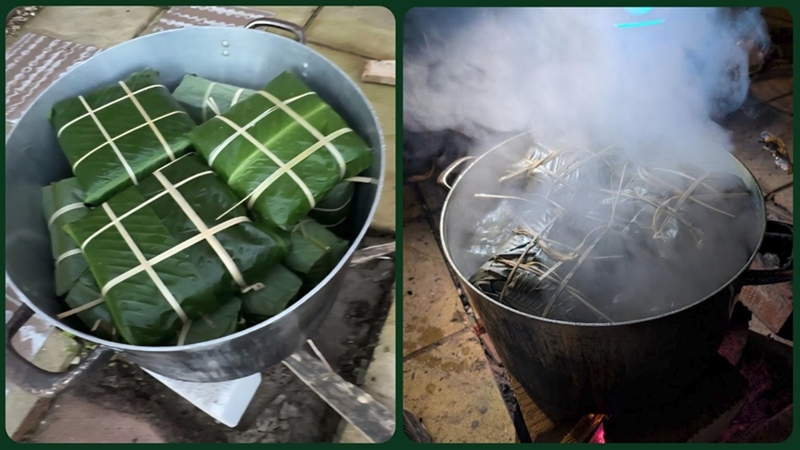
"Banh chung" before and after boiling. The indescribable aroma of homeland flavors in a distant land inspires expatriates to make the cakes themselves and breathe in that familiar scent every Tet season. (Photo: Nguyen Khanh) |
|
|
 |
|
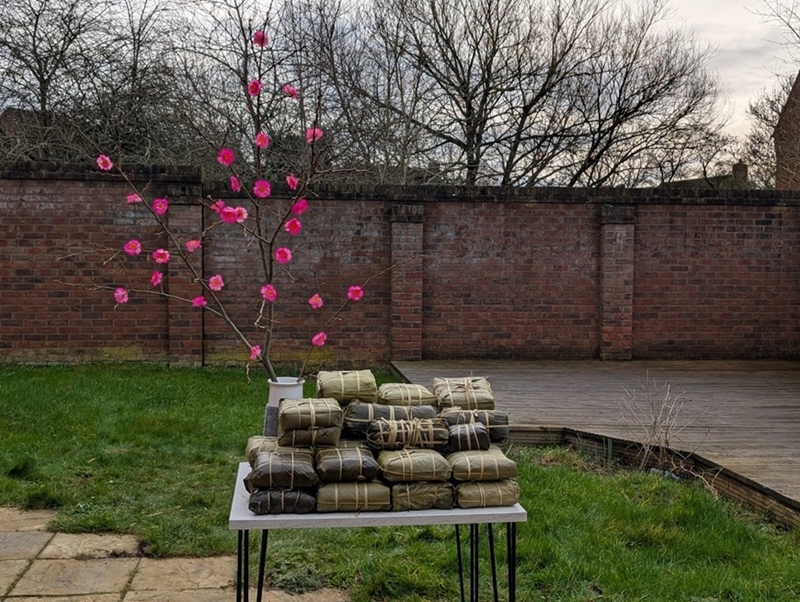
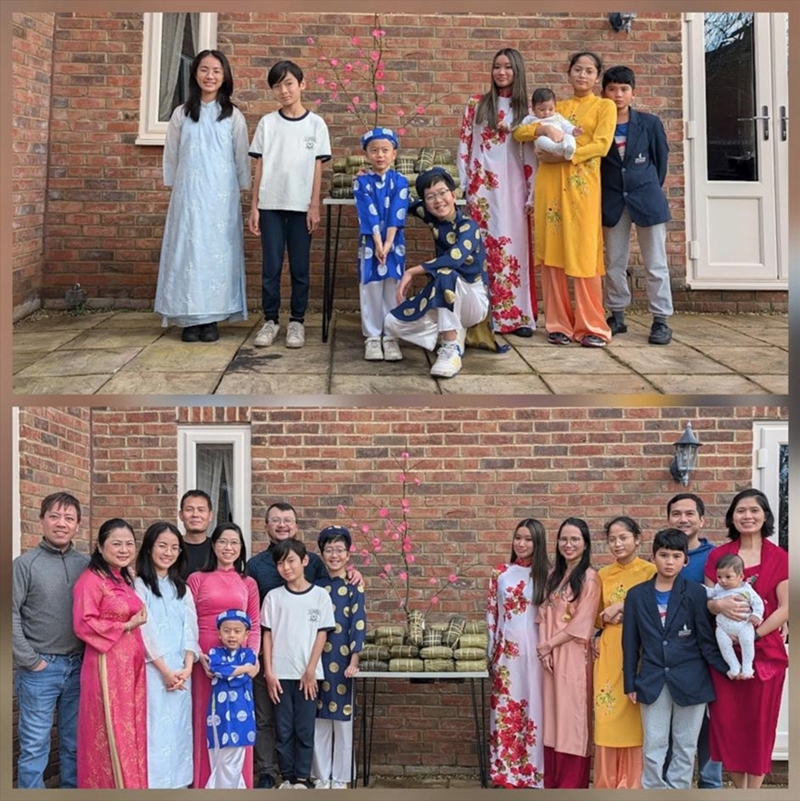
Homemade "banh chung," banh tet (cylindrical glutinous rice cake), handmade peach blossoms, Tet atmosphere is everywhere. (Photo: Nguyen Khanh) |
Learning about one’s roots
For Vietnamese living overseas, preparing ingredients and making the cakes also creates a vibrant “cultural space” where children can experience and better understand the legend of "banh chung" and the nation’s origins.
Here, children are guided step by step by their parents from arranging each layer of leaves, measuring each bowl of rice, tying the strings, and shaping the cakes into perfect squares. Watching parents patiently instruct their children, one can clearly sense the intergenerational connection through this traditional cultural practice. According to Mai, this bond helps children understand that they are Vietnamese, wherever they may live. “No matter how far one goes, one’s roots remain in the heart,” she stressed.
|
|
 |
|
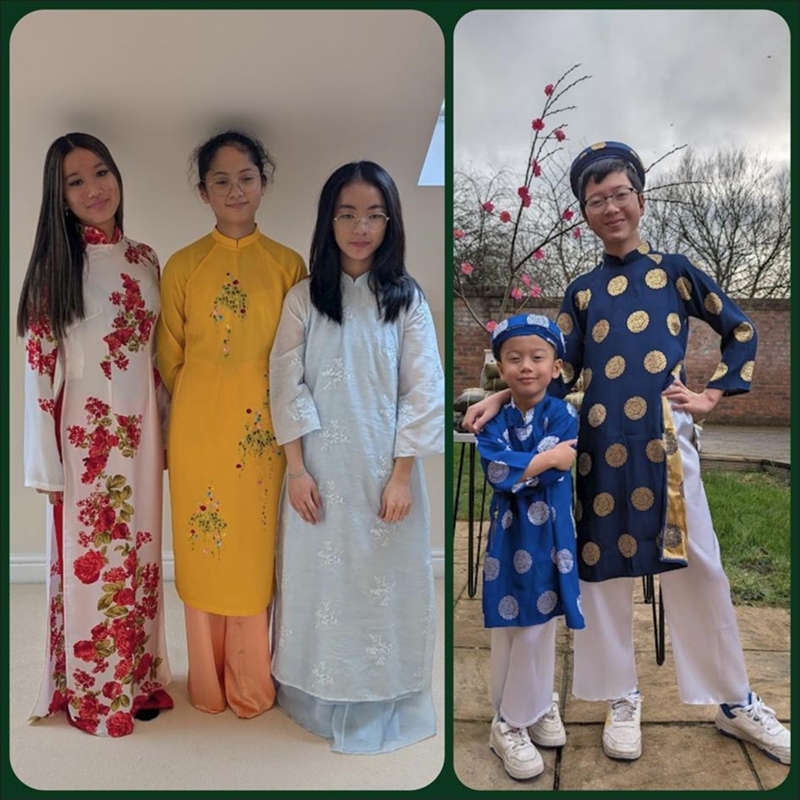
Children wear the ao dai for Tet. (Photo: Nguyen Khanh) |
|
|
 |
|
Families “check in” beside their finished products. A complete Tet with the flavors of home is shared among relatives and friends. (Photo: Nguyen Khanh) |
Tet in the U.K. may lack the bustling atmosphere of flower markets back home, but with homemade "banh chung," handmade peach blossoms, and flowing ao dai, it is still a complete Tet. Wherever Vietnamese people ache for their homeland, there Tet will always be present.
Mai Huong