For 14 days, the delegates will travel across the Northern, Central, and Southern regions, visiting Hanoi, Ninh Binh, Nghe An, Quang Tri, Hue, Da Nang, Gia Lai, and Khanh Hoa.
    |
 |
|
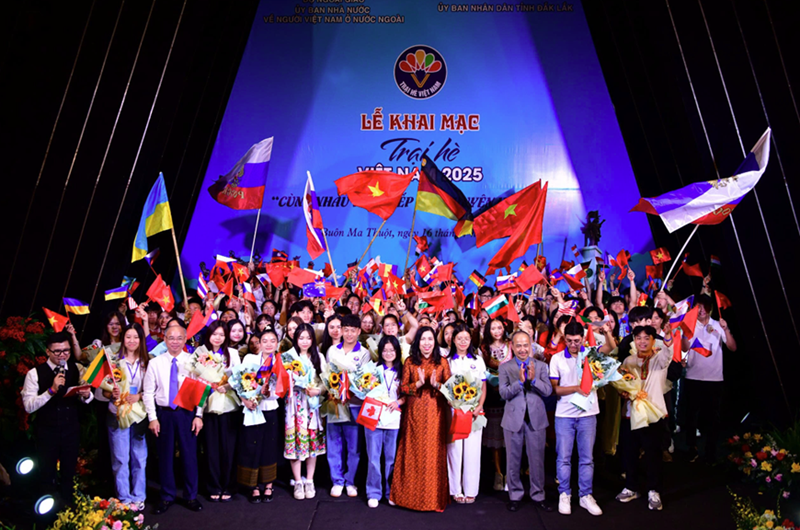
Young overseas Vietnamese students attend the Vietnam Summer Camp 2025. |
The official opening ceremony will take place on the evening of July 13 in Hanoi, while the closing ceremony is scheduled for the evening of July 24 at the April 2 Square in Nha Trang ward (Khanh Hoa province).
Under the theme “Heritage journey, Connecting roots,” delegates will explore iconic Vietnamese cultural heritage elements, including UNESCO-recognized landmarks, such as the Complex of Hue Monuments, My Son Sanctuary, Hoi An Ancient Town, and Hue Royal Court Music. The program blends traditional education, history exploration, cultural experiences, and Vietnamese language practice to instill national pride and a sense of attachment to the homeland among the young expatriates.
The itinerary includes visits to the Ho Chi Minh Relic Site at the Presidential Palace and the Kim Lien Relic Site (Nghe An), as well as incense-offering ceremonies at Long Dai Ferry II and the Gac Ma Soldiers’ Memorial. Participants will also learn about maritime sovereignty at the Hoang Sa (Paracel) Exhibition House and the Nha Trang Institute of Oceanography, interact with Naval Academy personnel, practice Tay Son traditional martial arts, explore astronomy at the Quy Nhon Discovery Science Center, and engage in various cultural, sports, and language-honoring activities.
A highlight of the 2026 camp is the interactive sessions with prominent overseas Vietnamese intellectuals and artists, such as Prof., Dr. Thai Kim Lan (from Germany) at the Huong River Antique Pottery Museum and the memorial space of painter Le Ba Dang (from France). These events aim to spread Vietnamese cultural values and affirm the diaspora’s contributions to national development.
Held annually since 2004, the Vietnam Summer Camp is chaired by the State Commission for Overseas Vietnamese Affairs in coordination with various ministries, sectors, and localities. Over the past more than two decades, the program has attracted thousands of young overseas Vietnamese back to their homeland, fostering community cohesion, consolidating national cultural identity, and nurturing the younger generation’s sense of responsibility toward their country.
In the country’s new development phase, the camp continues to serve as a flagship activity implementing the Party and State’s policies on overseas Vietnamese. It aims to harness the resources of overseas Vietnamese, particularly youths, for building a prosperous and happy nation.
Translated by Minh Anh